Aluminum Chlorohydrate Market Growth Story: US$ 1,308.13M to US$ 1,784.42M
The aluminum chlorohydrate market was valued at US$ 1,308.13 million in 2025 and is projected to reach US$ 1,784.42 million by 2034, expanding at a CAGR of 3.51% during 2026–2034.
 industry
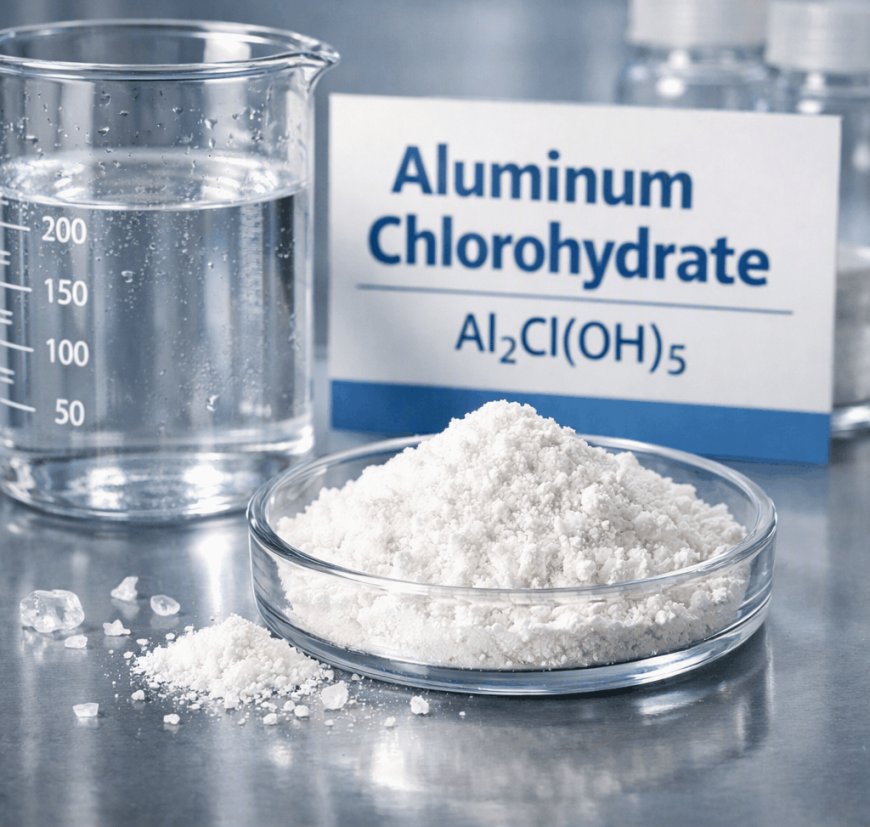
The cosmetics industry continues to contribute to aluminum chlorohydrate demand, creating an important consumer-facing application alongside water treatment. This diversified usage helps explain the market's steady long-term trajectory. The Aluminum Chlorohydrate Market is anticipated to reach US$ 1,784.42 million by 2034, compared with US$ 1,308.13 million in 2025, at a 3.51% CAGR from 2026 to 2034.
What Is Aluminum Chlorohydrate?
Aluminum chlorohydrate is a compound made from aluminium, chlorine, and oxygen. It works as a coagulant in water treatment and as an active ingredient in antiperspirants. Its ability to bind particles and control moisture makes it useful across several industries.
Three forces keep this market on a steady path. First, clean water access remains a global priority, and municipalities keep investing in treatment plants that use aluminum chlorohydrate to clear turbidity from drinking water and wastewater. Second, the personal care industry leans on this compound for antiperspirant formulas, and demand has held firm even as consumers shift toward gentler skincare products. Third, pharmaceutical applications are quietly expanding, with the compound finding use in certain topical formulations.
Request a Sample Copy of the Report: https://www.theinsightpartners.com/sample/TIPRE00015876
Beyond municipal use, industrial water treatment is opening fresh demand. Factories that discharge wastewater face tighter environmental rules in most regions, and aluminum chlorohydrate offers an efficient way to meet discharge limits without excessive sludge production. This is not a flashy growth story, it is a structural need tied to population growth and stricter water quality standards.
Raw material costs tied to aluminium and chlorine production do create some price pressure. Producers who secure long-term feedstock contracts tend to manage margins better than those exposed to spot market swings. Regional supply chains also matter here, since transporting the compound over long distances raises costs significantly.
Segmentation Overview
By Type: Solid aluminum chlorohydrate offers easier storage and transport, making it popular for export markets. Liquid aluminum chlorohydrate suits large treatment plants that need continuous dosing without manual handling.
By Application: Cosmetics, mainly antiperspirants, account for a steady share of demand. Water treatment remains the largest application, spanning both municipal and industrial use. Pharmaceutical applications are smaller but growing. Other uses include leather processing and paper production.
By Geography: North America, Europe, Asia Pacific, and South and Central America each show different adoption patterns shaped by water infrastructure investment and personal care manufacturing strength.
Key Market Players
- ALTIVIA Chemicals, LLC
- Chemtrade Logistics Inc.
- GEO
- Gulbrandsen Chemicals, Inc.
- Holland Company, Inc.
- Kemira Oyj
- Parchem Construction Supplies Pty Ltd.
- R. Grace and Co.
- Summit Chemicals Holding Corporation
- USALCO, LLC
These companies focus on expanding production capacity near major water treatment hubs. Several are also refining purity grades to meet stricter cosmetic industry standards, while others build out distribution networks to serve smaller municipal customers.
Buy Premium Report: https://www.theinsightpartners.com/buy/TIPRE00015876
Sustainability and Innovation Trends
Water scarcity concerns are pushing treatment plants to adopt more efficient coagulants, and aluminum chlorohydrate fits that need well due to its lower sludge output compared with older treatment chemicals. Producers are also exploring lower-energy manufacturing processes to cut their own carbon footprint. In personal care, brands are working on formulations that use less active compound while keeping the same effectiveness, responding to consumer demand for simpler ingredient lists.
Regional Outlook
North America holds a strong position, backed by extensive municipal water treatment infrastructure and a mature personal care industry. Europe follows closely, with strict water quality regulations driving steady demand. Asia Pacific is growing fastest, as rapid urbanisation forces governments to expand water treatment capacity in cities across India, China, and Southeast Asia. South and Central America shows gradual growth, tied to infrastructure development in major urban centres.
Contact Us:
If you have any queries about this report or if you would like further information, please contact us:
Phone: +1-646-491-9876
E-mail: sales@theinsightpartners.com
Also Available in: Korean | German | Japanese | French | Chinese | Italian | Spanish