Bulk Tipping Services for Commercial Construction
Discover how bulk tipping services support UK commercial construction projects with reliable material delivery, efficient muckaway, flexible logistics and cost-effective site operations.
 rockleytransport
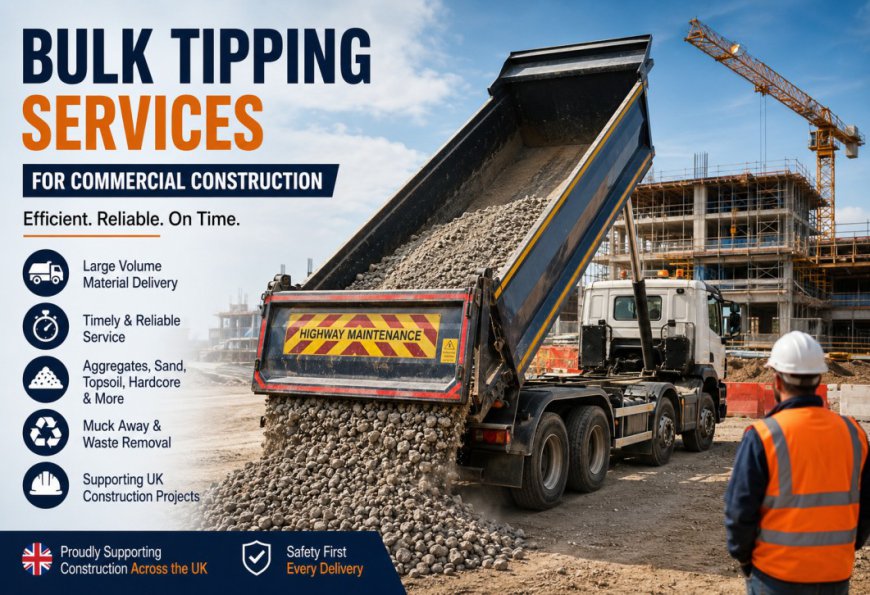
Commercial construction projects in the United Kingdom depend on a steady movement of materials. From aggregates and sand to soil, stone, road planings and construction waste, large volumes of loose materials have to reach the right location at the right time. When those movements are poorly planned, even a productive construction site can quickly lose valuable hours.
This is where bulk tipping services for commercial construction become an important part of project logistics.
Unlike ordinary transport, bulk tipping is designed around loose, high-volume materials that need to be loaded, transported and discharged efficiently. A suitable tipper vehicle can deliver material directly to a designated area, reducing unnecessary handling and helping site teams maintain a consistent workflow.
For UK contractors, developers, civil engineering companies and construction managers, the real value is not simply moving material from A to B. It is creating a dependable supply and removal process that fits the way the construction site actually operates.
What Are Bulk Tipping Services?
Bulk tipping services involve the transportation and controlled discharge of loose or bulk materials using specialist tipping vehicles.
Depending on the project, these services may be used for:
- Sand and aggregates
- Gravel and crushed stone
- Topsoil and subsoil
- Hardcore and MOT-type materials
- Excavated earth
- Road planings
- Construction and demolition materials
- Muckaway requirements
- Recycled aggregates
- Other suitable loose bulk materials
The tipping mechanism allows the load to be discharged without relying entirely on manual unloading. This makes the process particularly useful when a commercial site needs repeated deliveries throughout the day.
The key consideration is matching the vehicle, material and delivery arrangement to the site. A large commercial development may require a very different approach from a smaller building project with restricted access.
Why Commercial Construction Projects Need Bulk Tipping
Construction logistics are often measured in hours rather than days.
A delayed delivery of aggregates may affect ground preparation. A shortage of stone can interrupt road construction. Delayed removal of excavated material can reduce available working space. One transport problem can therefore create several secondary problems.
Bulk tipping services help construction businesses manage this flow more efficiently.
1. Moving Large Volumes More Efficiently
Commercial developments can require substantial quantities of loose materials. Using appropriate bulk tipping vehicles means materials can be transported in practical loads rather than relying on smaller vehicles making unnecessary additional journeys.
This can simplify scheduling and help project managers coordinate deliveries around site operations.
2. Supporting Continuous Site Productivity
A construction site rarely operates as a collection of isolated tasks. Groundworks, drainage, foundations, road construction and landscaping often depend on one another.
When required materials arrive consistently, site teams can continue working instead of waiting for transport.
That reliability can be particularly important on projects operating under tight programmes.
3. Improving Material Handling
Bulk materials are difficult to handle efficiently when every load has to be manually unloaded.
Tipping vehicles are designed to discharge suitable materials quickly at the required location, subject to safe site conditions. This can reduce handling requirements and make the delivery process more practical for busy construction environments.
4. Supporting Muckaway and Excavation Work
Construction is not only about bringing materials onto a site. Large developments can also generate significant quantities of excavated soil and other materials that need to be removed.
Bulk tipping transport can support muckaway operations by moving excavated material away from the construction site, helping keep working areas clear and organised.
This becomes especially valuable during intensive groundworks when excavation volumes can change rapidly from one stage of the project to another.
Common Commercial Construction Applications
Bulk tipping services can support many different types of UK construction work.
Commercial Building Developments
Office buildings, retail developments, industrial units and mixed-use projects often require regular deliveries of aggregates, stone, sand and other bulk materials.
Transport schedules can be organised around individual construction phases, allowing deliveries to match actual site requirements.
Groundworks and Foundations
Ground preparation frequently requires imported stone, hardcore, sand or other suitable materials.
Bulk tipping provides a practical way to deliver these materials close to where they will be used, provided the site has suitable access and unloading arrangements.
Road and Infrastructure Projects
Road construction and infrastructure work can involve substantial quantities of aggregates, road planings and other loose materials.
Because these projects may cover large areas, transport planning becomes particularly important. Delivery points, traffic management, working hours and vehicle movements all need consideration.
Landscaping and External Works
Large commercial landscaping projects may require topsoil, subsoil, stone, aggregates or other materials in significant quantities.
Bulk tipping can make these movements easier to coordinate, particularly where multiple deliveries are required during a short programme.
Demolition and Site Clearance
Following demolition or major excavation, materials may need to be removed from the site.
A planned bulk transport solution can help construction teams maintain usable working space while managing the movement of suitable materials.
Choosing the Right Bulk Tipping Provider
Not every transport provider is equally suitable for commercial construction.
The lowest quoted price is not necessarily the lowest overall project cost. A provider that cannot reliably meet delivery windows, understand site restrictions or scale transport capacity may create delays that cost considerably more than the original saving.
When comparing bulk tipping services UK providers, consider the following.
Vehicle Suitability
The vehicle needs to be appropriate for the material being transported and the site where it will be discharged.
Different projects have different requirements, so discuss the load type, estimated quantities, access conditions and delivery locations before booking.
Reliability and Communication
Construction schedules can change quickly. Good communication between the contractor and transport provider helps deal with changes before they become major disruptions.
A dependable provider should understand delivery instructions and communicate effectively when circumstances affect the planned schedule.
Site Access
A construction site may have narrow entrances, temporary roads, overhead restrictions, weight limitations or designated delivery areas.
These details should be considered before vehicles arrive.
Good logistics planning starts before the truck reaches the gate.
Capacity and Scalability
A small project may require only occasional tipping movements, while a major commercial development could require multiple vehicles and repeated deliveries.
Choose a provider capable of scaling its service around the project's workload rather than forcing the project to adapt to limited transport capacity.
Experience With Construction Logistics
Construction transport is different from general freight.
Drivers and transport teams working regularly around construction environments are more likely to understand the importance of delivery instructions, site coordination, safe positioning and changing ground conditions.
How Bulk Tipping Can Help Control Construction Costs
Construction cost control is not simply about finding the cheapest transport rate.
A better question is: How much does the entire material movement process cost the project?
Consider a delivery that arrives late. A machine may remain unused. Workers may have to move onto another task. A programme milestone may be affected. Additional plant hire could be required.
The original transport saving can quickly disappear.
Efficient bulk tipping can contribute to cost control by helping reduce unnecessary journeys, improve material movement and keep site operations better coordinated.
The exact financial benefit will depend on factors such as distance, material type, vehicle capacity, delivery frequency, fuel costs, site conditions and project scale. However, efficient logistics planning can make a meaningful difference over hundreds or thousands of vehicle movements.
Bulk Tipping and Sustainability
Sustainability has become increasingly important within UK construction.
Transport is one part of the wider environmental picture, and businesses are looking for practical ways to reduce unnecessary movement and improve resource efficiency.
Where appropriate, consolidating material movements and planning efficient routes can help avoid avoidable journeys. The use of suitable recycled aggregates can also support resource efficiency where the material meets the project's technical requirements.
However, sustainability should never be reduced to a simple claim that "fewer journeys always means lower impact." Vehicle type, load utilisation, route distance, traffic conditions and material sourcing all influence the overall result.
For commercial construction companies, the better approach is to look at the complete logistics chain.
Planning Bulk Tipping for a Construction Project
The most effective bulk tipping arrangements are planned before deliveries begin.
Project teams should establish:
- What materials are required?
- How much material is needed?
- Where will the material come from?
- Where must it be delivered or removed?
- What vehicle access is available?
- What are the site's delivery hours?
- How frequently are loads required?
- Are there temporary traffic-management arrangements?
- What happens if weather or site conditions cause delays?
- Who is responsible for coordinating the transport schedule?
Providing accurate information at the quotation stage can help the transport provider recommend a more appropriate solution.
Bulk Tipping Services for UK Construction: What Good Looks Like
A strong bulk tipping operation should feel almost invisible to the construction team.
Materials arrive when they are needed. Drivers know where to go. Loads are discharged in the correct area. Communication is maintained. Collection and delivery schedules can adapt when project requirements change.
That is the real objective.
The best bulk tipping services for commercial construction are not simply about having a tipper truck available. They are about integrating transport into the wider construction programme.
For contractors and project managers, this means treating haulage as part of project planning rather than an afterthought.
Frequently Asked Questions
What are bulk tipping services used for in commercial construction?
Bulk tipping services are used to transport and discharge loose materials such as aggregates, sand, stone, soil, hardcore, road planings and suitable construction materials. They can also support excavation and muckaway operations.
How do bulk tipping services benefit construction companies?
They can help construction companies move large quantities of loose material efficiently, reduce unnecessary handling and support a more consistent flow of materials to and from the site.
Can bulk tipping vehicles remove excavated soil?
Yes, suitable tipping vehicles can be used for excavation and muckaway requirements, subject to the material, vehicle suitability, site conditions and applicable waste and transport requirements.
How far in advance should I arrange bulk tipping?
For planned commercial projects, arranging transport as early as possible is advisable. Providing expected volumes, dates, delivery locations and site restrictions allows the haulage provider to plan vehicle capacity and scheduling more effectively.
Can bulk tipping services support large construction projects?
Yes. Bulk tipping can be scaled according to project requirements, with transport schedules arranged around the expected volume and frequency of material movements.
What materials can bulk tipping vehicles transport?
This depends on the vehicle and service provider, but common construction-related loads include aggregates, sand, gravel, stone, soil, hardcore, road planings and other suitable loose materials.
Are bulk tipping services suitable for restricted construction sites?
They can be, but site access must be assessed before delivery. Factors such as entrance width, turning space, ground conditions, overhead restrictions and unloading areas should be considered.
How can I reduce bulk tipping costs?
Start with accurate volume estimates, plan delivery schedules, avoid unnecessary journeys, coordinate deliveries with site activities and select vehicles appropriate for the required loads. Comparing providers on reliability and total project value rather than price alone can also help.
What should I tell a bulk tipping company when requesting a quote?
Provide the material type, estimated quantity, collection and delivery locations, preferred dates, required frequency, site access information and any relevant delivery restrictions. The more accurate the information, the more useful the quotation is likely to be.
Final Thoughts
Commercial construction depends on movement. Materials need to arrive, excavated material needs to leave, and every transport movement has to fit into an already busy working environment.
That is why bulk tipping services for commercial construction should be considered part of the project's logistics strategy rather than simply another transport expense.
For UK construction companies, the right bulk tipping arrangement can support smoother material handling, more organised site operations and better control over project schedules. Whether the requirement involves aggregate deliveries, groundworks, muckaway, infrastructure construction or commercial development, choosing a capable and responsive transport partner can make the movement of bulk materials considerably easier.
The strongest results come from planning early, communicating clearly and matching the transport solution to the actual demands of the construction site.
In a sector where a few hours of lost productivity can have a much wider financial impact, reliable bulk tipping is not just about moving material. It is about keeping the project moving.