E-Waste Recycling Plant Licences in India: A Complete Guide for New Businesses
Learn about E-Waste Recycling Plant Licences in India, including registration, approvals, documents, CPCB requirements, and compliance for new businesses.
 upendrasharma
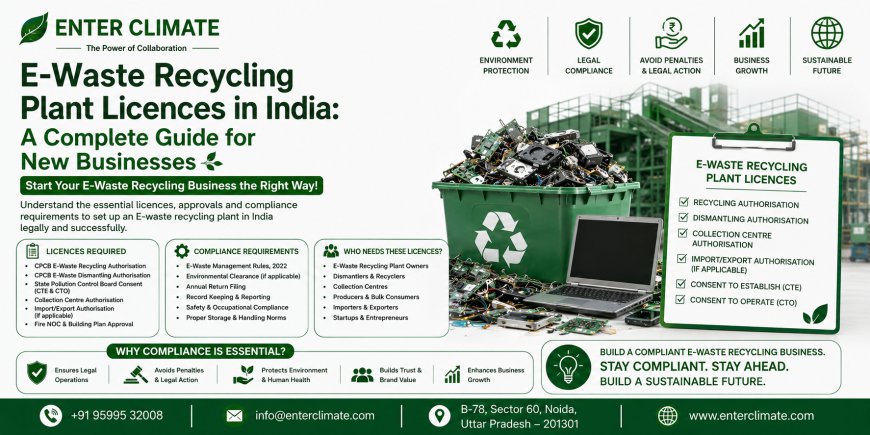
Starting a business in the waste recycling sector can be a smart way to earn money while helping the environment. One such opportunity is an E-Waste Recycling Plant. Old computers, mobile phones, televisions, printers, and other electronic items contain materials that can be recovered and reused.
But before starting this business, you need the right approvals and licences. In this guide, let us understand the basic requirements in simple language.
What Is an E-Waste Recycling Plant?
An e-waste recycling plant is a facility where unwanted electronic products are collected, sorted, dismantled, and processed. Useful materials such as metals, plastics, and other components can be recovered instead of sending everything to landfills.
However, electronic waste can contain harmful substances. That is why the government has rules to make sure recycling is done safely.
Why Do You Need E-Waste Recycling Plant Licences?
You cannot simply rent a building, bring in old electronic products, and start recycling them. Businesses must follow environmental rules and obtain the required permissions.
The main purpose of E-waste Recycling Plant licences is to make sure that:
-
E-waste is handled safely.
-
Recycling activities do not harm people or the environment.
-
Hazardous materials are managed properly.
-
Waste is processed according to government requirements.
-
Records and reports are maintained correctly.
The exact approvals can depend on your plant location, capacity, activities, and type of waste being handled.
Important Approvals for an E-Waste Recycling Business
A new business may need several registrations and permissions. These can include:
1. Pollution Control Board Approval
Businesses generally need consent from the concerned State Pollution Control Board. Depending on the stage of the project, this may include Consent to Establish (CTE) and Consent to Operate (CTO).
2. E-Waste Recycling Authorisation
An eligible recycling facility needs to follow the applicable e-waste management rules and obtain the required registration/authorisation through the prescribed system.
3. Factory and Local Approvals
Depending on the plant and location, other approvals may be required, such as factory-related permissions, fire safety approval, local authority permissions, electricity-related approvals, and business registrations.
4. Environmental Compliance
A recycling plant must have suitable systems for pollution control, safe storage, worker safety, and handling of different types of waste.
Because the approval process can be different for every project, it is useful to check the requirements before investing in machinery or land.
What About Other Manufacturing Businesses?
The same basic idea applies to many other industries. For example, someone planning a Food Processing Business setup may need food-related registrations, pollution control permissions, factory approvals, and other licences.
Similarly, an Electronic manufacturing Plant Set Up may require different approvals depending on the products manufactured and the processes used.
A Glass industry set up can also involve environmental permissions because manufacturing may include furnaces, fuel use, emissions, wastewater, and industrial waste.
So, whether you are recycling electronics or setting up a manufacturing unit, checking compliance requirements at the beginning can save time and money later.
Steps to Start an E-Waste Recycling Plant
Starting the plant becomes easier when you follow a proper plan:
Step 1: Select the business activity
Decide whether you will recycle, dismantle, refurbish, or carry out another permitted activity.
Step 2: Choose a suitable location
Make sure the selected site is suitable for the proposed industrial activity and meets local requirements.
Step 3: Prepare the plant plan
Plan your machinery, storage areas, waste-handling systems, worker safety arrangements, and pollution-control measures.
Step 4: Apply for required approvals
Identify and apply for the relevant pollution control and other statutory permissions.
Step 5: Set up the plant
Install machinery and safety systems according to the approved plan.
Step 6: Maintain records and compliance
After starting operations, continue maintaining records, returns, reports, and other documents required under applicable rules.
Why Take Professional Compliance Support?
Environmental regulations can sometimes feel confusing, especially for someone starting their first business. A small mistake in documentation or approval requirements can delay the project.
Companies such as Enterclimate help businesses understand environmental compliance requirements and guide them through applicable registrations, approvals, and documentation.
Professional support can help a new entrepreneur understand what approvals are needed, when to apply, and what compliance work must continue after the plant starts operating.
Final Thoughts
An e-waste recycling business can be a valuable opportunity because it supports both resource recovery and environmental protection. But the business should be started legally and responsibly.
Before investing in land, machinery, or equipment, understand the E-waste Recycling Plant licences and other approvals applicable to your project. With proper planning and compliance, a recycling plant can become a sustainable and responsible business.
Author Profile
Upendra Sharma is an Environmental Compliance Consultant who works on environmental licensing, EPR, waste management, and regulatory compliance. He helps businesses understand environmental requirements and make their operations more compliant and sustainable. Upendra Sharma is associated with Enterclimate, an environmental compliance consultancy supporting businesses with licensing, EPR, waste management, and related environmental services.