How Accurate Are Online IQ Tests Without a Psychologist
Online IQ tests have made it easier than ever to explore cognitive abilities from home. Instead of scheduling an appointment with a psychologist, people can open a website, answer a series of questions, and receive an IQ score within minutes. This convenience raises an important question: how accurate are online IQ tests when they are completed without a psychologist
 jhonreid
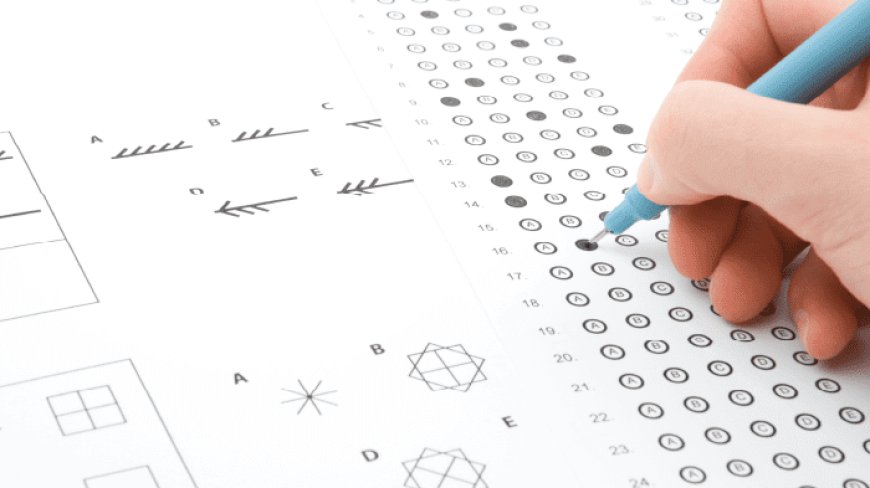
Online IQ tests have made it easier than ever to explore cognitive abilities from home. Instead of scheduling an appointment with a psychologist, people can open a website, answer a series of questions, and receive an IQ score within minutes. This convenience raises an important question: how accurate are online IQ tests when they are completed without a psychologist?
The answer depends on the quality of the assessment and how its results are interpreted. Online IQ tests can provide an interesting estimate of performance on certain reasoning tasks, but they do not automatically provide the same level of accuracy or interpretation as a professionally administered intelligence assessment. Understanding their strengths and limitations can help you decide how much confidence to place in an online result.
What Does an IQ Test Actually Measure?
IQ tests are designed to measure particular aspects of cognitive functioning. Depending on the assessment, these may include logical reasoning, verbal comprehension, working memory, processing speed, numerical reasoning, and visual-spatial skills.
A professionally developed intelligence test is carefully constructed so that questions measure specific cognitive abilities. Scores are then compared with results from an appropriate reference population.
However, intelligence is a broad concept. An IQ score does not measure every ability that contributes to success in school, work, relationships, or everyday life. Creativity, motivation, emotional skills, practical judgment, communication, persistence, and specialized knowledge are examples of abilities that may not be adequately represented by a single IQ score.
How Accurate Are Online IQ Tests?
When asking how accurate are online iq tests it is important to distinguish between an online cognitive quiz and a scientifically validated assessment.
Some online tests are designed using legitimate principles of psychological measurement. They may contain well-constructed reasoning questions and use statistical methods to estimate scores. Such tests can provide useful information about how a person performs on the tasks included.
Other online tests are primarily created for entertainment or marketing. They may offer an impressive-looking IQ number without providing enough information about how the test was validated.
A score from an online test should therefore be viewed as an estimate unless there is strong evidence supporting the test's reliability and validity.
Why a Psychologist Can Make a Difference
A psychologist does more than simply give someone a list of questions. Professional assessment involves standardized administration, observation, scoring, and interpretation.
Testing conditions can affect performance. A psychologist can provide clear instructions, maintain appropriate testing conditions, and monitor factors that might interfere with the assessment.
Professional interpretation is also important. A psychologist can consider the individual's background and circumstances rather than looking at one number in isolation.
For example, if someone performs particularly well on verbal reasoning but less well on processing speed, a professional can examine the pattern of results and determine whether it has meaningful implications.
An online test generally cannot provide this level of personalized interpretation.
Can You Get an Accurate IQ Score at Home?
You can complete an IQ-style assessment at home, but obtaining a precise and professionally meaningful IQ score is more complicated.
The testing environment may influence your performance. Noise, interruptions, phone notifications, poor lighting, fatigue, stress, or other distractions can affect concentration.
There may also be differences in technology. A person completing a test on a large computer monitor may have a different experience from someone using a small smartphone screen.
If the test is timed, these environmental factors can become particularly important.
Taking an online test in a quiet environment with adequate sleep and no distractions can improve the quality of the testing experience. However, good conditions alone do not turn an informal online quiz into a standardized professional assessment.
Reliability and Validity Matter
Two important concepts are reliability and validity.
Reliability refers to consistency. If a person takes the same assessment under similar conditions, a reliable test should generally produce reasonably consistent results.
Validity refers to whether the assessment actually measures what it claims to measure. A test might be consistent without being a valid measure of intelligence.
For example, an online quiz could consistently measure a person's ability to solve a particular type of puzzle. That does not necessarily mean its final number accurately represents their overall IQ.
When evaluating an online test, look for information about both reliability and validity.
Why Online IQ Scores Can Differ
People often discover that they receive different IQ scores from different websites. This is not surprising.
Online assessments can differ in their questions, difficulty levels, time limits, scoring systems, and comparison groups. One test may emphasize visual patterns, while another may focus on vocabulary or numerical reasoning.
The reference population can also make a difference. An IQ score has meaning partly because it compares performance with that of other people in a relevant population.
If an online test uses an unclear or poorly constructed reference sample, the resulting score may not be particularly meaningful.
For this reason, taking several free online IQ tests and choosing the highest result is not a reliable way to determine your true IQ.
The Problem With Precise Numbers
One of the biggest issues with online IQ testing is the appearance of precision.
A website might tell you that your IQ is 117 or 132. A highly specific number can create the impression that your intelligence has been measured with great accuracy.
In reality, psychological measurements involve uncertainty. Even professionally administered assessments should be interpreted within the context of the test's measurement characteristics.
An online score should therefore not be interpreted as an exact permanent value. It is better understood as an estimate based on your performance on a particular assessment at a particular time.
Practice Effects Can Change Results
Repeated testing can also influence scores. Once people become familiar with common IQ question formats, they may learn strategies that help them solve similar problems more quickly.
For example, someone who has completed many tests involving numerical sequences may become familiar with common patterns. Their later performance could improve partly because of practice rather than a fundamental change in cognitive ability.
This means repeatedly taking online IQ tests can make comparisons between scores difficult.
Does Online Testing Work Equally Well for Everyone?
Not necessarily. Language, education, culture, technology experience, and familiarity with test formats can all influence performance.
Someone taking a test in a language they do not speak fluently may find verbal questions more difficult. Similarly, a person who has extensive experience with logic puzzles may be more comfortable with the question formats.
Education can also influence certain types of test performance. Although well-designed intelligence assessments attempt to minimize irrelevant influences, informal online tests may not do this effectively.
Consequently, a score should always be interpreted within its limitations.
When an Online IQ Test Can Be Useful
Online IQ tests can still have legitimate uses.
They can provide entertainment and intellectual stimulation. They can also introduce people to different types of reasoning problems, including sequences, analogies, spatial puzzles, and logical challenges.
For someone who is simply curious about how they perform on these tasks, an online assessment may be perfectly reasonable.
The key is to understand what the test can and cannot tell you.
An online IQ score can suggest how you performed on the specific tasks included in the assessment. It should not automatically be used to make important decisions about education, employment, mental health, or personal potential.
How to Choose a Better Online IQ Test
If you want to try an online IQ test without a psychologist, look for signs that the assessment has been developed responsibly.
Consider whether the website provides information about:
-
The qualifications of the test developers
-
The research behind the assessment
-
Reliability and validity data
-
The population used to establish scoring norms
-
The cognitive abilities being measured
-
The method used to calculate scores
-
Appropriate age ranges
-
Limitations of the test
Be cautious if a website makes extraordinary claims, provides a score without explaining its methodology, or suggests that a few minutes of puzzles can reveal every aspect of your intelligence.
A trustworthy assessment should be transparent about what it measures and what its results mean.
When You Should Consider Professional Testing
There are situations where an online test is not an adequate substitute for professional assessment.
For example, someone may need a formal cognitive evaluation for educational planning, psychological assessment, or another important purpose. In such cases, a standardized assessment administered and interpreted by an appropriately qualified professional is generally more suitable.
Professional testing can provide more than a single number. It can reveal patterns across different cognitive abilities and help explain areas of relative strength and difficulty.
This information can be much more useful than an isolated online score.
Can You Trust Your Online IQ Result?
You can treat an online IQ result as a general estimate, particularly if the test comes from a transparent and well-designed provider. However, you should avoid treating the number as an unquestionable measurement of your intelligence.
A high score does not prove that someone will succeed in every academic or professional environment. Likewise, a lower online score does not establish that someone has limited intellectual potential.
Performance can change depending on sleep, concentration, stress, familiarity, motivation, and testing conditions.
Most importantly, intelligence is multidimensional. A single score cannot fully describe how someone learns, creates, communicates, adapts, or solves real-world problems.
Final Verdict
So, how accurate are online IQ tests without a psychologist? They can range from reasonably informative to largely recreational. The absence of a psychologist does not automatically make an online assessment inaccurate, but it does remove important elements of standardized administration and professional interpretation.
A well-designed online test may give you a useful estimate of your performance on selected cognitive tasks. However, the exact IQ number should be treated cautiously, especially when the test provides little information about its scientific development.
If you are taking an online IQ test for fun or personal curiosity, enjoy the experience without putting too much importance on the final score. If you need a dependable assessment for an important decision, professional testing remains the more appropriate option.
Ultimately, an IQ score is one piece of information, not a complete definition of intelligence. The most useful approach is to view online results as estimates that can provide insight and curiosity, while recognizing the limitations of testing without professional supervision.