India Plant-Based Milk Market 2026–2034: Size, Industry Trends, Growth Outlook and Research Report
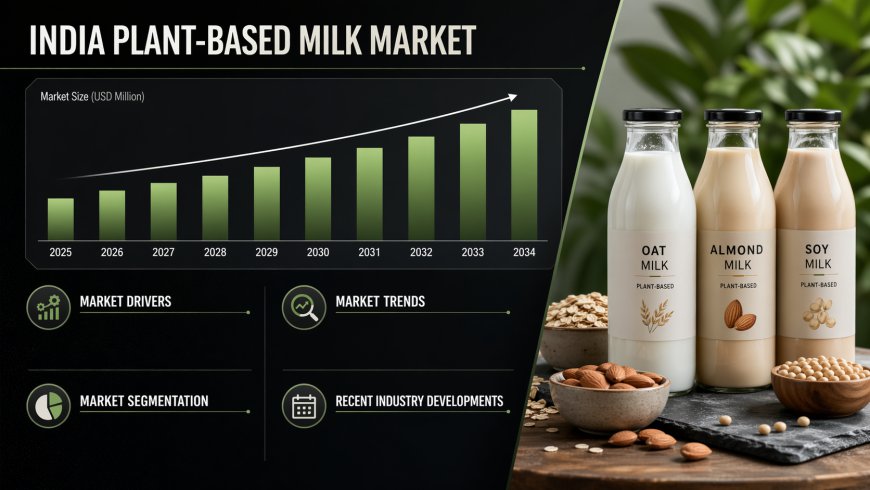
The India plant-based milk market reached USD 857.7 Million in 2025 and is projected to reach USD 1,828.0 Million by 2034, growing at a CAGR of 8.33% during 2026-2034.
 Samwalter
India Plant-Based Milk Market: Outlook
The report titled "India Plant-Based Milk Market Size, Share, Trends and Forecast by Product, Formulation, Category, Form, Distribution Channel, and Region, 2026–2034" comprises the overall market analysis of India, size, growth trends, key drivers, and regional insights of the plant-based milk market in India and other important aspects related to the report.
How Big is the India Plant-Based Milk Market?
The India plant-based milk market size reached USD 857.7 Million in 2025. Looking forward, IMARC Group expects the market to reach USD 1,828.0 Million by 2034, exhibiting a growth rate (CAGR) of 8.33% during 2026–2034. The market is experiencing robust expansion driven by surging clinical awareness of lactose intolerance, the rapid mainstreaming of barista-grade oat milk in café cultures, and aggressive quick-commerce distribution penetrating highly affluent urban households.
What are the Key Developments and Emerging Trends in the India Plant-Based Milk Market?
-
Oat Milk’s Dominance in the HoReCa Sector: While soy and almond historically led retail sales, barista-grade oat milk is completely disrupting the Hotel, Restaurant, and Café (HoReCa) sector. Valued for its superior micro-foam stability and neutral taste profile that does not overpower coffee, oat milk is now the default premium dairy alternative across both artisanal coffee roasters and major mainstream café chains across Tier-1 cities.
-
Nutritional Parity Through Blends and Fortification: Early iterations of plant-based milks faced criticism for lacking the natural protein density of cow's milk. To bridge this nutritional gap, Indian brands are heavily innovating with proprietary blends (e.g., combining oat for creaminess with soy or pea for protein). These next-generation milks are aggressively fortified with Calcium, Vitamin D, and Vitamin B12 to directly replicate the exact nutritional profile of traditional dairy.
-
Regulatory Standardization via FSSAI’s Vegan Logo: The market is undergoing massive formalization driven by the Food Safety and Standards Authority of India (FSSAI). The strict enforcement of the legally backed "Vegan" certification logo ensures zero cross-contamination with dairy in shared manufacturing facilities. This regulatory clarity is decisively eliminating greenwashed products and building absolute consumer trust in premium clean-label brands.
-
Hyper-Local Q-Commerce Dependency: Because extensive cold-chain infrastructure remains a bottleneck outside major metropolitan hubs, domestic direct-to-consumer (D2C) brands are heavily leveraging 10-minute delivery platforms (like Zepto, Blinkit, and Swiggy Instamart). This digital strategy bypasses traditional, fragmented retail supply chains, ensuring rapid product turnover and catering directly to the impulse purchasing behaviors of urban millennials.
➤ Request Sample Report (TOC & Charts): https://www.imarcgroup.com/india-plant-based-milk-market/requestsample
What Factors are Driving Growth in the India Plant-Based Milk Market?
-
Rising Clinical Diagnosis of Lactose Intolerance: India has a remarkably high, yet historically underdiagnosed, prevalence of lactose malabsorption. As diagnostic testing becomes more accessible and gastroenterologists actively recommend dairy-free diets to combat chronic bloating and gut inflammation, plant-based milk is rapidly transitioning from a niche lifestyle choice to a vital medical and dietary necessity.
-
The Rise of the Urban Flexitarian: The market is no longer solely dependent on strict vegans. A massive demographic of health-conscious "flexitarians" is driving volumetric growth. These consumers continue to consume traditional dairy for certain cultural foods (like ghee or curd) but actively substitute regular milk with almond or oat milk in their daily smoothies, protein shakes, and morning coffees to reduce cholesterol and caloric intake.
-
Localization of Extraction and Packaging Infrastructure: Historically, the prohibitive cost of imported plant milks alienated mass-market consumers. However, intense capital investment into domestic extraction facilities and local aseptic tetra-packaging is drastically lowering production costs. By shrinking the price premium between alternative milks and A2 dairy milk, brands are successfully unlocking high-volume trial purchases among the upper-middle class.
-
Corporate ESG and Institutional Wellness Initiatives: Major IT parks, multinational corporate campuses, and luxury hospitality chains are increasingly mandating the inclusion of plant-based milks in their cafeterias. This B2B procurement is heavily driven by dual objectives: meeting the dietary demands of a Gen-Z workforce and aligning with corporate Scope 3 emission reduction targets by promoting lower-carbon food alternatives.
How will the India Plant-Based Milk Market Evolve in the Coming Years?
The India plant-based milk market is positioned for solid and sustained expansion throughout the forecast period, transitioning from an imported luxury novelty into a locally manufactured, highly functional lifestyle staple. The convergence of domestic ingredient sourcing, aggressive Q-commerce distribution, and café-led consumer exposure will heavily compound long-term market viability.
The market generated a revenue of USD 857.7 Million in 2025 and is projected to reach USD 1,828.0 Million by 2034, growing at a compound annual growth rate (CAGR) of 8.33% from 2026–2034. Unflavored formulations will definitively maintain volumetric dominance due to their immense versatility in cooking and daily beverage applications, while organic and clean-label segments will continuously outpace overall industry growth, securing higher profit margins.
Investment & Growth Opportunities
-
Scaling Domestic Oat and Pea Processing: Institutional investors should focus heavily on the localized milling and enzymatic extraction of oats and yellow peas. Funding domestic B2B ingredient suppliers eliminates reliance on expensive imported oat-bases, allowing consumer brands to drastically lower retail price points and aggressively capture price-sensitive demographics.
-
Single-Serve and On-the-Go Formats: There is a highly lucrative opportunity in backing the production of affordable, 200ml single-serve cartons. Developing flavored, protein-fortified plant-milk tetra-packs explicitly positioned as convenient, on-the-go school lunches or post-workout recovery drinks guarantees massive volume growth and deeper penetration into general trade (kirana) stores.
-
Precision Fermentation and Next-Gen Dairy Alternatives: Capitalizing on deep-tech food science offers a massive frontier. Deploying capital into biotechnology startups utilizing precision fermentation to create dairy-identical whey and casein proteins without the cow ensures absolute market disruption, completely bridging the taste and texture gap for uncompromising consumers.
➤ Explore the Full Report with Charts, Table of Contents, and List of Figures: https://www.imarcgroup.com/india-plant-based-milk-market
Deep-Dive Segment Insights
-
By Product: The market is segmented into Soy Milk, Almond Milk, Coconut Milk, Rice Milk, Oat Milk, and Others. Soy Milk and Almond Milk historically dominate the volumetric share due to early market entry and widespread consumer familiarity. However, Oat Milk represents the fastest-growing sub-segment, aggressively capturing premium market share due to its superior performance in hot beverages and lower environmental water footprint.
-
By Formulation: Segmented into Unflavored and Flavored. Unflavored plant-based milk holds the dominant position with a 58.4% market share in 2025. Its supremacy is heavily driven by its unparalleled versatility as a direct 1:1 dairy substitute in home cooking, baking, and daily tea/coffee preparation, guaranteeing highly consistent, recurring household purchases.
-
By Category: Segmented into Organic and Conventional. The Conventional category leads with a commanding 74.2% share in 2025, favored heavily for its wider retail availability and competitive pricing. Conversely, the Organic segment is the fastest-growing category, driven by affluent, eco-conscious consumers actively seeking clean-label, pesticide-free products.
-
By Form: Categorized into Liquid and Powder. The Liquid form holds absolute dominance, serving as the standard, ready-to-consume format for both retail buyers and commercial cafés.
-
By Distribution Channel: Divided into Business-to-Business (B2B) and Business-to-Consumer (B2C). The B2C segment—encompassing Modern Groceries, Convenience Stores, Specialty Stores, and Online Retail—commands the majority share, highly accelerated by the aggressive expansion of quick-commerce platforms that deliver ambient and chilled cartons directly to homes.
-
By Region: The market is divided into North India, West and Central India, South India, and East and Northeast India.
-
North India: Represents the absolute market leader with a 28.9% share in 2025. This dominant position is heavily fueled by extreme health consciousness, exceptionally high per-capita incomes, and a dense, thriving specialty coffee culture across the Delhi-NCR and Chandigarh corridors.
-
Competitive Landscape & Key Company Insights:
The India plant-based milk market exhibits a highly dynamic, rapidly formalizing competitive landscape. The sector is fiercely contested by agile domestic D2C startups, global dairy-alternative heavyweights, and legacy Indian FMCG conglomerates entering the fray to defend their beverage portfolios.
Market participants are competing aggressively through localized taste profiles, expansive café partnerships, and aggressive digital marketing targeting lactose-intolerant millennials. Established global brands leverage their immense R&D capabilities to deliver superior barista-grade textures, while domestic challengers compete heavily on competitive pricing, utilizing localized supply chains and rapid digital delivery networks.
Key players actively shaping the competitive environment include:
-
The Hershey Company (Sofit)
-
Blue Diamond Growers (Almond Breeze)
-
Veganday Lifestyle Private Limited (Goodmylk)
-
Bagrry's India Limited
Recent Developments
-
FSSAI Strengthens Vegan Certification Norms (2025–2026): In a massive regulatory overhaul, the Food Safety and Standards Authority of India (FSSAI) significantly tightened its legally backed "Vegan" logo certification. The amended regulations mandate transparent supply chain tracking, strict separation of production lines to prevent dairy cross-contamination, and completely prohibit animal testing, drastically elevating consumer trust across the sector.
-
Dairy Giants Enter Alternative Milk (June 2025): Recognizing the permanent shift in urban dietary habits, leading D2C dairy platform Country Delight officially expanded its portfolio by launching a clean-label Oat Beverage. Utilizing premium Australian oats without artificial preservatives, this strategic launch highlights traditional dairy companies actively hedging their portfolios against the surging demand for plant-based alternatives.
-
Oatly’s Strategic Functional Expansion (2026): Global market leader Oatly aggressively tested and rolled out new functional and flavor-first formats globally—including Matcha Oat Drinks and specialized Barista Editions. This continuous product innovation directly targets the booming specialty café networks across massive emerging markets like India, reinforcing the brand's premium positioning.
Customization Note: If you require any specific information not covered within this report's scope, we will provide it as part of the customization.
➤ Request Report Customization: https://www.imarcgroup.com/request?type=report&id=21107&flag=E
Q1. What is the current size of the India plant-based milk market?
The India plant-based milk market size reached USD 857.7 Million in 2025.
Q2. What is the projected market size by 2034 and the CAGR from 2026 to 2034?
The market is projected to reach USD 1,828.0 Million by 2034, growing at a compound annual growth rate (CAGR) of 8.33% during the 2026–2034 forecast period.
Q3. Which formulation dominates the India plant-based milk market?
Unflavored formulations dominate the market with a 58.4% share in 2025, heavily favored for their immense versatility as a direct dairy substitute in home cooking, baking, and daily hot beverages.
Q4. Which category commands the highest share in the India plant-based milk market?
The Conventional category commands the definitive lead with a 74.2% market share in 2025, primarily driven by its wider retail accessibility and competitive pricing compared to premium organic variants.
Q5. Which region holds the leading position in the India plant-based milk market?
North India represents the absolute market leader with a 28.9% share in 2025, primarily fueled by high health awareness, affluent consumer demographics, and a massive specialty coffee culture across the Delhi-NCR region.
Strategic Insight & Verdict
Through comprehensive data analysis, we observe that the strategic transition toward locally milled, barista-grade oat milk and aggressively fortified proprietary blends represents the most lucrative frontier for stakeholders. Institutional investors and FMCG conglomerates must prioritize capital deployment into localized enzymatic extraction facilities, single-serve ambient tetra-packaging, and B2B partnerships with expanding café chains. Leveraging the immense reach of 10-minute quick-commerce platforms and deeply aligning with India's surging clinical awareness of lactose intolerance will remain the definitive path for securing absolute market dominance through 2034.