Indonesia’s Electric Two-Wheeler Adoption Gains Momentum Through Urban Mobility and Electrification
 Allen92a
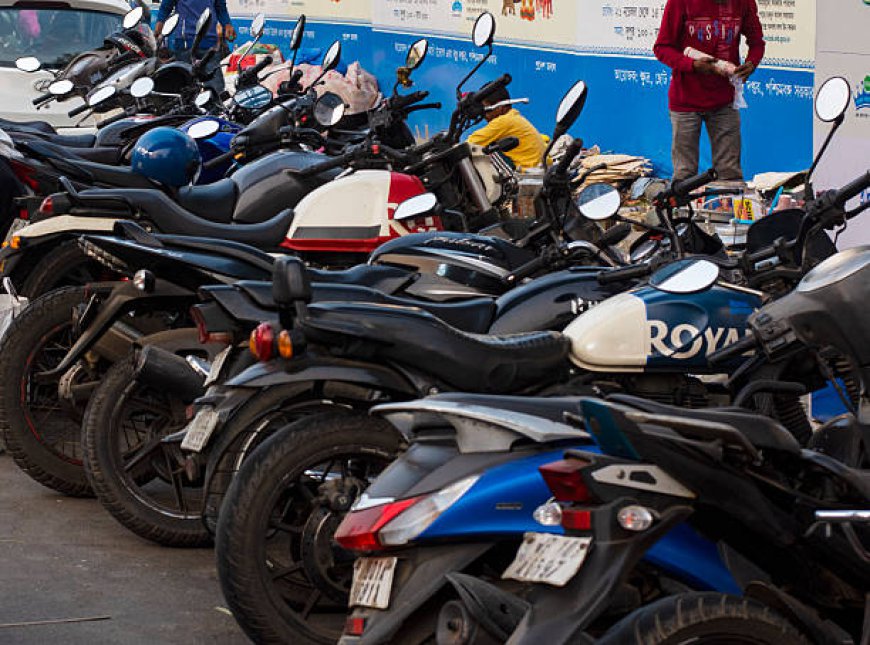
Indonesia is becoming an increasingly important market for electric two-wheelers as consumers, businesses, and policymakers look toward cleaner and more efficient transportation. Electric motorcycles and scooters are particularly relevant to Indonesia because two-wheelers are widely used for commuting, deliveries, and everyday mobility across densely populated cities and surrounding areas.
According to the supplied analysis from Vyansa Intelligence, the Indonesia electric two-wheelers industry was valued at USD 389 million in 2025 and is projected to reach USD 1.07 billion by 2032, expanding at a 15.55% CAGR from 2026 to 2032. Growth is being supported by government electrification initiatives, increasing EV awareness, improving battery technology, expanding charging infrastructure, and the growing use of electric two-wheelers for commercial mobility.
Two-Wheelers Are Central to Indonesian Mobility
Motorcycles play a major role in Indonesia's transportation system. They provide an affordable and flexible way to navigate congested urban areas and are widely used for commuting, personal transportation, and commercial activities.
This established two-wheeler culture provides a strong foundation for electrification.
Unlike passenger cars, electric motorcycles require comparatively smaller battery packs and can be suitable for shorter daily journeys. Their compact dimensions also make them practical in heavily congested cities.
As consumers become more familiar with electric mobility, replacing conventional motorcycles with electric alternatives can become an increasingly attractive option for certain users.
Government Support Encourages EV Adoption
Government policy is an important driver of Indonesia's electric two-wheeler transition.
Indonesia has introduced policies designed to encourage electric vehicle adoption and strengthen domestic EV manufacturing. Incentives and regulatory measures are intended to reduce barriers to adoption while supporting the development of a local electric-vehicle ecosystem.
The Indonesian government has also focused on developing domestic battery and electric-vehicle manufacturing capabilities, recognizing the strategic importance of EV supply chains.
Such policies can influence consumer prices, manufacturer investment, charging infrastructure, and the availability of locally produced components.
Electric Motorcycles Offer Urban Advantages
Electric motorcycles can provide several advantages in urban environments.
Electric drivetrains generally have fewer moving mechanical components than conventional internal-combustion systems. This can reduce certain maintenance requirements while also providing quiet operation.
For urban commuters, the combination of lower operating complexity and convenient charging can make electric motorcycles attractive.
However, the suitability of an electric motorcycle depends on factors including daily travel distance, battery capacity, charging availability, vehicle price, and local riding conditions.
Fuel Costs Influence Consumer Decisions
Operating costs are an important consideration for Indonesian motorcycle users.
Electric motorcycles can potentially reduce energy costs compared with petrol-powered alternatives, depending on electricity prices, charging efficiency, riding patterns, and vehicle characteristics.
For consumers who travel frequently, these savings can become more meaningful over the vehicle's ownership period.
However, buyers also consider the initial purchase price, financing, battery warranty, replacement costs, maintenance, and resale value.
As the electric two-wheeler ecosystem matures, greater consumer awareness of total cost of ownership can influence purchasing decisions.
Delivery Services Create Commercial Demand
Indonesia's expanding digital economy is supporting demand for two-wheelers used in delivery services.
Food delivery, e-commerce, courier operations, and other last-mile services rely heavily on motorcycles.
These high-mileage applications can make electrification particularly attractive because commercial riders may accumulate significantly more kilometres than private users.
Lower energy and maintenance costs can potentially improve fleet economics.
Businesses can also install dedicated charging facilities or use battery-swapping arrangements to minimize downtime.
Battery Swapping Can Address Charging Constraints
Battery swapping is particularly relevant to electric motorcycles because smaller batteries can be easier to remove and exchange than passenger-car battery packs.
A swapping network allows riders to replace depleted batteries with charged units rather than waiting for a complete recharge.
This can be valuable for delivery riders and commercial fleets where every minute of downtime affects productivity.
However, successful battery swapping requires compatible battery designs, standardized systems, sufficient swapping locations, effective battery tracking, and reliable battery quality.
Developing a broad network will therefore require cooperation among vehicle manufacturers, battery companies, infrastructure operators, and policymakers.
Charging Infrastructure Is Expanding
Charging infrastructure remains a major component of Indonesia's EV transition.
Public charging stations can help address the needs of riders who cannot charge at home or require additional energy during the day.
Indonesia's state-owned electricity utility and other organizations have been involved in developing EV charging infrastructure, while government policies continue to encourage charging-network expansion.
The IEA report identifies charging infrastructure as an important component of successful electric-mobility deployment, particularly as EV ownership increases.
For electric two-wheelers, charging solutions can include residential charging, workplace charging, public stations, and battery-swapping networks.
Home Charging Can Support Private Users
Home charging can make electric motorcycles particularly convenient for consumers with secure parking and access to electricity.
Instead of visiting a fuel station, users can charge their vehicle during periods when it is parked, including overnight.
This can make electric two-wheelers well suited to predictable commuting patterns.
However, apartment residents and people without dedicated parking may have more difficulty accessing convenient home charging.
Expanding public charging and swapping options can therefore help broaden adoption beyond households with easy access to private charging.
Battery Technology Continues to Improve
Battery performance remains one of the most important considerations for electric two-wheeler manufacturers.
Advances in battery chemistry, energy density, charging performance, thermal management, and battery-management systems can improve vehicle range and reliability.
Manufacturers are also exploring different battery architectures and chemistry options to balance cost, durability, safety, and performance.
For the Indonesian market, battery technology needs to perform reliably under local environmental conditions, including high temperatures and humidity.
Effective thermal management and battery protection systems can therefore contribute to long-term reliability.
Local Manufacturing Strengthens the Ecosystem
Indonesia has significant ambitions for developing domestic EV and battery production.
The country has substantial nickel resources, which are strategically important for certain lithium-ion battery chemistries.
The development of local processing and battery manufacturing can support the broader electric-vehicle supply chain while reducing dependence on imported components.
For electric two-wheelers, a stronger local ecosystem can potentially support more competitive pricing and improve access to components, batteries, and technical services.
It can also create opportunities for local suppliers and manufacturers.
Connected Technology Adds Product Differentiation
Electric motorcycles are increasingly incorporating digital features such as smartphone applications, GPS tracking, battery monitoring, remote diagnostics, and vehicle-location services.
These technologies can improve the ownership experience while giving manufacturers greater visibility into vehicle performance.
Fleet operators can use connected systems to monitor vehicle utilization, battery status, charging requirements, and maintenance schedules.
As electric two-wheeler competition increases, software and connectivity can therefore become important differentiators alongside conventional specifications such as motor power and range.
Safety and Quality Remain Critical
Battery safety is a major consideration for the continued growth of electric two-wheelers.
Manufacturers need to maintain rigorous quality control across battery cells, battery-management systems, charging equipment, electrical connections, and thermal-management components.
Indonesia's National Standardization Agency and relevant government authorities play roles in developing and implementing standards that support product safety and quality.
For consumers, battery warranty, after-sales service, and manufacturer reputation can increasingly influence purchase decisions.
Affordability Will Shape Wider Adoption
Despite declining technology costs, electric motorcycles can still face higher upfront prices than some conventional alternatives.
Government incentives can help narrow this difference, but long-term adoption will also depend on financing availability and improvements in manufacturing scale.
Installment financing, leasing, fleet programs, and other ownership models can make electric motorcycles accessible to a wider range of consumers.
Manufacturers that can combine affordable pricing with reliable performance and strong after-sales support may be better positioned to expand beyond early adopters.
Urban Expansion Creates Further Opportunities
Jakarta and other major urban areas represent important opportunities for electric two-wheelers, but long-term growth can extend to secondary cities and regional communities.
As charging infrastructure and distribution networks expand, electric motorcycles can become more practical across a broader geographic area.
Commercial fleets may also help accelerate adoption because centralized charging or battery-swapping infrastructure can make electrification easier to manage.
This could create a gradual transition from early urban adoption toward wider national deployment.
Outlook for Indonesia’s Electric Two-Wheeler Industry
Indonesia's electric two-wheelers industry is entering a period of substantial development as government initiatives, urban mobility needs, commercial fleet demand, battery innovation, and charging infrastructure converge.
Future growth will depend on more than vehicle availability. Affordable pricing, battery reliability, charging access, swapping networks, financing, local manufacturing, and after-sales service will all influence consumer confidence.
For manufacturers, energy companies, fleet operators, and infrastructure providers, Indonesia offers significant opportunities to participate in the transition from conventional motorcycles toward electric mobility. As the ecosystem matures, electric two-wheelers can become an increasingly important component of Indonesia's urban and commercial transportation system.