Key Advantages of Healthcare Solutions for Better Patient Care
Healthcare solutions are digital systems, tools, and services created to solve challenges in the healthcare industry
 amginnovative
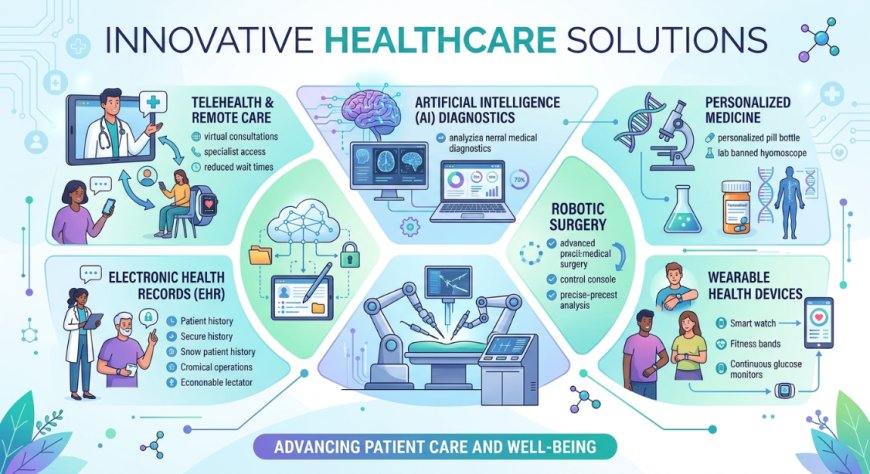
Healthcare is changing rapidly as technology becomes an important part of medical services. Hospitals, clinics, and healthcare organizations need reliable ways to manage patient information, improve communication, reduce delays, and provide better care. Modern healthcare solutions can help meet these needs by bringing useful digital tools into daily healthcare work.
The advantages of healthcare solutions go beyond simple automation. They can improve patient experiences, support healthcare professionals, reduce administrative work, and help organizations manage information more effectively. When technology is planned around real healthcare needs, it can create a more efficient and patient-focused system.
What Are Healthcare Solutions?
Healthcare solutions are digital systems, tools, and services created to solve challenges in the healthcare industry. They may include patient portals, electronic health records, appointment systems, telehealth platforms, mobile applications, communication tools, and data management systems.
Different healthcare organizations have different requirements. A small medical clinic may need an appointment and patient management system, while a large hospital may need a connected platform for departments, staff, records, billing, and patient communication.
The right solution should be secure, simple, reliable, and easy for both patients and healthcare workers to use. A well-designed system can support daily tasks while improving the overall quality of healthcare services.
Improved Patient Care
One of the biggest advantages of healthcare solutions is improved patient care. Patients want convenient access to medical services, clear information, and quick communication with healthcare providers.
Digital appointment systems can make scheduling easier, while patient portals can allow users to access information without making repeated phone calls. Automated reminders can also help patients remember appointments and follow-up visits.
By making routine processes easier, technology gives healthcare professionals more time to focus on patient needs. This can create a smoother experience and improve patient satisfaction.
Better Access to Healthcare Services
Healthcare technology can make medical services easier to access. Patients who live far from healthcare facilities or have difficulty traveling may benefit from digital services such as telehealth.
Remote consultations can support certain follow-up appointments and basic healthcare discussions without requiring patients to visit a facility every time. This can save time for both patients and healthcare teams.
Digital access does not replace traditional medical care in every situation. However, it can provide an additional option that makes healthcare more convenient and flexible.
Reduced Administrative Work
Healthcare professionals often spend a significant amount of time handling administrative tasks. Appointment scheduling, data entry, documentation, billing, and patient communication can take time away from patient-focused work.
Healthcare solutions can automate or simplify many repetitive tasks. Online forms can reduce manual data entry, while automated reminders can help manage appointments. Digital records can also make it easier to organize and access important information.
Reducing unnecessary administrative work can help healthcare teams use their time more effectively. Staff can focus on tasks that require professional knowledge, communication, and human attention.
Better Healthcare Data Management
Healthcare organizations manage large amounts of sensitive information every day. Patient history, test results, treatment records, appointments, and other details must be organized carefully.
Digital healthcare systems can help store and manage this information in a structured way. Authorized staff can access important records more quickly, which can support better coordination between departments and healthcare providers.
Good data management can also reduce problems caused by missing or difficult-to-find information. When healthcare professionals have access to accurate records, they can work with a clearer view of the patient’s needs.
Supporting Healthcare Digital Transformation
Healthcare Digital transformation is another major advantage of modern technology. It involves using digital tools to improve the way healthcare organizations operate, communicate, and deliver services.
Healthcare Digital transformation is not only about replacing paper documents with digital files. It can involve redesigning processes to make them faster, simpler, and more useful for patients and staff.
For example, a healthcare organization can connect appointment systems, patient portals, communication tools, and digital records to create a more connected experience. This can reduce repeated work and improve information flow.
A successful transformation can also help healthcare organizations respond to changing patient expectations. As people become more comfortable with digital services, they may expect healthcare providers to offer similar convenience.
AI Chatbots in Healthcare
AI Chatbots in Healthcare can provide another useful way to improve patient communication. Chatbots can answer common questions, provide general information, guide users through simple processes, and support appointment-related tasks.
For example, a chatbot can help a patient find clinic hours, understand appointment procedures, or locate information on a healthcare website. It can provide basic support at any time, including outside normal working hours.
AI Chatbots in Healthcare can reduce the number of simple questions handled directly by staff. This allows employees to focus on more complex patient needs.
However, chatbots should not replace qualified medical professionals. They should be used for suitable tasks and should direct patients to healthcare professionals when a question requires medical judgment or urgent attention.
Improved Communication
Clear communication is essential for good healthcare. Patients need understandable information, and healthcare teams need accurate details to coordinate their work.
Digital communication tools can support appointment reminders, secure messages, notifications, and patient updates. Patient portals can give people a central place to access information and communicate with healthcare providers.
Better communication can reduce confusion and delays. It can also help patients feel more informed about their healthcare journey.
Better Patient Experience
Technology can make healthcare more convenient for patients. Instead of waiting on the phone or visiting a facility for simple tasks, patients may be able to complete some activities online.
Online appointment booking, digital forms, patient portals, and remote communication can reduce unnecessary effort. These features can make healthcare services easier to access and use.
A positive digital experience can also improve a patient’s overall view of a healthcare organization. Simple and reliable systems show that the provider values the patient’s time and needs.
Improved Healthcare Efficiency
Efficiency is important for hospitals and clinics because healthcare teams often work under pressure. Digital systems can help organize tasks, reduce repeated work, and make information easier to access.
Automation can handle routine activities while staff focus on work that needs human attention. Connected systems can also reduce the need to enter the same information into multiple platforms.
Better efficiency can help organizations use their available resources more effectively. It can also reduce delays and support smoother daily operations.
Stronger Data Security
Healthcare information is highly sensitive, so security must be a key part of any digital system. Modern healthcare solutions can include access controls and other security features to help protect patient information.
Only authorized users should have access to sensitive records. Healthcare organizations should also provide staff training and regularly review their systems for possible risks.
Strong security helps protect patient privacy and builds trust between healthcare providers and the people they serve.
Support for Better Decisions
Healthcare professionals need accurate information to make informed decisions. Digital systems can organize patient records and make important details easier to access.
Data tools can also help healthcare organizations understand trends and identify areas that may need improvement. When information is presented clearly, healthcare teams can use it to support planning and service improvements.
Technology should support professional judgment rather than replace it. Human knowledge and experience remain essential in healthcare.
Cost and Resource Benefits
Healthcare solutions can also create financial benefits over time. Automation can reduce the amount of manual work required for routine tasks. Digital records can reduce paper use and help organizations manage information more efficiently.
Better scheduling can reduce missed appointments, while improved workflows can reduce wasted staff time. These savings can help healthcare organizations use their resources more effectively.
The exact savings depend on the type of system and how well it is implemented. Proper planning is important to ensure that technology solves real problems instead of adding unnecessary complexity.
Preparing Healthcare for the Future
Healthcare organizations need systems that can adapt as technology and patient needs change. Scalable healthcare solutions can make it easier to add new services, connect new tools, and improve existing processes.
Organizations that focus on flexible technology can be better prepared for future changes. Healthcare Digital transformation can provide a strong foundation for continued improvement and innovation.
The future will likely include more automation, remote services, data tools, and AI-based support. Healthcare providers that adopt these technologies carefully can improve their ability to serve patients while keeping human care at the center.
Conclusion
The advantages of healthcare solutions can be seen across patient care, communication, administration, data management, and daily operations. Digital tools can make healthcare more accessible, efficient, secure, and convenient.
Healthcare Digital transformation can help organizations improve their wider systems and processes, while AI Chatbots in Healthcare can support routine communication and basic patient needs. When these technologies are introduced with proper planning, security, and human oversight, they can provide meaningful benefits for both healthcare providers and patients.
The goal of healthcare technology should always be better care. By using modern solutions to support healthcare professionals and improve patient experiences, organizations can build stronger, more efficient, and more future-ready healthcare services.
More Info: Amg Innovative