Liquid Particle Counter: Supporting Pharmaceutical Quality Assurance
Learn how a Liquid Particle Counter supports pharmaceutical quality assurance by detecting contaminants, ensuring product purity, and maintaining reliable quality standards.
 millerdaisy
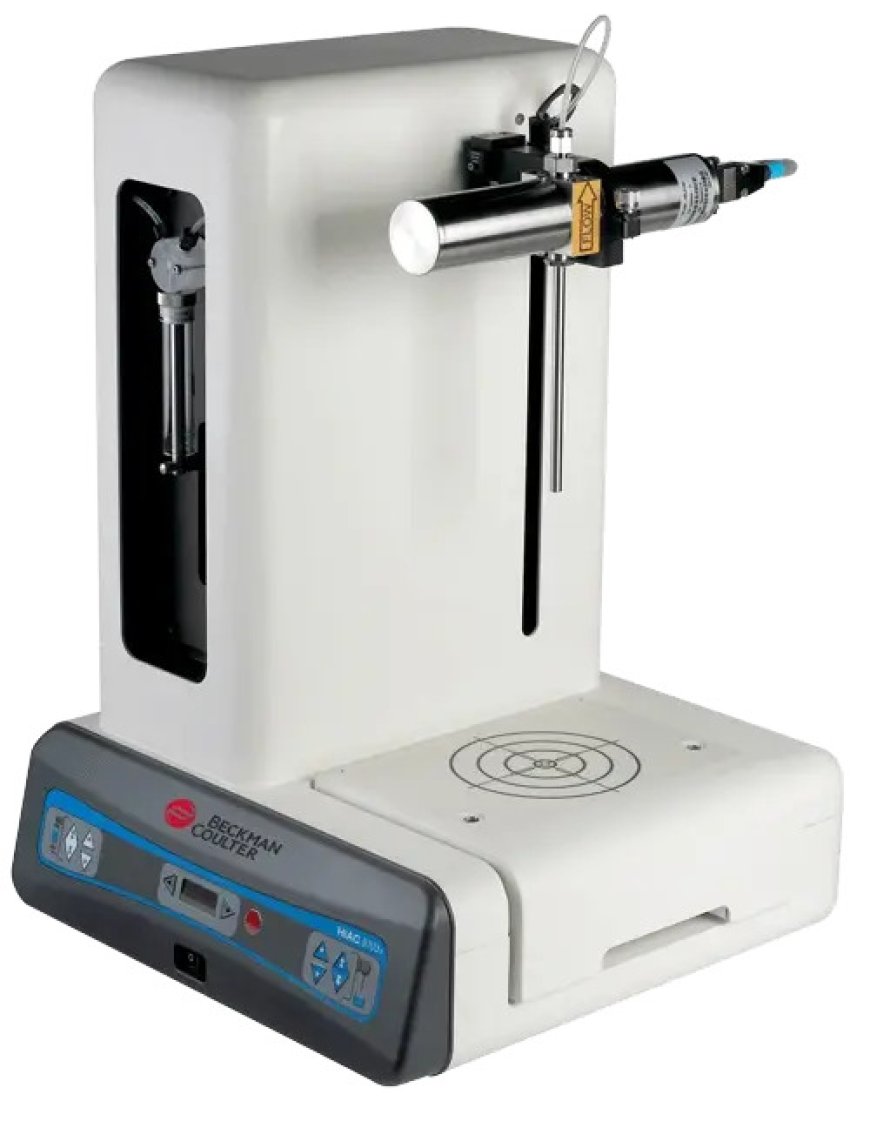
In pharmaceutical manufacturing, maintaining product quality and patient safety requires careful control of particulate contamination. Even very small particles in injectable drugs, ophthalmic products, biologics, and other critical pharmaceutical preparations can affect product quality and regulatory compliance. A Liquid Particle Counter provides an effective solution for detecting and measuring particulate matter in liquid samples. By delivering accurate particle counts and size information, this instrument helps pharmaceutical laboratories and quality control teams identify contamination risks before products reach patients.
A reliable Liquid borne particle counter is designed to analyze liquid samples and detect particles across specified size ranges. The instrument can support routine quality testing, process monitoring, raw material evaluation, and final product inspection. When integrated into a well-designed quality assurance program, particle counting provides valuable data for maintaining consistent pharmaceutical manufacturing standards.
What Is a Liquid Particle Counter?
A Liquid Particle Counter is an analytical instrument used to detect and count particles suspended in liquid samples. Depending on the instrument configuration and application, it can identify particles according to their approximate size and concentration.
Most modern systems use light-scattering technology. A liquid sample passes through a sensing zone where a light source illuminates the particles. As particles pass through the detection area, they scatter light. The instrument measures these signals and converts them into particle counts and size-related information.
This automated approach provides faster and more consistent results than visual inspection alone. It is particularly valuable when pharmaceutical products require strict control of particulate contamination.
Importance of Particulate Monitoring in Pharmaceuticals
Particulate contamination can originate from multiple sources, including raw materials, manufacturing equipment, packaging components, processing environments, and handling procedures. Particles may consist of fibers, dust, glass fragments, metal particles, polymeric materials, or other foreign matter.
For sterile pharmaceutical products, controlling particulate matter is especially important because injectable and ophthalmic preparations can have direct contact with sensitive areas of the body. Regular testing helps manufacturers detect unexpected contamination and investigate potential process problems.
A Liquid borne particle counter can therefore become an important part of pharmaceutical quality control by providing quantitative information rather than relying solely on visual observations.
How Does a Liquid Particle Measuring System Work?
A liquid Particle measuring system generally works by drawing a controlled volume of liquid through a precision sensor. When suspended particles pass through the detection zone, the optical system detects the change in scattered light.
The system processes these signals and categorizes particles according to their detected size. Results may include particle counts for different size channels, sample volume information, and other test parameters depending on the instrument.
The basic testing process typically includes:
- Preparing the sample according to the applicable testing procedure.
- Ensuring that the instrument and sampling components are appropriately prepared.
- Introducing a measured volume of liquid into the instrument.
- Passing the sample through the detection chamber.
- Detecting and sizing particles using the optical system.
- Recording and reviewing the particle count results.
- Comparing results with applicable specifications or established internal limits.
This automated process can improve repeatability and reduce the possibility of errors associated with manual particle assessment.
Applications in Pharmaceutical Quality Control
Liquid particle analysis can be used across several areas of pharmaceutical manufacturing and laboratory testing.
Injectable Products
Parenteral products require strict particulate control. Particle counting can help laboratories assess liquid samples for unwanted particulate matter and support routine quality testing.
Ophthalmic Preparations
Eye drops and other ophthalmic preparations may also require particulate monitoring. A suitable particle counting system can help laboratories evaluate samples as part of their quality control procedures.
Biopharmaceutical Products
Biologics and other sensitive pharmaceutical formulations may require careful monitoring of particulate contamination. Particle analysis can provide useful information during development, manufacturing, and quality investigations.
Water and Process Fluids
Pharmaceutical water systems and process fluids may also be monitored for particulate contamination. Testing can help identify changes in water quality or potential issues within processing systems.
Packaging and Process Investigations
When unexpected particles are discovered in a finished product, particle counting data can support investigations into possible sources. Manufacturers can use particle size distributions and concentration data to identify trends and evaluate process performance.
Benefits of Using a Liquid Particle Counter
One of the main benefits of automated particle counting is improved consistency. Manual inspection can be influenced by operator experience, lighting conditions, and other factors. An automated system provides numerical results that can be documented and compared over time.
Other benefits include:
- Accurate particle detection: Advanced optical systems can detect particles within defined measurement ranges.
- Fast analysis: Automated testing can reduce the time required for routine sample evaluation.
- Quantitative results: Particle counts provide measurable data for quality control decisions.
- Process monitoring: Regular testing can help identify changes in manufacturing processes.
- Data documentation: Electronic systems can support result recording and laboratory documentation.
- Improved contamination control: Early detection can help laboratories investigate potential contamination sources.
Selecting the Right Liquid Particle Measuring System
Choosing the appropriate liquid Particle measuring system depends on the intended application and testing requirements. Laboratories should consider factors such as particle size range, sample volume, detection sensitivity, measurement accuracy, sample compatibility, and data management capabilities.
The instrument should also be suitable for the types of pharmaceutical liquids being tested. Sample preparation procedures, viscosity, concentration, and formulation characteristics can influence particle measurement. Therefore, laboratories should select equipment based on validated procedures and application requirements rather than relying only on general specifications.
Ease of cleaning and maintenance is another important consideration. Components that come into contact with samples should be designed for appropriate cleaning and handling procedures to minimize the risk of cross-contamination.
Supporting Pharmaceutical Quality Assurance
A Liquid Particle Counter does more than simply provide particle counts. It can contribute to a broader pharmaceutical quality assurance strategy by generating reliable data for contamination monitoring, process investigations, and product evaluation.
When particle levels show unexpected changes, quality teams can investigate potential causes such as equipment wear, filtration problems, environmental contamination, packaging defects, or handling issues. Trend analysis can also help identify recurring problems before they become larger quality concerns.
For this reason, integrating a Liquid borne particle counter into appropriate laboratory procedures can strengthen monitoring programs and provide objective evidence of product and process control.
Conclusion
Particulate contamination is an important quality consideration in pharmaceutical manufacturing, particularly for products that require stringent contamination control. A Liquid Particle Counter provides an automated and quantitative approach to detecting and measuring particles suspended in pharmaceutical liquids.
From injectable products and ophthalmic preparations to process fluids and quality investigations, a reliable liquid Particle measuring system can support consistent testing and informed quality decisions. By combining accurate particle detection, repeatable measurements, and documented results, these systems can play a valuable role in pharmaceutical quality assurance and contamination control.