Metaverse Casinos: Reality or Hype?
 playagegaming
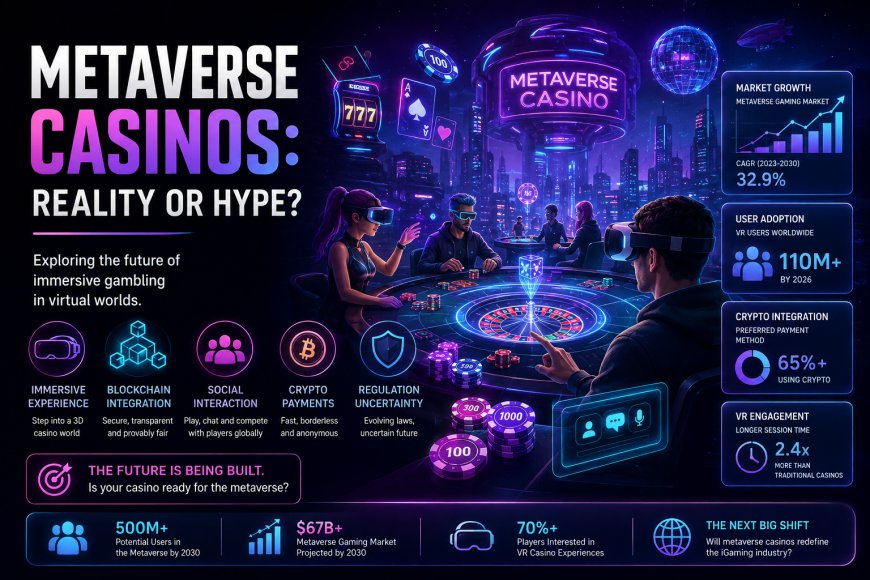
The Metaverse Casino Question
Metaverse casinos have been discussed as the next major step in online gambling. The idea is simple. Instead of opening a standard casino website, a player enters a three-dimensional digital venue, chooses an avatar, walks between games and speaks with other players or live hosts. It promises more social interaction than a normal casino lobby and more freedom than a physical venue.
However, the word “metaverse” is often used too loosely. Some products are genuine virtual worlds, while others are ordinary online casinos with three-dimensional designs or cryptocurrency payments. Operators therefore need to separate useful innovation from expensive presentation.
The practical answer is that metaverse casinos are real, but the market is still developing. The technology can support new forms of entertainment, community and brand experience. It does not remove the need for strong casino software, secure payments, licensing, responsible gambling controls or reliable support. Players may notice the virtual setting first, but they still judge the operator by trust, convenience and fair treatment.
What Is a Metaverse Casino?
A metaverse casino is an online gambling or social gaming environment presented as an interactive virtual world. Players usually move through the space using a digital character called an avatar. They may visit slot areas, poker rooms, live tables, events or branded spaces without leaving the same environment.
Virtual reality, often shortened to VR, can make the experience more immersive through a headset. However, a metaverse casino does not always require VR. Many virtual worlds work through a desktop browser or mobile device. This matters because headsets add cost and can create a barrier for casual players.
Some metaverse casinos also use blockchain technology. A blockchain is a shared digital record that can track payments or ownership. It may support cryptocurrency deposits, digital collectables or items that players can trade. These features are optional rather than essential.
The key difference is not simply the graphics. A true metaverse casino aims to create presence and social interaction. Players should feel that they are visiting a shared venue, not clicking through a menu with a three-dimensional background.
What Is Real Today?
Several parts of the metaverse casino idea already work. Operators can create three-dimensional casino spaces, host multiplayer poker, stream live entertainment and allow players to communicate through avatars. Virtual events can also combine casino games, sports viewing, competitions and branded promotions in one location.
Research into the Decentraland virtual world found that its ICE Poker casino areas attracted a notable share of visits and time spent within that platform. This suggests that casino-style entertainment can become a strong attraction inside a social virtual world. It does not prove that every metaverse casino will succeed, but it shows that the concept can generate real engagement.
The strongest current use case is community. Online gambling is usually a private activity, even when the game includes a live dealer. A shared environment can make poker nights, tournaments and special events feel more social.
The weaker claim is that metaverse casinos are ready to replace established casino sites. Most players still prefer quick access, simple navigation and smooth mobile play. Immersion has value, but convenience remains difficult to beat.
Why Players Might Find Them Appealing
Metaverse casinos can offer something that standard online casinos often struggle to provide: a sense of place. Players can explore a venue, recognise other regular visitors and join scheduled events. This can feel less like browsing a game list and more like entering an entertainment destination.
Personalisation is another benefit. Players may choose avatars, clothing, private rooms or preferred table settings. Operators can build themed spaces around sports events, game launches or seasonal campaigns. These experiences can strengthen brand recognition when they are useful rather than distracting.
The format also creates new options for live entertainment. A virtual casino could host a dealer-led tournament, a music performance or a product presentation in the same environment. For business-to-business operators, it may also serve as a demonstration space for partners.
Still, the basic experience must remain simple. Players should not need to understand cryptocurrency, buy digital items or install specialist software before they can explore. The most promising metaverse casinos will make advanced features optional and keep registration, payments and game access familiar.
Why Much of the Market Is Still Hype
The full metaverse vision requires many technologies to work together. A casino needs high-quality graphics, stable connections, secure accounts, game integrations, payment systems, identity checks and customer support. Adding virtual reality and digital asset ownership increases cost and complexity.
User access is another challenge. A standard casino can run in a mobile browser. A detailed virtual world may require a powerful device, a large download or a headset. Each extra step reduces the number of players who complete registration and make a deposit.
There is also a difference between curiosity and long-term use. A player may visit once because the casino looks new, but novelty does not guarantee retention. The games, promotions, payments and support must still provide a reason to return.
Operators should also be careful with claims about digital ownership. A player may technically own an item recorded on a blockchain, but its value can disappear if the game, market or virtual world loses users. Calling every digital item an investment can create serious trust and compliance risks.
Payments, Data and Artificial Intelligence
A metaverse casino still needs dependable deposits and withdrawals. Cryptocurrency may suit some virtual environments, but licensed operators must continue to verify players, review suspicious activity and protect customer funds. They also need payment methods that match each target market.
Our guide to how payment processing works in online casinos explains why local payment coverage, withdrawal checks and clear processing rules remain essential.
Traditional payment options should not disappear because the casino has a futuristic design. Players may enjoy an immersive venue but still prefer cards, bank transfers or familiar digital wallets. The best approach is to offer choice and explain fees, limits and processing times before a transaction begins.
Artificial intelligence can improve the experience when it solves a clear problem. It can guide new players, recommend relevant content, translate support messages or identify technical issues. It should not pressure vulnerable players or hide important conditions.
This guide to AI in online casinos and smarter player journeys offers further reading on how intelligent tools can support the casino experience.
Regulation and Player Protection Still Apply
A metaverse casino is not outside gambling law simply because it operates in a virtual world. In Great Britain, the Gambling Commission regulates remote gambling offered to consumers and includes systems used to present virtual games or determine results within its remit.
Operators must consider licensing, age checks, identity verification, anti-money laundering controls, game testing and marketing rules in every market they target. Anti-money laundering controls are processes used to detect and prevent criminal funds from moving through the casino.
Technical standards also remain important. The UK Gambling Commission’s remote standards cover account information, transaction displays, game rules, result determination, interrupted play, financial limits and responsible product design. A metaverse interface should make these protections easier to understand, not harder to find.
Player safety needs special attention because immersive environments can weaken a person’s sense of time. Clear balance displays, session reminders, deposit limits, time-outs and self-exclusion tools should remain visible inside the virtual venue. Responsible gambling information should never be hidden behind an avatar menu.
Should Casino Operators Invest Now?
Operators should view metaverse casinos as a testable product opportunity, not an automatic replacement for their existing platform. The best starting point is a focused experience, such as a social poker room, a virtual live casino event or a three-dimensional brand showroom. This lets the business measure real interest without rebuilding the entire casino.
Before investing, operators should ask simple commercial questions. Does the experience solve a player problem? Can people access it easily on devices they already own? Will it improve retention, community or brand value? Can the business meet licensing and safety requirements? Is there a clear plan for payments, support and technical failures?
The final verdict is balanced. Metaverse casinos are more than hype because working virtual gambling and social gaming experiences already exist. However, the larger promise of a connected, widely adopted casino universe remains unproven.
For most operators, the sensible strategy is to strengthen the core online casino first, then test immersive features where they add measurable value. Technology should support the player journey, not become the journey.
Frequently Asked Questions
Are metaverse casinos real?
Yes. Virtual worlds can already host poker, casino-style games, events and social spaces. However, many products marketed as metaverse casinos are still early experiments or standard casino sites with additional three-dimensional features.
Do players need a virtual reality headset?
Not always. Some metaverse casinos work through desktop browsers, mobile devices or downloadable applications. A headset can improve immersion, but requiring one may limit the available audience and reduce casual use.
Are metaverse casinos legal?
Their legality depends on the gambling activity, the operator’s licence and the player’s location. A virtual setting does not remove normal rules covering age checks, payments, fair games, advertising and responsible gambling.
Will metaverse casinos replace online casinos?
Not in the near future. Standard mobile casinos remain faster and easier for most players. Metaverse features are more likely to develop as an additional social and entertainment channel rather than a full replacement.