NDIS Tutoring Services: Helping Participants Develop Skills for Greater Independence
 johnmarker
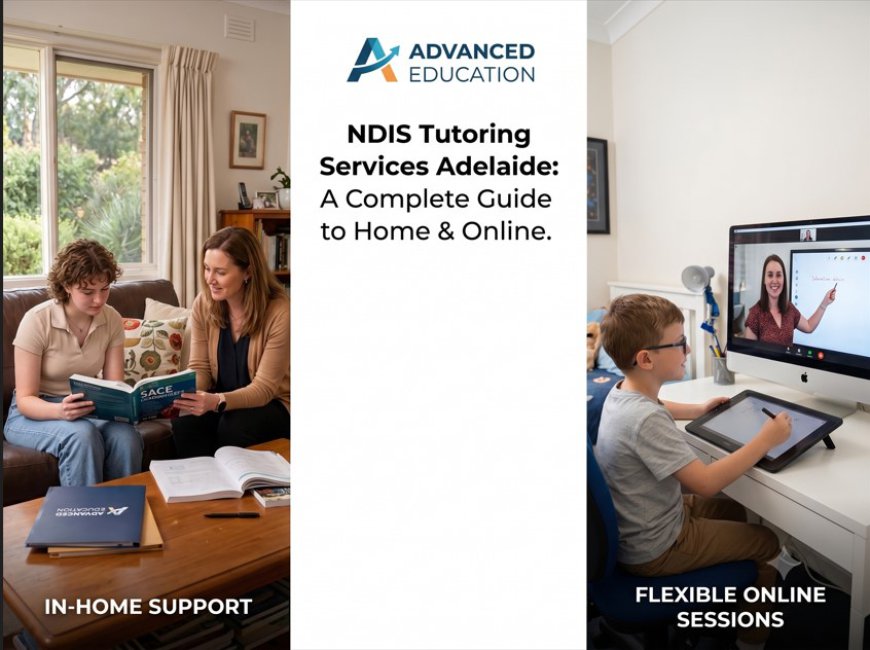
Learning can be a powerful way to build confidence, improve communication, and develop greater independence. For people living with disability, however, traditional educational approaches may not always address the way they learn or the practical challenges they experience. Individualised learning can provide a more suitable approach when it is connected to disability-related needs and meaningful personal goals.
NDIS tutoring services are often searched for by participants and families looking for personalised educational support. However, it is important to understand that NDIS-funded support is different from ordinary academic tutoring. The National Disability Insurance Scheme is designed to fund reasonable and necessary disability-related supports, rather than mainstream education responsibilities.
At Advanced Education SA, we focus on personalised learning that can help eligible participants develop functional skills and greater confidence while working towards appropriate individual goals.
What Makes NDIS Tutoring Services Different?
Traditional tutoring usually focuses on academic subjects. A student may receive additional help with mathematics, English, science, homework, assignments, or exam preparation.
Disability-related learning support has a different purpose.
Appropriate NDIS tutoring services may focus on functional abilities that help a participant manage everyday activities, communicate effectively, develop independence, and build capacity.
Potential areas may include:
- Functional literacy
- Practical numeracy
- Communication
- Digital literacy
- Organisation
- Planning
- Problem-solving
- Executive functioning
- Independent learning
The appropriate focus depends on the participant's individual needs and goals.
Understanding NDIS Funding for Learning Support
It is important for families to understand what the NDIS generally does and does not fund.
The NDIS generally does not fund mainstream school tutoring, homework assistance, exam preparation, ATAR coaching, or general academic tuition. These services are generally considered part of the mainstream education system.
A learning-related support may be considered when it is directly connected to disability-related needs, supports capacity building, aligns with the participant's goals, and meets the relevant NDIS funding requirements.
Because NDIS plans are individual, participants should confirm their circumstances before starting a service.
A Plan Manager, Support Coordinator, Local Area Coordinator (LAC), or the NDIA can provide guidance about appropriate supports and funding arrangements.
Personalised Learning Starts With the Individual
Every learner has different abilities.
Some participants may understand new information quickly but need help applying it independently. Others may benefit from repetition, visual resources, structured routines, or practical demonstrations.
At Advanced Education SA, we consider factors such as:
- Existing abilities
- Learning preferences
- Communication style
- Personal interests
- Strengths
- Areas requiring support
- Learning pace
- Daily routines
- Individual goals
This information helps educators create a learning experience that is relevant to the participant.
Functional Literacy for Everyday Situations
Literacy plays an important role in independent living.
Participants may need to read signs, understand instructions, communicate through messages, complete forms, or understand written information.
Depending on individual goals, learning activities may support:
- Reading comprehension
- Functional reading
- Vocabulary
- Spelling
- Grammar
- Written communication
- Understanding instructions
- Completing everyday documents
Instead of focusing only on theoretical exercises, functional literacy can be connected to situations the participant encounters in daily life.
For example, learning could involve reading a timetable, understanding a shopping list, or writing a simple message.
Building Practical Numeracy
Numeracy is another skill used throughout everyday life.
Money, time, measurements, schedules, quantities, and prices all require practical mathematical understanding.
Personalised learning may include:
- Number recognition
- Basic calculations
- Money concepts
- Understanding prices
- Budgeting
- Time
- Measurement
- Practical problem-solving
Using familiar situations can make numeracy easier to understand and apply.
The goal is to help participants recognise how mathematical skills can contribute to everyday independence.
Strengthening Communication
Communication is fundamental to participation and independence.
Depending on the participant's needs, NDIS tutoring services may support areas such as:
- Listening
- Speaking
- Vocabulary
- Following instructions
- Expressing needs
- Written communication
- Everyday conversation
- Understanding information
Learning activities can be adjusted to match the participant's communication style and abilities.
Building communication confidence can help participants feel more comfortable interacting with people in different environments.
Developing Digital Confidence
Technology is increasingly important for communication, education, employment, and everyday activities.
Participants may benefit from learning how to:
- Use a computer
- Type
- Send emails
- Navigate websites
- Use online learning platforms
- Organise digital information
- Use word-processing programs
- Recognise basic online safety practices
Digital skills can support independence by making it easier to access information and complete appropriate tasks.
Supporting Planning and Organisation
Planning can be challenging when an activity involves multiple steps.
Learning support may introduce practical strategies for:
- Creating routines
- Managing time
- Organising materials
- Remembering tasks
- Following sequences
- Breaking activities into smaller steps
- Setting goals
- Reviewing progress
These strategies can be adapted to the participant's daily routines.
For example, a participant may learn how to create a simple schedule for appointments, activities, or personal responsibilities.
Developing Problem-Solving Abilities
Independent living often requires participants to make decisions and respond to unexpected situations.
Learning activities can encourage participants to identify problems, consider options, and choose appropriate solutions.
They may practise:
- Identifying a challenge
- Understanding choices
- Considering consequences
- Making decisions
- Following problem-solving steps
- Asking for assistance when necessary
Developing these skills can help participants become more confident when facing everyday situations.
Encouraging Independent Learning
One of the most valuable outcomes of personalised education is helping participants become more confident learners.
Educators can encourage participants to:
- Set achievable goals
- Plan activities
- Monitor their progress
- Ask questions
- Use appropriate resources
- Practise skills independently
- Reflect on what they have learned
These strategies can support continued development outside structured learning sessions.
Learning Through Real-Life Examples
Learning can become more engaging when participants can immediately see how a skill relates to their lives.
Depending on their goals, practical activities may involve:
- Shopping
- Reading information
- Planning a journey
- Managing a schedule
- Using technology
- Communicating with others
- Understanding money
- Following instructions
- Organising daily activities
Real-life learning provides opportunities to practise skills in meaningful contexts.
Flexible Learning Approaches
A participant's learning environment can affect their engagement and confidence.
Advanced Education SA can provide learning approaches that may include:
- One-to-one sessions
- Online learning
- Home-based learning
- Community-based learning
- Flexible scheduling
The most appropriate format depends on the participant's individual needs, goals, preferences, and circumstances.
A Supportive Learning Environment
Participants are more likely to engage with learning when they feel respected and supported.
Our approach focuses on creating an environment that is:
- Patient
- Inclusive
- Encouraging
- Respectful
- Structured
- Flexible
- Participant-centred
Mistakes are treated as part of the learning process, allowing participants to practise new skills without unnecessary pressure.
Working Towards Meaningful Outcomes
Progress should be based on the participant's individual goals rather than comparison with other learners.
Meaningful progress might include:
- Reading more independently
- Communicating needs more confidently
- Managing a simple schedule
- Improving practical numeracy
- Using technology more effectively
- Following multi-step instructions
- Completing everyday tasks with less assistance
Small improvements can become important milestones when they contribute to greater independence.
Working With Families and Support Professionals
Learning does not happen in isolation.
Where appropriate and with suitable consent, educators may communicate with people involved in the participant's broader support network.
This may include:
- Parents
- Carers
- Support Coordinators
- LACs
- Teachers
- Allied health professionals
Collaboration can help maintain consistency and ensure learning strategies complement other supports.
How Progress Can Be Reviewed
Regular review helps determine whether learning activities remain useful and relevant.
Educators may consider:
- Skills developed
- Areas of improvement
- Challenges encountered
- Confidence levels
- Participation
- Independence
- Achievement of individual learning objectives
Learning plans can then be adjusted where appropriate.
Who May Benefit From NDIS Tutoring Services?
There is no single learning program that suits every participant.
Eligible participants may benefit from personalised learning where the support addresses appropriate disability-related needs and contributes to their individual goals.
Potential areas include:
- Functional literacy
- Practical numeracy
- Communication
- Digital skills
- Organisation
- Planning
- Problem-solving
- Executive functioning
- Independent learning
The suitability of a support must always be considered on an individual basis.
Questions to Ask Before Choosing a Provider
Before arranging NDIS tutoring services, families can consider several important questions:
Does the provider understand NDIS requirements?
A provider should understand the distinction between mainstream education and disability-related supports.
Is the learning plan personalised?
A participant should not simply receive a generic program. Learning should reflect their abilities, preferences, and goals.
Are practical outcomes clearly identified?
The learning program should have meaningful objectives that can be applied to everyday situations where appropriate.
Can progress be reviewed?
Regular reviews can help identify achievements and determine whether learning strategies need adjustment.
Is communication clear?
Families and participants should be able to understand what the service involves and how it relates to the participant's goals.
Why Advanced Education SA?
At Advanced Education SA, we believe educational support should be built around the individual.
Our approach to NDIS tutoring services emphasises:
- Personalised learning
- Practical skill development
- Functional outcomes
- Participant-centred education
- Flexible teaching strategies
- Confidence building
- Capacity development
- Supportive learning environments
We recognise that progress can take different forms. Our role is to create learning opportunities that help participants develop useful skills while respecting their individual pace and preferences.
Understanding Your NDIS Plan Before Starting
It is important to confirm funding before commencing any service.
Participants should speak with their Plan Manager, Support Coordinator, LAC, or the NDIA to understand whether a proposed learning support aligns with their individual NDIS goals and funding arrangements.
Do not assume that a provider describing a service as an "NDIS tutoring service" means the service is automatically funded by the NDIS.
Understanding the funding position in advance can help families make informed decisions.
Start a Personalised Learning Journey
The right learning environment can help eligible participants build confidence, strengthen practical abilities, and develop greater independence. NDIS tutoring services may support this journey when the learning support is appropriate to the participant's disability-related needs and meets relevant NDIS requirements.
At Advanced Education SA, we take a personalised approach to learning. We focus on practical skills such as literacy, numeracy, communication, digital capability, organisation, planning, and problem-solving where these areas are relevant to a participant's goals.
Our educators aim to create learning experiences that are supportive, flexible, and meaningful. By recognising individual strengths and adapting learning strategies, we help participants work towards achievable outcomes while developing confidence in their own abilities.
If you are considering NDIS tutoring services, begin by reviewing your individual goals and discussing the proposed support with your Plan Manager, Support Coordinator, LAC, or the NDIA. With the right guidance and a personalised approach, learning can become an important pathway towards greater confidence, capability, and everyday independence.