Why More Entrepreneurs Are Choosing an Airbnb Clone Script to Launch Vacation Rental Businesses
Discover why businesses are choosing an Airbnb Clone Script to launch vacation rental marketplaces faster with scalable features and growth opportunities.
 mollycreep
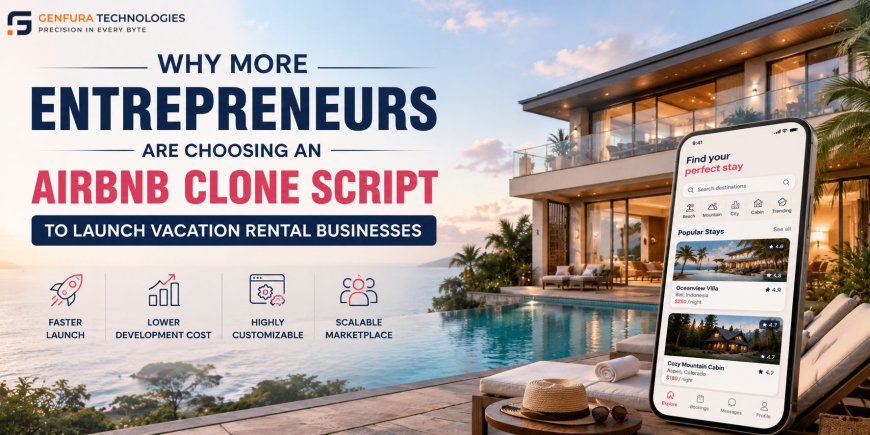
The Travel Industry Is Creating New Opportunities for Digital Entrepreneurs
The vacation rental business has evolved far beyond being an alternative to traditional hotels. What began as a simple concept of homeowners renting spare rooms has transformed into a global marketplace where travelers actively seek unique stays, personalized experiences, and greater flexibility. Whether it's a beachfront villa in Bali, a mountain cabin in Switzerland, or a serviced apartment in Dubai, people are increasingly choosing accommodations that match their lifestyle rather than settling for standard hotel rooms. This shift has changed how travel businesses operate and, more importantly, how entrepreneurs approach the hospitality industry.
Today's travelers expect convenience from the moment they begin searching for accommodation until the day they check out. They compare properties, read reviews, communicate directly with hosts, complete secure payments, and expect instant booking confirmations. Behind every seamless booking experience is a technology platform that manages hundreds of processes simultaneously. For businesses planning to enter this market, building such a platform from scratch can be expensive, time-consuming, and filled with technical challenges. This is one of the primary reasons more founders are choosing an Airbnb Clone Script as the foundation for launching their vacation rental businesses.
Contrary to popular belief, an Airbnb Clone Script is not about copying another company's success. It is about using a proven marketplace architecture that has already demonstrated its ability to connect property owners with travelers efficiently. Instead of spending valuable resources rebuilding booking systems, payment integrations, messaging platforms, and property management tools, businesses can focus on creating a unique marketplace that reflects their own vision and serves a specific audience.
Consumer Expectations Have Changed More Than Technology
One of the biggest reasons the vacation rental industry continues to grow is that travelers have changed their expectations. A decade ago, location and price were often the deciding factors when choosing accommodation. Today, travelers look beyond these basic requirements. They want spacious homes for family vacations, fully furnished apartments for long business trips, pet-friendly accommodations, eco-friendly cottages, and unique properties that offer memorable experiences rather than simply providing a place to sleep.
Remote work has accelerated this transformation even further. Professionals are no longer limited to working from offices, allowing them to travel for weeks or even months while continuing their careers. Digital nomads, freelancers, consultants, and entrepreneurs frequently search for accommodations designed for extended stays instead of short vacations. This growing demand has encouraged thousands of property owners to enter the vacation rental market, creating opportunities for businesses capable of connecting hosts with guests through intuitive digital platforms.
As demand continues to expand across different customer segments, entrepreneurs recognize that there is still room for specialized vacation rental marketplaces. Instead of competing directly with global brands, many businesses are focusing on regional markets, luxury accommodations, medical tourism, student housing, religious travel, adventure tourism, or corporate rentals. An Airbnb Clone Script provides the flexibility needed to build these specialized platforms without beginning development from zero.
Why Building from Scratch Is No Longer the Smartest Investment
There was a time when custom software development was considered the only path toward creating a successful digital product. While custom development continues to play an important role, businesses have become far more strategic about where they invest their resources. Developing every component from the ground up often consumes months of engineering effort before a single customer ever uses the platform.
Marketplace businesses are particularly complex because they must serve two completely different audiences at the same time. Travelers expect a fast and reliable booking experience, while property owners require efficient tools to manage listings, calendars, availability, pricing, and reservations. Behind the scenes, administrators need reporting systems, commission management, dispute resolution, customer support tools, and payment processing capabilities. Bringing all these elements together requires significant planning and continuous testing.
Rather than investing valuable time rebuilding common marketplace functionality, many startups now choose an Airbnb Clone Script because it provides a stable technological framework from day one. This allows development teams to focus on customization, performance improvements, security enhancements, and features that differentiate the business instead of recreating standard marketplace components that already exist.
The result is a shorter development cycle, lower investment risk, and faster market entry. More importantly, businesses can begin validating their ideas with real customers while competitors are still completing lengthy development projects.
Speed to Market Has Become a Competitive Advantage
Every business idea has a limited window of opportunity. Consumer preferences evolve rapidly, new competitors appear regularly, and technological innovation continues to reshape entire industries. Waiting twelve or eighteen months to launch a platform can significantly reduce a startup's competitive advantage.
Successful founders understand that launching early does not mean launching incomplete. It means prioritizing the features that create immediate value while continuously improving the platform through customer feedback. This approach has become increasingly common among successful technology companies because it allows businesses to adapt based on real market behavior instead of assumptions.
An Airbnb Clone Script supports this strategy by reducing development timelines without sacrificing scalability. Businesses can establish their presence, attract property owners, build customer relationships, and refine their marketplace while demand continues to grow. Instead of treating software development as a one-time project, they approach it as an ongoing process of improvement supported by real user insights.
The companies succeeding in the vacation rental industry are rarely those with the largest development budgets. More often, they are the businesses that understand their customers better, respond faster to market changes, and continuously improve the overall booking experience.
Success Depends on More Than Technology
Technology alone does not create successful marketplaces. Many platforms launch with impressive interfaces, advanced features, and modern infrastructure yet struggle to attract loyal users. The difference usually lies in execution rather than software.
Travelers choose platforms that make booking simple and transparent. Property owners remain loyal to marketplaces that help them generate consistent reservations without unnecessary complications. Businesses that understand both sides of the marketplace are far more likely to build sustainable platforms than those focused exclusively on technical innovation.
An Airbnb Clone Script provides the technological foundation, but long-term success depends on branding, customer service, marketing strategy, trust, and continuous product improvement. These are the areas where businesses create meaningful competitive advantages that cannot easily be replicated by software alone.
Customization Creates Stronger Business Value
One of the biggest misconceptions about an Airbnb Clone Script is that every platform built using it will look and function exactly the same. In reality, successful businesses rarely launch products that resemble the original platform. They use the underlying technology as a starting point while building an experience that reflects their own business goals, target audience, and market strategy.
A startup focusing on luxury villas will naturally design a very different customer journey than a company specializing in student accommodation or corporate housing. Even though the core functionality remains similar, the branding, user interface, pricing strategy, commission model, and additional services are tailored to the needs of a specific audience. This level of customization allows businesses to stand out in an increasingly competitive market without spending years developing marketplace technology from the ground up.
The ability to adapt quickly is equally important. Consumer preferences change, travel trends evolve, and new technologies continue to influence booking behavior. Businesses need platforms that can grow alongside these changes rather than becoming outdated after launch. Choosing a customizable Airbnb Clone Script provides the flexibility required to introduce new features, expand into new markets, and support changing customer expectations without rebuilding the platform entirely.
Building Trust Is More Important Than Building Features
Technology attracts users, but trust keeps them coming back.
Every booking made through a vacation rental marketplace involves two individuals who often have no prior relationship with each other. Guests trust that the property matches its description, while hosts trust that their payments and properties are protected. Creating that confidence requires much more than attractive design or advanced functionality.
Successful platforms invest heavily in verification processes, transparent reviews, secure payment systems, responsive customer support, and clear communication between hosts and travelers. These elements create an environment where users feel comfortable completing transactions, recommending the platform to others, and returning for future bookings.
For new businesses entering the market, earning that trust should become a higher priority than introducing dozens of additional features. Customers rarely remember how many functions a platform offers, but they always remember whether the booking experience felt safe and reliable.
Artificial Intelligence Is Quietly Transforming Vacation Rental Platforms
Artificial intelligence has become one of the most influential technologies shaping digital businesses, and the vacation rental industry is no exception. While many people associate AI with chatbots, its role extends much further.
Modern vacation rental platforms are using AI to improve property recommendations, analyze customer preferences, optimize pricing, detect suspicious activities, and automate repetitive support requests. These improvements happen behind the scenes, but they have a direct impact on customer satisfaction.
Imagine a traveler searching for a family-friendly property near a beach destination. Instead of displaying thousands of random listings, an intelligent recommendation engine can prioritize homes that closely match previous booking behavior, preferred amenities, and travel dates. This not only saves time for the customer but also increases booking conversions for the platform.
Property owners also benefit from AI-powered insights that help them understand seasonal demand, adjust pricing strategies, and improve occupancy rates. As these technologies become more accessible, they are gradually becoming standard features rather than optional enhancements.
A Successful Platform Generates More Than Booking Revenue
Many first-time founders assume that booking commissions are the primary source of income for a vacation rental marketplace. While commissions remain important, the most successful platforms build multiple revenue channels that strengthen long-term profitability.
Premium subscriptions for professional hosts, featured property listings, promotional advertising, travel insurance partnerships, concierge services, airport transfers, local experience bookings, cleaning services, and property management solutions all contribute to a more diversified business model. Rather than relying on a single source of revenue, businesses create an ecosystem where different services support one another.
This approach also improves customer retention. Travelers appreciate the convenience of accessing additional services through the same platform, while property owners gain access to tools that help them manage their rental business more efficiently. As the marketplace grows, these additional services often become significant contributors to overall revenue.
Selecting the Right Technology Partner Matters
Launching a vacation rental platform is not simply a software project. It is the beginning of a long-term business journey. The technology chosen during the early stages influences everything from scalability and security to future expansion opportunities.
This is why selecting an experienced development partner deserves careful consideration. Beyond technical expertise, businesses should look for teams that understand marketplace dynamics, user behavior, and the operational challenges involved in managing hosts, guests, payments, and reservations.
A reliable technology partner contributes more than clean code. They help businesses make informed architectural decisions, recommend scalable solutions, maintain platform performance, and provide ongoing support as the business evolves. These factors often determine whether a startup can confidently expand into new markets or struggles to keep pace with growing customer demand.
The Future of Vacation Rental Businesses Looks Promising
The vacation rental industry continues to evolve alongside changing travel habits. Travelers are seeking more personalized experiences, longer stays, flexible booking options, and accommodations that reflect their lifestyles rather than standardized hotel environments. Property owners are increasingly viewing short-term rentals as valuable income opportunities, creating a steady supply of listings across different markets.
Emerging technologies such as artificial intelligence, predictive analytics, smart home integrations, digital identity verification, and contactless check-ins will continue shaping the next generation of vacation rental platforms. Businesses that adopt these innovations early will be better positioned to deliver seamless customer experiences while improving operational efficiency.
At the same time, niche marketplaces are expected to grow significantly. Instead of competing with global platforms on scale alone, many startups will focus on serving specific audiences with specialized services and localized experiences. This creates exciting opportunities for founders willing to build platforms around clearly defined customer segments.
End Point
The growing interest in Airbnb Clone Script solutions reflects a broader change in how entrepreneurs approach digital business development. Instead of investing years building marketplace infrastructure from scratch, businesses are choosing proven technology foundations that allow them to enter the market faster and concentrate on creating value for their customers.
Success in the vacation rental industry is no longer determined solely by technology. It depends on understanding traveler expectations, supporting property owners, building trust, embracing innovation, and continuously improving the overall experience. An Airbnb Clone Script provides the technical framework, but the vision behind the platform is what ultimately shapes its success.
As the global travel industry continues to expand, opportunities for specialized vacation rental marketplaces will only become stronger. Businesses that combine the right technology with a clear market strategy, exceptional customer experience, and continuous innovation will be well positioned to build sustainable brands in one of the world's fastest-growing digital industries.