How Does Exilis Treatment Target Deep Fat Layers Safely?
Discover how Exilis Treatment Dubai targets deep fat layers with controlled RF and ultrasound energy while supporting safer, non-invasive body contouring results.
 dynamichassan4
If stubborn fat remains despite a healthy lifestyle, non-invasive body contouring may offer another option. Exilis Treatment Dubai uses energy-based technology to heat targeted tissue beneath the skin, making it possible to address localized fat while also supporting skin tightening. But how can energy reach deeper layers without unnecessarily harming the surface? The answer lies in controlled energy delivery, treatment monitoring, and careful selection of the treatment area and settings.
What Is Exilis Treatment and How Does It Work?
Exilis is an energy-based aesthetic treatment associated with radiofrequency technology, with certain Exilis systems combining radiofrequency and ultrasound. Rather than cutting into the body or physically removing fat with surgical instruments, the treatment applies energy through an external applicator to influence tissue beneath the skin.
Radiofrequency produces controlled heating within tissue. Ultrasound, when used for body contouring, can also deliver energy into the fat layer and may contribute to disruption of fat cells. The U.S. Food and Drug Administration explains that therapeutic ultrasound can act on fat beneath the skin and potentially reduce circumference in treated areas, although the technology and indications vary between devices.
This distinction is important: Exilis should not be viewed as a general weight-loss treatment. It is better understood as a body-contouring approach intended for localized concerns, where reducing the appearance or thickness of a targeted area may improve overall contours.
Research on combined focused radiofrequency and ultrasound has reported measurable circumference reductions after a course of treatments, with one study involving 64 patients finding significant changes in the abdomen, thighs, and arms and reporting no adverse events in that study.
How Does Exilis Reach Deeper Fat Layers?
The key concept is controlled energy penetration. Instead of relying only on surface-level warming, radiofrequency energy can heat tissue below the outermost layer of skin. The precise depth and thermal effect depend on the device, applicator, settings, tissue characteristics, and treatment protocol.
For people researching deep fat reduction, it is useful to understand that the goal is not simply to make the skin hot. The practitioner aims to deliver an appropriate amount of energy to the targeted tissue while avoiding excessive exposure to superficial structures.
Radiofrequency-based technologies have been studied for their effects on subcutaneous adipose tissue. For example, clinical research involving non-invasive RF technology has used ultrasound measurements to evaluate changes in fat-layer thickness and reported reductions after a series of treatments.
When ultrasound is incorporated, its energy can also interact with tissue beneath the skin. According to the FDA, therapeutic ultrasound can cause fat-cell disruption when energy reaches the fat layer, but it must be applied correctly because excessive ultrasound energy can also cause burns or other complications.
That is why the phrase “deep” should not be interpreted as meaning unlimited penetration. The objective is controlled treatment of the appropriate subcutaneous layer rather than indiscriminate heating of everything underneath the skin.
Why Is Targeted Heating Considered Safer Than Uncontrolled Heating?
The safety of energy-based body contouring depends heavily on controlling the amount and duration of energy delivered. Modern systems are designed around defined treatment parameters, while the practitioner continuously moves the applicator and observes the patient's comfort and tissue response.
In clinical practice, several factors help determine whether treatment is appropriate:
- The thickness and location of the targeted tissue
- Skin condition in the treatment area
- The patient's medical history and relevant contraindications
- The selected energy level and treatment duration
- Proper applicator contact and movement
- The patient's response to heat during the procedure
Some Exilis systems also incorporate monitoring and control features. FDA documentation for Exilis-related RF systems describes microprocessor-controlled operation, treatment-parameter displays, and handpiece controls that allow the operator to manage therapy during treatment.
This type of control matters because deeper tissue treatment does not mean that the surface of the skin can simply be ignored. The practitioner must balance the desired tissue effect with protection of the skin and surrounding structures.
The FDA also notes that therapeutic ultrasound requires proper skin contact and coupling gel to help reduce the risk of burns. Potential complications from improperly delivered ultrasound can include discomfort, redness, swelling, blisters, burns, and nerve injury.
Therefore, “safe” does not mean risk-free. It means that treatment is performed using an appropriate device, correct parameters, suitable technique, and proper patient selection.
How Does Exilis Support Both Fat Reduction and Skin Firming?
One reason Exilis attracts attention for body contouring is that treatment can address more than one aesthetic concern in the same general area. Localized fat may contribute to fullness, while changes in collagen and tissue firmness can contribute to loose or less-toned-looking skin.
Radiofrequency heating has long been investigated for its ability to produce controlled thermal effects in tissue. Studies of RF-based body-contouring systems have reported changes not only in adipose-tissue measurements but also in skin firmness or appearance.
This creates an important distinction between fat reduction treatment and ordinary weight loss. A person may have a relatively stable body weight while still having small areas of stubborn subcutaneous fat. Body contouring aims to modify the shape or appearance of those localized areas rather than dramatically changing overall body weight.
For suitable candidates, this combination can make the treatment appealing when the concern involves both mild fat accumulation and skin laxity. However, the degree of improvement varies, and realistic expectations are essential.
Clinical evidence generally supports moderate, gradual improvements rather than dramatic transformations from non-invasive RF and ultrasound body contouring. A study of combined RF and ultrasound, for example, concluded that the approach was safe and effective for body contouring but emphasized that patients should expect moderate improvement.
What Happens During an Exilis Treatment Session?
An Exilis session generally begins with an assessment of the area being treated. The practitioner determines whether the concern is appropriate for non-invasive contouring and selects treatment parameters based on the body area and individual characteristics.
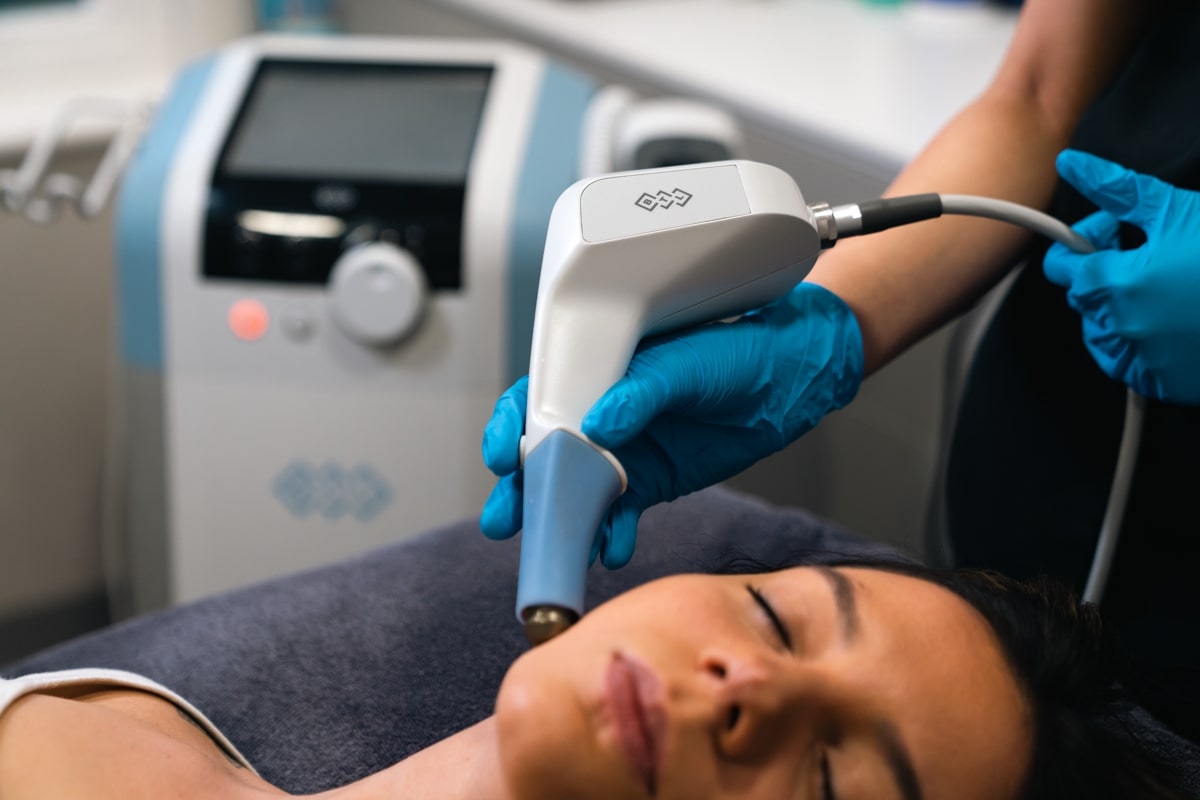
During treatment, the applicator is placed against the skin and moved across the selected area according to the treatment protocol. Patients commonly describe energy-based RF treatments as producing a sensation of warmth, although comfort can vary depending on the treatment settings and individual sensitivity.
The objective is to create controlled thermal exposure rather than excessive heat. The practitioner may adjust the treatment based on the patient's feedback and the response of the tissue.
Afterward, temporary redness or warmth may occur with energy-based procedures. Most people seeking non-invasive contouring are attracted to the approach because it does not involve surgical incisions, but the absence of surgery should not be confused with an absence of potential side effects.
Proper aftercare and adherence to the provider's instructions can help support a comfortable recovery. More importantly, patients should report unusual or persistent discomfort rather than assuming that stronger sensations indicate better results.
Who May Benefit From Exilis for Localized Fat?
Exilis may be considered by adults who are close to their preferred weight but have localized areas of fullness that have not responded sufficiently to diet and exercise. Commonly discussed body-contouring areas include the abdomen, flanks, thighs, and arms, although suitability depends on the specific device and treatment protocol. Clinical research on combined RF and ultrasound has evaluated several of these areas.
A consultation is particularly important when the main concern is loose skin rather than fat. In some cases, excessive laxity may require a different approach, while larger volumes of fat may be better addressed through other body-contouring options.
People should also understand that non-invasive contouring is not designed to treat obesity or replace healthy lifestyle habits. Results are generally more appropriate for localized contour refinement than substantial body-weight reduction.
A qualified practitioner can also determine whether the area contains enough subcutaneous tissue to make treatment worthwhile and whether another procedure would better match the patient's goals.
How Safe Is Deep Fat Targeting With Exilis?
The safety question ultimately comes down to controlled energy delivery and appropriate patient selection. RF and therapeutic ultrasound can affect tissue beneath the skin, but both technologies require proper technique because excessive energy can produce unwanted tissue effects.
Research provides some encouraging evidence. A 2020 study of focused RF combined with ultrasound reported significant circumference changes after four treatments and recorded no adverse events among its 64 participants. However, one study cannot establish that every patient will experience the same outcome or that every device using similar energy types has identical safety characteristics.
Regulatory status also needs to be considered carefully. FDA records show that Exilis devices have received specific 510(k) clearances for particular uses, but clearance for one indication does not automatically mean that every promotional claim or every treatment application is FDA-cleared. The FDA has previously warned about unsupported claims involving Exilis for uses outside its cleared indications.
For someone considering Exilis body contouring, the safest approach is therefore to choose a qualified provider who can explain exactly which device is being used, what it is intended to treat, what results are realistic, and what contraindications apply.
What Results Can You Realistically Expect?
Results from non-invasive body contouring tend to develop gradually. Depending on the technology and treatment plan, changes may become more noticeable after a series of sessions rather than immediately after one appointment.
Clinical studies demonstrate that measurements such as body circumference and fat-layer thickness can change following treatment courses, but individual outcomes differ. Factors such as baseline tissue thickness, treatment area, lifestyle, age, skin elasticity, and the selected protocol can all influence the visible result.
It is also important not to interpret a reduction in the treated area's circumference as equivalent to major fat loss throughout the body. The purpose is localized contouring.
Maintaining a stable weight and healthy lifestyle may help preserve the appearance achieved through body contouring, since significant future weight changes can alter the treated area's appearance.
Conclusion
Exilis works by using controlled energy to influence tissue beneath the skin, allowing practitioners to address selected subcutaneous areas without surgical fat removal. Radiofrequency can create controlled thermal effects, while ultrasound, where incorporated into the system and protocol, can interact with the underlying fat layer.
The most important safety factor is not simply how deeply energy can reach, but how precisely it is delivered. Appropriate settings, continuous treatment monitoring, correct technique, patient selection, and realistic expectations all contribute to a safer experience.
If localized fat and mild skin laxity are your concerns, a professional consultation can help determine whether Exilis Treatment is appropriate for your goals and whether another body-contouring option may provide a better match.