Microcrystalline Cellulose Market Growth Story: US$ 4.06B to US$ 6.75B
The global microcrystalline cellulose market size stood at US$ 4.06 Billion in 2025 and is expected to reach US$ 6.75 Billion by 2034, growing at a CAGR of 5.81% during 2026–2034.
 industry
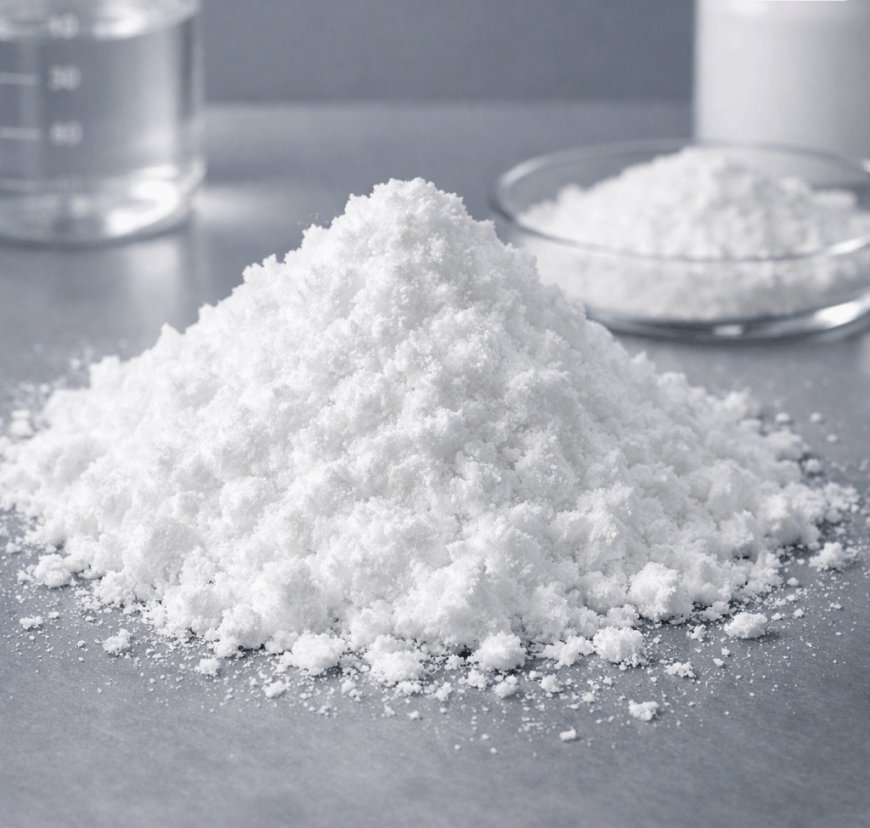
Microcrystalline cellulose has moved beyond a single-industry application, finding uses across pharmaceuticals, food processing, and personal care. Its broad functionality continues to create opportunities for market expansion across these sectors. The Microcrystalline Cellulose Market is projected to grow from US$ 4.06 billion in 2025 to US$ 6.75 billion by 2034, recording a 5.81% CAGR between 2026 and 2034.
What Is Microcrystalline Cellulose?
Microcrystalline cellulose (MCC) is a refined, partially depolymerised cellulose derived primarily from wood pulp or other plant-based fibrous raw materials. It functions as a binder, filler, disintegrant, and flow-aid in tablet manufacturing, and performs equally well as a fat replacer, stabiliser, and texturiser in food and cosmetic applications. Its natural origin, chemical inertness, and regulatory acceptance across major pharmacopoeias make it one of the most widely specified excipients in global formulation science.
Request a Sample Copy of the Report: https://www.theinsightpartners.com/sample/TIPRE00004679
Why the Microcrystalline Cellulose Market Is Growing Faster Than Ever
Pharmaceutical output is rising on a global scale, and MCC is embedded in that growth at the formulation level. Oral solid dosage forms tablets and capsules remain the dominant drug delivery format worldwide, and MCC is the excipient of choice for direct compression and wet granulation across both branded and generic drug production. As generic medicine volumes expand in Asia, Latin America, and Africa, driven by patent cliffs on major blockbuster molecules and government procurement programmes prioritising affordable medicines, MCC demand scales in parallel. India alone has emerged as one of the world's largest producers and consumers of pharmaceutical-grade MCC, with domestic manufacturers such as Sigachi Industries Pvt. Ltd. and Accent Microcell Pvt. Ltd. playing a significant role in both supply and pricing.
Beyond pharmaceuticals, the food and beverage industry is generating its own structural demand. Consumers in developed markets are actively seeking low-fat, low-calorie reformulations of everyday products from dairy alternatives to processed snacks and MCC delivers the mouthfeel and textural stability that fat normally provides. This is not a passing trend. Regulatory bodies in the US, EU, and elsewhere have approved MCC as a safe food additive, and food manufacturers reformulating to meet health claims or nutritional labelling targets are incorporating it systematically into product development pipelines. The clean-label movement has also worked in MCC's favour; derived from plant cellulose, it reads as a natural ingredient relative to many synthetic stabilisers, which gives formulators an added positioning argument with health-conscious consumers.
The cosmetics and personal care segment add a third growth vector that is easy to underestimate. MCC functions as an opacifier, absorbent, and texture enhancer in creams, lotions, and pressed powders. As premium skincare expands rapidly across China, South Korea, and Southeast Asia, and as formulators replace synthetic polymers in response to microplastic regulations gaining traction in Europe and the UK, MCC is increasingly specified as a functional alternative. This regulatory pressure on synthetic ingredients is not yet universal, but its direction is clear and that is accelerating qualification work for MCC-based replacements across multiple cosmetic product categories.
Raw material sourcing and sustainability concerns are reshaping supply chains in ways that create both risk and opportunity. Wood-based MCC has historically dominated the market, but non-wood sources including cotton linters, sugarcane bagasse, and agricultural residues are attracting growing investment. Manufacturers working in regions with constrained timber supply or stricter forest governance requirements are actively qualifying non-wood grades, and some pharmaceutical customers are beginning to request supply chain transparency on cellulose sourcing as part of their own ESG commitments. This shift is slow but directionally consistent, and companies that have invested early in non-wood feedstock capability stand to benefit as the requirement firms up.
Segmentation Overview
The market is analysed across source type and application, with each segment reflecting distinct demand dynamics.
By Source Type: Wood-based MCC currently accounts for the majority of global supply, benefitting from well-established pulping infrastructure, consistent quality profiles, and deep pharmacopoeial documentation. Non-Wood based MCC is the faster-growing segment, supported by agricultural residue availability in Asia and Latin America, improving processing technology, and increasing demand for supply chain diversification from large pharmaceutical and food customers.
By Application: Pharmaceutical remains the largest application segment, driven by tablet manufacturing volumes and stringent excipient quality requirements that favour established, pharmacopoeial-grade MCC grades. Food and Beverage is expanding at an accelerating pace, particularly in functional food, dietary supplement, and low-calorie product categories. Cosmetics and Personal Care is the most dynamic segment in terms of new application development, as formulators across premium skincare and colour cosmetics explore MCC as both a functional and clean-label ingredient.
Key Market Players
- Accent Microcell Pvt. Ltd.
- Asahi Kasei Corporation
- Avantor, Inc.
- DFE Pharma GmbH and Co. KG
- FMC Corporation
- JRS PHARMA GmbH and Co. KG
- Mingtai Chemical Co., Ltd.
- Rayonier Advanced Materials
- Roquette Frères
- Sigachi Industries Pvt. Ltd.
Buy Premium Report: https://www.theinsightpartners.com/buy/TIPRE00004679
Sustainability and Innovation Trends in Microcrystalline Cellulose
Innovation in MCC is running on two parallel tracks. The first is performance: manufacturers are developing co-processed MCC grades that combine cellulose with other excipients such as colloidal silicon dioxide or carboxymethylcellulose to deliver improved compressibility, flow, or moisture resistance in a single ingredient. These co-processed grades simplify formulation development and reduce tablet press downtime tangible operational benefits that justify premium pricing with pharmaceutical manufacturers. The second track is sustainability: investment in closed-loop water systems, energy recovery in drying operations, and certified sustainable wood sourcing is becoming a differentiator as large pharmaceutical customers embed supplier sustainability assessments into procurement.
Regional Outlook
North America holds a strong position in the microcrystalline cellulose market, underpinned by large-scale pharmaceutical manufacturing, a mature food processing industry, and well-established excipient supply chains. Europe contributes significantly as well, with Germany, France, and the UK hosting major MCC producers and end-users in both pharma and food sectors, alongside tightening regulatory scrutiny on synthetic alternatives in cosmetics that is redirecting formulator attention toward cellulose-based ingredients. Asia Pacific is the fastest-growing region, driven by pharmaceutical capacity expansions in India and China, rising processed food consumption, and the rapid growth of prestige skincare markets across the region. Latin America and the Middle East represent emerging demand centres where rising pharmaceutical generics production and food processing modernisation are creating incremental MCC volume.
About The Insight Partners
The Insight Partners is among the leading market research and consulting firms in the world. We take pride in delivering exclusive reports along with sophisticated strategic and tactical insights into the industry. Reports are generated through a combination of primary and secondary research, solely aimed at giving our clientele a knowledge-based insight into the market and domain. This is done to assist clients in making wiser business decisions. A holistic perspective in every study undertaken forms an integral part of our research methodology and makes the report unique and reliable.
Contact Us:
If you have any queries about this report or if you would like further information, please contact us:
Phone: +1-646-491-9876
E-mail: sales@theinsightpartners.com
Also Available in: Korean | German | Japanese | French | Chinese | Italian | Spanish