Best Hair Transplant Clinic in Ludhiana: A Complete Guide to FUE Hair Transplant
 Vivi_evans
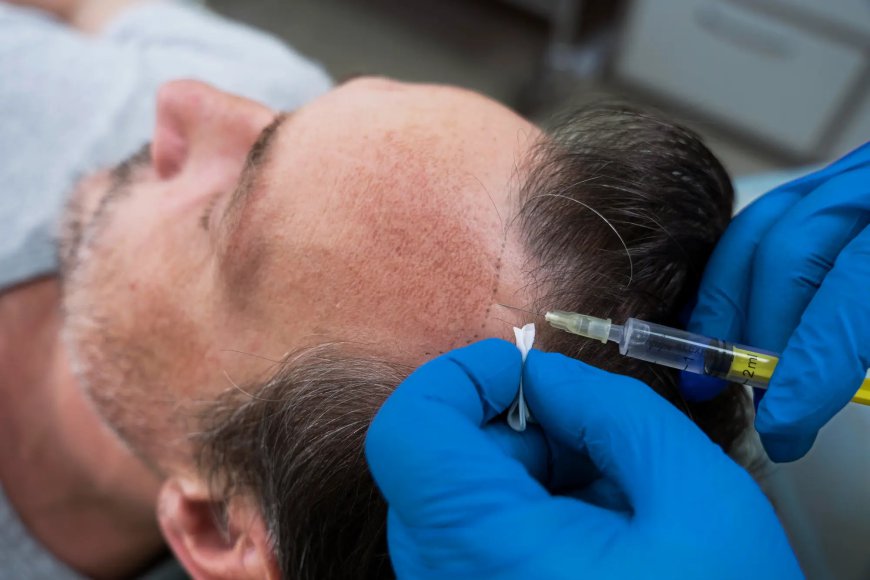
Hair loss can gradually change the way a person looks and feels. A receding hairline, thinning crown, or visible scalp may become more noticeable over time, leading many people to explore modern hair restoration options.
For those searching for the best hair transplant clinic in Ludhiana, FUE is one of the most commonly discussed techniques. A FUE Hair Transplant in Ludhiana can provide a way to restore hair in suitable candidates by transferring individual follicular units from a donor area to regions affected by hair loss.
However, choosing a clinic should involve more than comparing prices or looking for the latest procedure name. The quality of diagnosis, donor management, hairline planning, graft handling, and long-term treatment strategy can all influence the outcome.
What Is FUE Hair Transplant?
FUE, or Follicular Unit Extraction, is a hair transplantation technique in which individual follicular units are extracted from a suitable donor area and transplanted into areas experiencing hair loss.
Unlike the older strip-based approach, FUE does not involve removing a long strip of scalp.
Instead, individual follicular units are harvested separately.
The extracted follicles are then prepared and placed into carefully planned recipient areas.
The objective is to restore hair while maintaining a natural appearance in both the transplanted and donor regions.
Why Is FUE Popular?
FUE has become a widely discussed hair transplantation technique because it allows individual follicular units to be harvested without removing a linear strip of scalp.
Potential advantages include:
- Individual follicle extraction
- No linear strip scar
- Ability to target specific thinning areas
- Flexible graft placement
- Potentially suitable for different hair-loss patterns
- Option to design a natural-looking hairline
However, the success of a transplant depends on much more than the extraction technique.
The quality of planning and execution remains critical.
Who May Be Suitable for FUE Hair Transplant?
FUE may be considered by people experiencing several forms of hair loss, including:
- Receding hairlines
- Male pattern hair loss
- Crown thinning
- Localized bald areas
- Reduced hair density
- Certain cases of hair loss following injury or surgery
However, not everyone is an appropriate candidate.
A professional assessment should determine:
- The cause of hair loss
- Donor-area density
- Hair thickness
- Scalp condition
- Existing hairline
- Expected future hair loss
- Desired level of coverage
Why Donor Hair Matters
One of the most important concepts to understand before a FUE hair transplant in Ludhiana is that transplantation does not create additional hair follicles.
Follicles are moved from a donor area to a recipient area.
This means the donor area has a limited supply.
A responsible treatment plan should therefore balance the desired coverage with the amount of donor hair that can be safely harvested.
Overharvesting the donor area simply to increase the number of transplanted grafts can negatively affect its appearance.
How Does FUE Hair Transplant Work?
Although individual protocols vary, a typical FUE procedure involves several stages.
1. Hair and Scalp Assessment
The process begins with a detailed evaluation.
The practitioner may examine:
- Hair-loss pattern
- Hair density
- Hair thickness
- Donor-area quality
- Scalp health
- Hairline position
- Crown area
- Long-term restoration goals
The assessment helps determine whether FUE is appropriate.
2. Treatment Planning
The practitioner determines which areas need additional coverage and develops a graft distribution strategy.
The number of grafts should be based on the individual's requirements rather than simply choosing the highest possible number.
3. Hairline Design
A natural-looking hairline is planned according to facial proportions, age, existing hair, and anticipated future hair loss.
A good hairline should blend with the existing hair rather than appearing like an artificial boundary.
4. Individual Follicle Extraction
Suitable follicular units are extracted individually from the donor area.
Careful extraction is important for both graft survival and donor-area appearance.
5. Graft Preparation
The extracted follicles are examined and prepared for implantation.
Proper handling helps protect the follicles during the transplantation process.
6. Graft Implantation
The follicles are placed into the recipient areas according to the planned design.
The direction, angle, spacing, and distribution of grafts are carefully considered.
7. Recovery
After the procedure, the scalp begins its healing process.
Temporary redness, swelling, sensitivity, or small crusts may occur.
The clinic should provide detailed aftercare instructions for the recovery period.
What Makes a Hair Transplant Look Natural?
The number of grafts is only one part of the equation.
A natural-looking result can depend on several factors.
Hairline Design
The frontal hairline should generally transition naturally into the existing hair.
Graft Selection
Finer follicular units may be particularly useful in certain areas of the frontal hairline.
Growth Direction
Transplanted follicles should follow the natural direction of surrounding hair.
Density Distribution
Hair does not naturally grow at exactly the same density everywhere. Strategic distribution can help create a more realistic appearance.
Donor Management
The donor region should remain visually natural after extraction.
How to Choose the Best Hair Transplant Clinic in Ludhiana
The phrase best hair transplant clinic in Ludhiana can mean different things to different people.
Instead of relying on a single ranking or advertisement, consider several practical factors.
Look at Practitioner Experience
Ask about the experience of the professional who will assess and perform the procedure.
Hair restoration involves both medical judgment and aesthetic planning.
Review Genuine Before-and-After Cases
Before-and-after photographs can help you understand the type of results a clinic produces.
Look for cases with:
- Similar hair-loss patterns
- Comparable hair characteristics
- Natural hairlines
- Consistent density
- Healthy-looking donor areas
Ask About the Number of Grafts
A clinic should be able to explain why a particular graft number is being recommended.
More grafts do not automatically mean a better result.
Examine Donor-Area Planning
Ask how the clinic plans to protect the donor area and whether future hair loss has been considered.
Understand Who Performs the Procedure
It is reasonable to ask who will carry out the important stages of treatment rather than assuming that the same person handles every part of the procedure.
Look for Realistic Communication
A reputable clinic should discuss limitations and potential risks alongside benefits.
Be cautious about guaranteed results or claims that everyone will achieve a particular density.
How Much Does FUE Hair Transplant Cost in Ludhiana?
There is no fixed cost for every patient.
The total price can depend on:
- Number of grafts required
- Extent of hair loss
- Donor-area characteristics
- Procedure complexity
- Practitioner expertise
- Clinic facilities
- Additional treatments
- Follow-up care
Someone with mild recession may require a very different treatment plan from someone with extensive crown and frontal hair loss.
For this reason, a consultation is generally necessary before a meaningful estimate can be provided.
Understanding the FUE Recovery Period
Recovery varies between individuals.
After FUE, patients may experience temporary:
- Redness
- Swelling
- Small crusts
- Sensitivity
- Tightness or discomfort
The transplanted area requires appropriate care while the scalp recovers.
Patients should follow the clinic's specific instructions concerning washing, exercise, sleeping position, sun exposure, and scalp products.
Does Transplanted Hair Shed After FUE?
Some transplanted hair can shed during the early period following transplantation.
This is often part of the normal hair-growth cycle.
The follicle remains beneath the scalp and can subsequently produce new hair.
Because of this, patients should not assume that early shedding means the transplant has failed.
When Will FUE Results Become Visible?
Hair transplantation is a gradual process.
The general progression can be described as:
Procedure → Healing → Possible shedding → New growth → Increasing density → Hair maturation
The exact timeline differs between individuals.
Visible improvement develops progressively, and the mature result may take many months to evaluate.
Patience is therefore an important part of the process.
Can FUE Treat Crown Hair Loss?
FUE can be used to transplant follicles into the crown area in suitable candidates.
However, crown restoration can require careful planning because the natural growth pattern in the crown is different from the frontal hairline.
The available donor supply, size of the thinning area, and future progression of hair loss all need to be considered.
A practitioner may also prioritize certain areas depending on the individual's pattern of hair loss and available donor resources.
Frequently Asked Questions
1. What is a FUE Hair Transplant in Ludhiana?
A FUE Hair Transplant in Ludhiana is a hair restoration procedure in which individual follicular units are extracted from a suitable donor area and transplanted into areas affected by hair loss. It does not require removing a linear strip of scalp.
2. Is FUE hair transplantation permanent?
Transplanted follicles can provide long-term hair growth when suitable follicles are selected and successfully transplanted. However, non-transplanted hair can continue to thin depending on the underlying cause of hair loss.
3. How many grafts are needed for FUE?
There is no universal graft number. Requirements depend on the extent of hair loss, desired coverage, donor density, hair characteristics, and long-term treatment plan. A professional assessment is needed to estimate the appropriate number.
4. How long does it take to see FUE results?
Results develop gradually. Transplanted hairs may initially shed before new growth begins. Visible improvement occurs progressively, while the mature appearance generally takes several months to develop.
5. How do I find the best hair transplant clinic in Ludhiana?
Look for experienced professionals, individualized treatment planning, genuine before-and-after cases, careful donor management, appropriate clinical standards, transparent costs, and realistic discussions about benefits and limitations. Avoid selecting a clinic solely because of price or promotional claims.
Final Thoughts
Finding the best hair transplant clinic in Ludhiana should involve careful research rather than simply choosing the clinic with the most attractive advertisement or lowest price.
A FUE hair transplant in Ludhiana can be an effective option for suitable candidates because individual follicular units can be extracted and transplanted into areas affected by hair loss. However, the procedure's success depends on much more than the extraction method.
Donor-area planning, hairline design, graft handling, implantation direction, density distribution, practitioner experience, and long-term hair-loss management all deserve attention.
If you are considering FUE, begin with a detailed consultation. Understanding your diagnosis, donor capacity, realistic coverage, recovery, expected growth timeline, and available treatment options will help you make a more informed decision about your hair restoration journey.