Environmental Due Diligence: Key Steps, Environmental Risks, and Compliance Requirements in India
Learn the key steps of Environmental Due Diligence in India, including environmental risks, compliance requirements, assessments, documentation, and best practices.
 upendrasharma
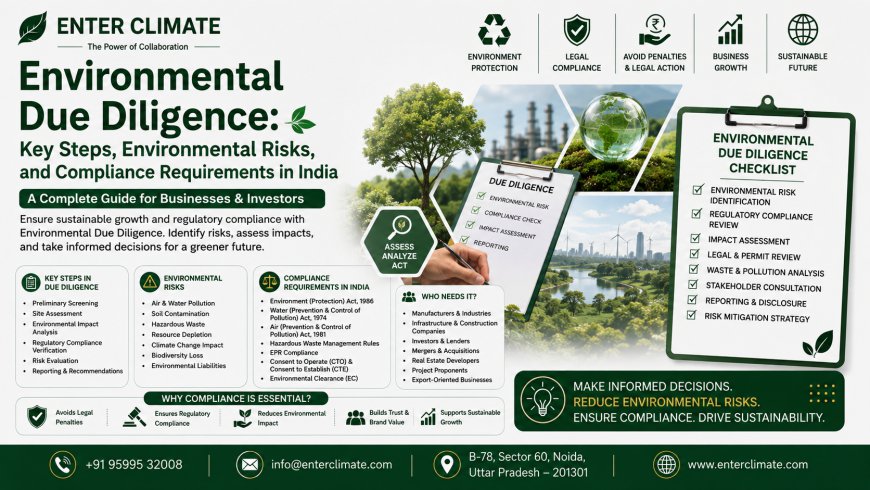
When a company wants to buy land, start a factory, build a project, or invest in an existing business, checking the environmental condition of the project is very important. This process is called Environmental Due Diligence.
In simple words, environmental due diligence means checking whether a business is following environmental rules and whether the project has any hidden environmental problems. It is like checking a house carefully before buying it. You want to know if everything is safe before spending your money.
In India, environmental laws can be complex. Businesses may need approvals, reports, certificates, and pollution control measures before starting or expanding their operations.
What Is Environmental Due Diligence?
Environmental Due Diligence is a detailed review of a company's environmental practices, land, operations, waste management, water use, pollution control systems, and legal approvals.
The main purpose is to find environmental risks before they become expensive problems.
For example, a company planning to purchase an industrial property may discover that the land has been affected by past chemical activities. Finding this problem early can help the buyer make a better decision.
Why Is Environmental Due Diligence Important?
Environmental problems can lead to penalties, project delays, legal notices, cleanup costs, and damage to a company's reputation.
A proper environmental review can help businesses:
-
Identify possible environmental risks
-
Check existing environmental approvals
-
Understand pollution and waste-related issues
-
Reduce the chance of future penalties
-
Make better investment decisions
-
Improve environmental compliance
-
Plan corrective actions before starting operations
It is especially useful during mergers, acquisitions, industrial expansion, property purchases, and new project development.
Key Steps in Environmental Due Diligence
1. Check Environmental Approvals
The first step is to check whether the project has the required environmental permissions.
Depending on the type and size of the project, Environmental Clearance may be required under applicable Indian environmental regulations. Other approvals may also be needed from the concerned pollution control authority.
The company should check whether its approvals are valid, updated, and applicable to its current operations.
2. Review Pollution Control Compliance
A business should be checked for air emissions, wastewater discharge, noise pollution, and other possible sources of pollution.
The review may include checking Consent to Establish, Consent to Operate, monitoring reports, pollution control equipment, and compliance records.
3. Check Waste Management
Industrial activities can generate different types of waste, including hazardous waste, plastic waste, e-waste, used oil, and other materials.
During due diligence, it is important to check how waste is stored, transported, treated, recycled, or disposed of.
Poor waste management can create environmental risks and regulatory problems.
4. Examine Soil and Water Risks
Past industrial activities may sometimes affect soil or groundwater. A proper assessment can help identify contamination or other concerns.
Where groundwater conditions are important, a Hydrogeological survey report may be required to understand groundwater availability, movement, recharge conditions, and related site characteristics.
This information can be useful when planning industries that depend heavily on groundwater.
5. Check Water and Wastewater Systems
Businesses using large amounts of water should carefully review their water consumption and wastewater treatment systems.
Some industries may require advanced treatment systems, including Zero Liquid Discharge (ZLD), depending on applicable requirements and project conditions.
Where applicable, businesses may also need a ZLD Certificate or supporting documentation to demonstrate that their wastewater management system meets the required conditions.
6. Review Past Environmental Notices
A company should also check whether it has received notices, directions, penalties, or other regulatory actions from environmental authorities.
Past violations can indicate risks that may continue after a property or business is purchased.
Common Environmental Risks in India
Some common risks found during environmental due diligence include:
-
Missing or expired environmental approvals
-
Soil or groundwater contamination
-
Improper hazardous waste storage
-
Poor wastewater treatment
-
Air pollution beyond permitted limits
-
Unauthorised groundwater extraction
-
Inadequate waste disposal
-
Non-compliance with environmental conditions
-
Missing monitoring and reporting records
Not every business will face all these risks. The risks depend on the industry, location, size, production process, and environmental impact of the project.
How Can Businesses Reduce These Risks?
The best approach is to identify problems early and prepare a practical compliance plan.
A business can start by maintaining proper environmental records, regularly checking pollution control systems, renewing approvals on time, managing waste responsibly, and following the conditions attached to its environmental permissions.
Taking professional support can also make the process easier, especially for projects with multiple environmental requirements.
Final Thoughts
Environmental Due Diligence is not only about avoiding penalties. It helps businesses understand what they are getting into before making an important investment or starting a project.
From checking Environmental Clearance and pollution approvals to reviewing waste management, groundwater conditions, and wastewater treatment, each step can help uncover potential risks.
With proper planning, businesses can solve environmental issues early, protect natural resources, and build operations that are safer and more compliant.
Author Profile
Upendra Sharma
Upendra Sharma is an Environmental Compliance Consultant associated with Enterclimate, an environmental compliance and sustainability consultancy. He writes about environmental regulations, pollution control, waste management, environmental due diligence, and compliance requirements in India. His goal is to make complex environmental topics simple and easy for businesses to understand.