How Much Does Spray Foam Insulation Cost
Learn the typical cost of spray foam insulation, factors that affect pricing, and why it can be a smart investment for energy efficiency and long-term savings.
 Austin Dominic
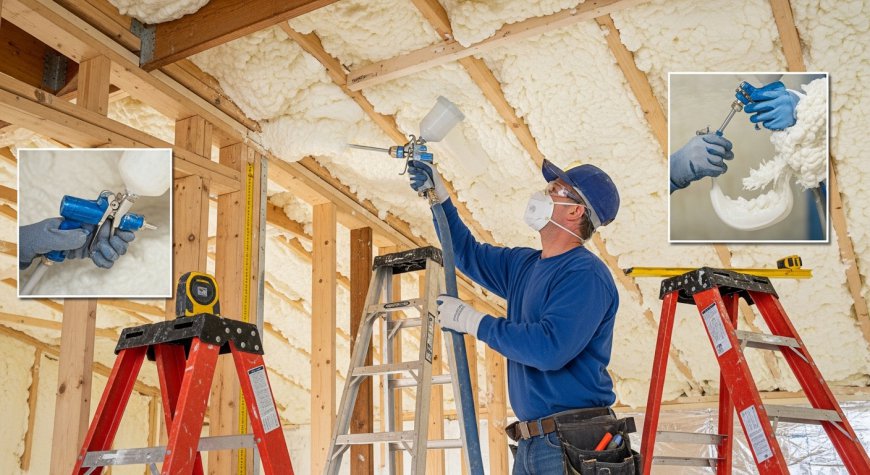
Spray foam insulation is considered among the best insulation materials in the USA by homeowners who wish to boost energy efficiency and comfort. A typical homeowner may spend anywhere from $1.500 to $10.000 for a full installation, depending on the house's area, the type of foam, and the cost of labor. Although the initial cost is higher than traditional insulation such as fiberglass or cellulose, energy bill savings over the years, increased comfort, and less maintenance are benefits that justify the investment.
There are a number of ways to decide on spray foam insulation while not feeling stressed. It is crucial to comprehend the average costs, the variables influencing the prices, and the advantages of each foam type. Homeowners who want to know exactly how much money they will need to spend can turn to accurate estimating services to avoid extra charges and to have a pleasant installation experience.
What Is Spray Foam Insulation?
Spray foam insulation, when applied, is a two-component mixture that, after the first contact rapidly expands, turning into a solid barrier that effectively seals gaps, cracks, and other openings in the walls, ceilings, and roofs. Unlike traditional insulation, spray foam does insulation and air sealing simultaneously in a single application. The two main types are:
Open-Cell Spray Foam
Open-cell foam is pliable and soft, with a texture like that of a sponge. Usually, it is cheaper per square foot, but its thermal resistance (R-value) is slightly less than that of closed-cell foam. Open-cell is good for use in interior walls, attics, and other areas where there is only a little moisture exposure.
Closed-Cell Spray Foam
Closed-cell foam is hard, compact, and has a higher R-value per inch which makes it perfect for places that require both the highest level of insulation and structural strength. This kind of foam can also serve as a moisture barrier, which is particularly helpful in basements, roofs, and exterior walls.
Factors Affecting Spray Foam Insulation Cost In The Us
There can be a significant variance between spray foam prices across the United States of America if you look at these major factors that influence the price:
Type of Foam
Open-cell is less expensive as it can be seen from the above, a range of $0.35-$0.65 per square foot, while closed-cell is $1-$1.50 per square foot. Both the selection of foam and whether it is open-cell or closed-cell will impact the material and labor costs because workers have to be very careful with closed-cell and at the same time very precise in the way they apply it.
Home Size And Layout
The size of the area to be insulated affects the cost directly. For example, the price for a small job like insulating an attic is only a few thousand dollars while doing the whole house may go even beyond $10,000. In addition, houses with more than one level or with an irregular layout require more labor and thus lead to a higher final price.
Regional Labor Costs
The variation in installation labor depends on the location. Cities with high living costs or a low number of contractors in the area will inevitably have higher prices. As an illustration, labor in California could be more expensive than in the Midwest.
Installation Area Accessibility
Locations that are not easily accessible, have a steep roof, or an attic full of obstacles, can increase the time and cost of installation. Contractors might include a surcharge for such complicated spots.
R-Value Standards
The R-value is the measure of thermal resistance. Raising the R-value indicates better insulation but requires thicker layers of foam, thus increasing the cost of materials and labor. Closed-cell foam offers higher R-values, which can be the reason for an extra expenditure in energy savings over time.
Additional Work and Preparations
Disposing of old insulation, fixing leaks, or strengthening the building can increase the costs. If the house has been damaged by water or there are structural issues, it might be necessary to have more preparations done, which should be included in the budget.
Typical Spray Foam Prices Across The Us
The table below summarizes the average cost of spray foam insulation in the USA.
|
Type of Foam |
Cost per Square Foot |
Typical R-Value per Inch |
Average Total Cost (1,500–2,000 ft²) |
|
Open-Cell |
$0.35–$0.65 |
3.5–4.0 |
$1,500–$4,000 |
|
Closed-Cell |
$1.00–$1.50 |
6.0–7.0 |
$3,500–$10,000 |
The mentioned figures are the averages throughout the US. The differences may depend on the size and complexity of the project, as well as the contractor's pricing. Homeowners get a realistic cost assessment of their property if builders use estimating services.
The Benefits Of Spray Foam Insulation
Spray foam is not just a tool to cover your walls, signing up for one of these will reward you with the following benefits:-
One of the primary functions of spray foam is to fill the air leaks, thus the heating and cooling bills of such homes can go down by a 20 to 50 percent range. Moreover, closed-cell foam is known to be a highly efficient thermal insulator.
Better Comfort
Spray foam reduces air drafts and temperature variation, thus, an indoor environment with a consistent temperature. Those who have used this method even say that their cold spots have almost been eliminated, and they have been more comfortable all year long.
Resistance To Moisture And Mold
Besides, the closed-cell foam serves as a moisture barrier and thus, lessens mold and water damage. Therefore, it is the best option for basements, crawl spaces, and exterior walls.
Increased Structural Strength
Closed-cell foam can add to the structural strength of walls and roofs. In addition, it provides extra support and an increase in the home's lifespan.
Cost Saving In The Long Run
Nevertheless, the reduction in energy bills is often enough to cover the cost of the investment within the 3-7 year range; the exact duration depends on the local climate and energy prices.
Comparison With Other Types Of Insulation

Spray foam is commonly more expensive than either fiberglass or cellulose insulation; however, it significantly outperforms them in terms of benefits, making it ideal for accurate insulation estimation.
|
Insulation Type |
Cost per Square Foot |
Pros |
Cons |
|
Fiberglass |
$0.40–$1.00 |
Low cost, easy to install |
Air leaks, lower R-value |
|
Cellulose |
$0.60–$1.20 |
Eco-friendly, moderate R-value |
Settling over time |
|
Spray Foam |
$0.35–$1.50 |
High R-value, air/moisture seal |
Higher upfront cost |
Spray foam is definitely the ideal solution for energy efficiency, comfort, and durability, but it is still the most expensive option to install in a house.
Tips For Homeowners
-
Get a minimum of 3 estimates: Prices can be very different from one contractor to another, so it is a good idea to get at least three different quotes to compare.
-
Request explanation about R value: Make sure to check what the right R-value is for your location and in accordance with building codes.
-
Use review sites and ask friends: Reviews and referrals are very helpful in finding trustworthy contractors.
-
Create a timeline for working with the contractor: Make sure that the area where they are going to work is ready so that you don't have to reschedule the job.
-
Consider Long-Term Savings: Factor in energy cost reductions over the lifespan of the insulation.
Conclusion
American homeowners who desire to make their houses more energy-efficient, comfortable, and save a lot of money for a long time should think about spray foam insulation. The price range of this service can be between 1,500 and 10,000 dollars, but if you know what kind of foam you need, the size of the house, the regional factors, and how complicated the installation is going to be, it will be easier to budget for the job. To get the best price, it is advisable to use reliable estimating services that not only offer a budget you can count on, but also prevent you from getting unnecessary expenses and ensure that your house is well insulated.
Eventually, people find out that the higher cost of spray foam in the beginning is more than made up for by the advantages that include less energy consumption, more comfort, protection against moisture, and a higher price of the house when it is sold. By correctly analyzing both the costs and the benefits, a homeowner can come up with a wise choice that will lead to both increased comfort and efficiency.
FAQs
Q1: Is Spray Foam Insulation Worth The High Cost?
A1: Yes. While the upfront cost is higher, homeowners typically see significant energy savings and improved comfort, making it a long-term investment.
Q2: How Long Does Spray Foam Insulation Last?
A2: Spray foam can last 20-30 years or longer if properly installed, with minimal maintenance.
Q3: Can I Install Spray Foam Insulation Myself?
A3: DIY kits exist, but professional installation ensures proper coverage, correct R-value, and safety.
Q4: How Much Can I Save On Energy Bills?
A4: Most homeowners reduce heating and cooling costs by 20–50%, depending on home size and climate.
Q5: Does Closed-Cell Foam Prevent Moisture Damage?
A5: Yes. Closed-cell foam acts as a moisture barrier, helping prevent mold growth and water-related damage.