How to Choose the Right Dump Trailer for Your Work
Looking for dump trailers in Montana? Explore essential tips on trailer size, payload capacity, hydraulics, towing, maintenance, and durability.
 Montana Trailer Sales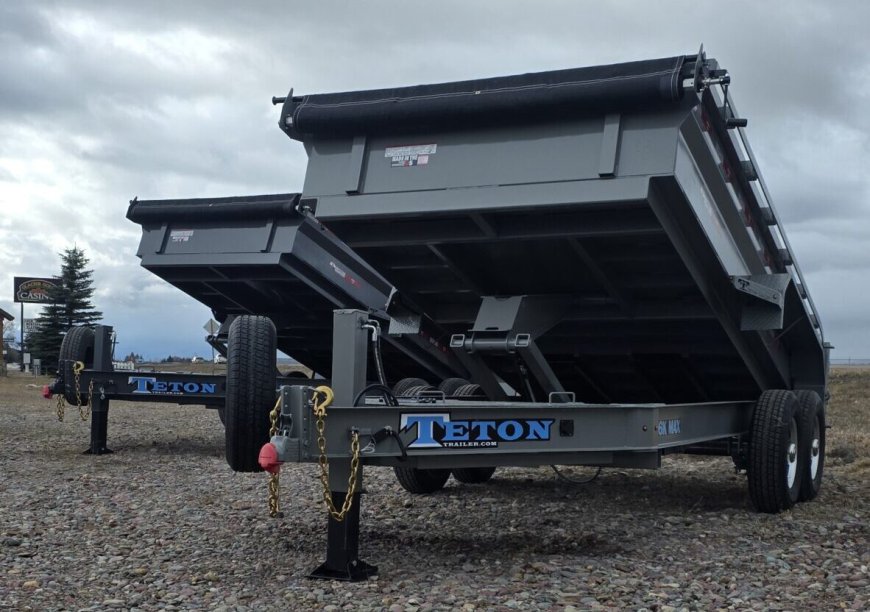
A dump trailer can make demanding jobs faster, safer, and more organized. Whether you are hauling gravel for a driveway, removing debris from a construction site, transporting landscaping materials, or cleaning up a large property, the right trailer reduces manual labor and helps you complete more work in less time. Unlike a standard utility trailer, a dump trailer uses a hydraulic lifting system to unload material directly at the job site.
For contractors, farmers, landscapers, property owners, and equipment operators, a dump trailer is more than a convenient hauling tool. It can become an important part of daily operations. However, trailers are available in different sizes, weight ratings, axle configurations, side heights, and hydraulic systems. Understanding these differences is essential because the most expensive or largest trailer is not always the best choice for every job.
People searching for dump trailers should consider local working conditions before making a purchase. Long towing distances, rough access roads, changing weather, snow, mud, and uneven job sites can place additional stress on a trailer. A model that performs well for light residential use may not be suitable for buyers who need reliable dump trailers in Montana for frequent commercial hauling. Choosing a trailer based on the actual workload and terrain can improve reliability and reduce unnecessary maintenance.
Start With the Material You Plan to Haul
The first step is identifying what you will carry most often. Different materials create different hauling requirements.
Loose materials such as mulch, branches, and household debris may take up a lot of space without adding excessive weight. Gravel, dirt, concrete, roofing shingles, and construction waste can become extremely heavy even when the trailer is not completely full. This is why trailer capacity should never be judged by bed size alone.
Before buying, estimate the weight of a typical load. Compare that figure with the trailer's payload capacity, not just its gross vehicle weight rating. The payload capacity is the amount the trailer can safely carry after subtracting the trailer's empty weight.
For example, two trailers may have the same gross weight rating, but one may weigh more because it has thicker steel, taller sides, or additional equipment. The heavier trailer may offer a lower usable payload. Understanding this difference helps prevent overloading and protects the trailer, tow vehicle, tires, brakes, and suspension.
Choose a Practical Trailer Size
Dump trailers are available in compact models for residential work and larger models for commercial operations. A small trailer is easier to store, maneuver, and tow in tight spaces. It may be a good choice for property maintenance, light landscaping, firewood, and occasional cleanup projects.
A larger trailer provides more room and may reduce the number of trips required for major jobs. It can be useful for excavation, construction, agricultural work, roofing, and heavy debris removal. However, a larger bed can encourage overloading, especially when hauling dense material.
Think about where the trailer will be used. A long trailer may be difficult to position in narrow driveways, crowded job sites, wooded areas, or small farm entrances. The right size should provide enough capacity without making routine towing and placement unnecessarily difficult.
Check the Axles, Brakes, and Suspension
Axles are among the most important components of a dump trailer. Their combined rating must support the loaded trailer, and the trailer should have suitable brakes for controlled stopping.
Tandem-axle trailers are common because they distribute weight more effectively than many single-axle models. They may also provide better stability when towing heavy loads. Depending on the trailer's rating and local requirements, electric brakes may be installed on one or both axles.
Look closely at the suspension, hubs, bearings, tires, and brake components. A strong trailer frame is valuable, but the trailer will only perform properly when the running gear is also suited to the load. Ask how easy it is to obtain replacement parts and whether the dealer can provide support after the sale.
Understand the Hydraulic Lifting System
The hydraulic system is what separates a dump trailer from a basic open trailer. It lifts the bed so the load can slide out through the rear.
Common lifting designs include scissor hoists, telescopic cylinders, and dual-cylinder systems. Each design has its own advantages. A scissor hoist provides strong lifting leverage and is widely used in many general-purpose dump trailers. Telescopic systems can produce a steep dumping angle and may work well for certain heavy-duty applications.
The quality and placement of the hydraulic components are important. The pump, battery, hoses, fittings, wiring, and controls should be protected but still accessible for inspection and service. Battery condition also matters because a weak or poorly maintained battery can slow the lifting process or leave the bed unable to rise fully.
When comparing models, ask how the hydraulic system is powered, how the battery is charged, and whether a remote control is included. These details can make daily operation more convenient.
Consider the Gate Design
The rear gate affects how easily different materials can be unloaded. A spreader gate can help release gravel, soil, or other loose material in a controlled manner. A barn-door style gate opens outward and creates a wide exit for equipment, debris, pallets, or bulky items.
Some trailers offer a combination gate that can work in more than one position. This is useful for owners who handle several types of jobs. Landscapers may need controlled spreading on one project and full access for loading equipment on another.
Check the hinges, latches, pins, and locking points. These components should be strong, easy to operate, and secure during transport. A poorly designed gate can make unloading difficult and may create a safety concern if it opens unexpectedly.
Decide Whether You Need Ramps
Loading ramps can make a dump trailer more versatile. They allow certain compact machines, lawn equipment, small tractors, or other wheeled tools to be loaded directly into the bed.
If ramps are important, inspect their length, weight rating, surface traction, attachment points, and storage location. Ramps should be rated for the equipment being loaded. They should also connect securely to the trailer so they do not move during use.
Remember that equipment weight counts toward the trailer's payload capacity. The trailer must also be balanced correctly, with enough tongue weight for stable towing but not so much that the tow vehicle or hitch is overloaded.
Match the Trailer to the Tow Vehicle
A trailer should never be selected without checking the capabilities of the tow vehicle. Review the vehicle's towing capacity, payload rating, hitch rating, gross combined weight rating, and recommended trailer brake controller.
The towing limit shown in an advertisement may not reflect the exact capacity of your vehicle. Engine choice, axle ratio, drivetrain, cab configuration, bed length, installed equipment, passengers, and cargo can all affect the amount a truck can safely tow.
The hitch ball size and coupler must match. Safety chains should be connected correctly, and the electrical plug should operate the lights and brakes. For heavier trailers, a properly installed brake controller is essential for smooth and controlled stopping.
Look for Features That Improve Daily Use
Small features can have a major effect on convenience. A tarp system helps contain loose material and may be required for transporting certain loads on public roads. Stake pockets allow side extensions to be added when carrying branches, brush, or lightweight debris. A built-in charger can help maintain the hydraulic battery.
Other useful features may include:
-
An adjustable coupler
-
A heavy-duty jack
-
LED lighting
-
Sealed wiring connections
-
Spare tire mounts
-
Tool storage
-
D-rings or tie-down points
-
Removable side extensions
-
Wireless or corded hydraulic controls
Choose features that support the work you actually perform. Extra equipment adds cost and weight, so it should provide a clear practical benefit.
Inspect Construction Quality
Pay attention to the frame, bed, crossmembers, floor thickness, welds, paint or powder coating, and corrosion protection. The trailer should feel solid, and doors or gates should open without binding.
A thicker floor may be helpful when hauling rock, scrap, broken concrete, or equipment. Taller sides may provide more volume for brush and debris. Reinforced fenders can offer added durability, but they should not be used as loading steps unless the manufacturer states that they are designed for that purpose.
It is also helpful to inspect how wiring and hydraulic hoses are routed. Exposed or poorly secured lines can be damaged by road debris, moving parts, or weather. Clean routing and protected connections often make inspection and future maintenance easier.
Ask About Service, Parts, and Custom Options
The buying process should include more than comparing prices. A knowledgeable trailer dealer can help calculate payload needs, check tow vehicle compatibility, explain available options, and recommend a model based on the customer's regular workload.
Montana Trailer Sales offers dump trailers along with cargo, utility, equipment, flatbed, recreational, and custom trailer options. The company also highlights straightforward pricing, financing choices, warranty coverage, and support before and after the sale.
Custom ordering may be worthwhile when standard inventory does not include the correct size, side height, axle rating, gate system, color, tarp, ramps, or tie-down configuration. A carefully selected custom build can be more useful than purchasing a standard trailer and making several modifications later.
Maintain the Trailer for Long-Term Reliability
Regular maintenance helps protect the trailer and keeps it ready for work. Inspect tire pressure before towing and look for uneven wear, cracking, or damage. Grease the required fittings, check wheel bearings, test the brakes, and confirm that all lights are working.
The hydraulic system should be checked for leaks, damaged hoses, loose connections, and low fluid. Keep the battery charged and clean the terminals when needed. Hinges, latches, ramps, and gates should move freely and lock securely.
After hauling dirt, road salt, manure, chemicals, or wet debris, clean the trailer thoroughly. Material left in the bed can hold moisture against the steel and contribute to corrosion. Following the manufacturer's service schedule can prevent small issues from turning into expensive repairs.
Make the Decision Based on Real Work
The best dump trailer is the one that safely handles your normal workload, works with your tow vehicle, and fits the conditions where it will be used. Focus on payload, construction quality, hydraulic performance, gate design, axle ratings, brakes, and dealer support rather than choosing a trailer based only on appearance or bed size.
A well-matched trailer can save time, reduce physical effort, improve job-site efficiency, and support many types of work for years. Taking the time to compare specifications and discuss your needs with an experienced dealer can help you choose the right trailer the first time.