How to Choose the Right Photo Editing App for Your Photography Needs
Discover how to choose the right photo editing app, explore Adobe Lightroom Mod APK features, presets, editing tools, and tips for better photography.
 AreejFatima
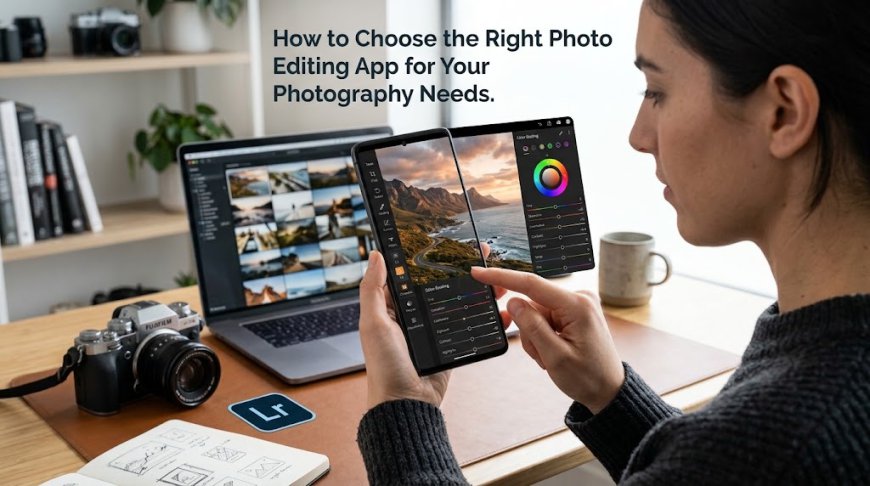
How to Choose the Right Photo Editing App
for Your Photography Needs
Choosing the right photo editing app can make a significant difference in how you improve and manage your photographs. With so many mobile and desktop editors available, it can be difficult to determine which application provides the tools you actually need. If you are exploring Adobe Lightroom Mod APK, understanding its editing features, presets, workflow, and compatibility can help you decide whether it fits your photography needs.
Understanding your photography goals before choosing an application can help you avoid unnecessary features and select a workflow that fits your needs. Whether you edit occasional smartphone photographs or create content regularly, comparing the available tools can make photo editing easier and more efficient.
Why Choosing the Right Photo Editing App Matters
A photo editing application should match the way you take, edit, organize, and share your images.
Some applications are designed for quick social media edits, while others provide detailed controls for photographers. Selecting the right option can save time and make it easier to achieve consistent results.
Before choosing an editor, consider your experience level, device, photography style, preferred features, and budget.
Understand Your Photography Needs
The first step is identifying what you actually want from a photo editing application.
If you mainly adjust brightness, contrast, cropping, and saturation, a basic editor may be enough. However, photographers who regularly work with RAW images may require more advanced tools.
Consider whether you need:
-
Basic photo adjustments
-
Advanced color controls
-
Presets and filters
-
RAW photo editing
-
Selective adjustments
-
Masking tools
-
Healing and object removal
-
AI-powered features
-
High-quality exports
-
Photo organization tools
Creating a list of essential features can make your decision much easier.
Consider Your Experience Level
Beginners and experienced photographers often have different requirements.
New users may prefer a simple interface with clearly labeled tools and automatic adjustments. Advanced users may want greater control over individual aspects of an image.
An application with too many complicated features can overwhelm beginners, while a basic editor may feel restrictive to experienced photographers.
The ideal application should provide enough functionality without making everyday editing unnecessarily difficult.
Mobile Photo Editing Features
Smartphone photography has become an important part of modern content creation.
Many users capture photographs directly on their phones and want to edit them without transferring files to a computer.
A good mobile editor should provide responsive controls, convenient importing, useful adjustment tools, and reliable export options.
If you frequently edit on Android or another mobile platform, make sure the application is compatible with your device and performs smoothly.
RAW Photo Support
RAW support is an important consideration for photographers who use dedicated cameras.
RAW files contain more image information than many compressed formats. This provides greater flexibility when adjusting exposure, highlights, shadows, colors, and other image characteristics.
If RAW editing is part of your workflow, check whether the application supports your camera's file format before making a decision.
Look for Useful Presets and Filters
Presets can simplify the editing process by providing predefined adjustments.
Instead of starting every photograph from scratch, you can apply a preset and then make additional changes based on the individual image.
Different photography styles may benefit from different preset approaches. Portraits, landscapes, street photography, travel photographs, and social media content can all require different visual treatments.
Lightroom Presets can help users explore different editing styles and understand how presets can become part of a consistent photo editing workflow.
Advanced Color and Light Adjustments
Basic filters can be useful, but detailed adjustment controls provide greater flexibility.
Look for tools that allow you to control elements such as:
-
Exposure
-
Contrast
-
Highlights
-
Shadows
-
Whites
-
Blacks
-
Temperature
-
Tint
-
Saturation
-
Vibrance
-
Clarity
These controls allow photographers to make more precise changes instead of relying entirely on automatic filters.
Selective Editing and Masking
Selective editing can be valuable when you want to adjust only a specific part of an image.
For example, you may want to brighten a subject without changing the background or adjust the sky separately from the foreground.
Masking and selective adjustment tools provide greater control and can help create more polished results.
AI-Powered Editing Tools
Modern editing applications increasingly include artificial intelligence features.
AI tools can assist with selections, subject detection, image adjustments, and other editing tasks. These features can save time, particularly when working with multiple photographs.
However, advanced technology should not be the only reason to choose an application. Consider whether the available AI tools actually solve problems within your normal workflow.
Adobe Lightroom for Photo Editing
Adobe Lightroom is a popular option for users who want more control over their photographs. It combines adjustment tools, presets, organization features, and creative editing capabilities in a single workflow.
People researching Adobe Lightroom Mod APK can find information about Lightroom features, editing tools, presets, updates, and mobile photography resources through specialized guides.
When considering modified or unofficial application files, users should also pay attention to the source, permissions, file authenticity, and potential security concerns. Official software sources are generally the safer option for obtaining applications.
Free and Premium Editing Options
Price is another important factor when selecting a photo editor.
Many applications provide free editing tools, while premium plans may add advanced features, cloud services, additional presets, or other functionality.
You should compare the features you actually need rather than automatically choosing the most expensive option.
For occasional users, free tools may provide everything necessary. Regular photographers and content creators may benefit from more advanced functionality.
Check Export Quality
The editing process does not end when you finish making adjustments.
Export quality can affect how your photographs appear on websites, social platforms, portfolios, and other destinations.
Before choosing an application, check whether it provides suitable resolution and file-format options for your intended use.
High-quality export controls are particularly important for photographers who plan to print or professionally publish their images.
Think About Your Editing Workflow
A powerful application is only useful if it fits your workflow.
Consider how you normally:
-
Import photographs
-
Organize your images
-
Select photographs for editing
-
Apply adjustments
-
Use presets
-
Make selective corrections
-
Export finished images
-
Share or publish your work
If these steps are easy to manage, you are more likely to use the application consistently.
Check Device Compatibility
Before installing any photo editor, confirm that it supports your device.
Check the operating system requirements, storage requirements, and expected performance.
Older devices may struggle with applications that use advanced processing features. Keeping sufficient free storage can also improve the overall editing experience.
Consider Storage Requirements
Photography can quickly consume storage space.
High-resolution images, RAW files, exported photographs, and application data can require considerable space over time.
If you edit large numbers of photographs, consider how the application handles storage and whether it provides useful file-management or cloud features.
Privacy and Security Considerations
Security should be considered whenever you install software, especially when applications are obtained outside official stores.
Before installing an application, consider its source and the permissions it requests.
Users researching unofficial or modified APK files should take additional precautions because such files may not be verified by the original developer. Checking the source carefully and understanding potential risks is important before installation.
Avoid Paying for Features You Don't Need
One of the easiest ways to overspend is choosing an application because it has a long list of features.
More tools do not automatically mean better value.
For example, a casual smartphone photographer may not need professional RAW controls, while an experienced photographer may consider them essential.
Think about the features you will actually use and choose accordingly.
Compare Different Editing Applications
Rather than selecting the first application you discover, compare several options.
Consider:
-
Editing capabilities
-
Preset availability
-
RAW support
-
AI features
-
Export quality
-
Ease of use
-
Device compatibility
-
Storage requirements
-
Pricing
-
Security considerations
This comparison can help you identify the application that best matches your photography workflow.
Build a Consistent Editing Style
A good photo editor can help you develop a recognizable visual style.
Using similar adjustments, colors, and presets across photographs can create consistency in photography portfolios and social media content.
Presets can be especially useful for maintaining a similar starting point across a collection of images while still allowing individual adjustments.
Common Photo Editing Mistakes
Beginners often make a few common mistakes when editing photographs.
Overusing Filters
Heavy filters can make photographs look unnatural. Subtle adjustments often produce more balanced results.
Excessive Saturation
Increasing saturation too much can create unrealistic colors and reduce image quality.
Ignoring Exposure
Color adjustments cannot always fix an image that was heavily overexposed or underexposed.
Applying the Same Settings to Every Image
Different photographs often require different adjustments. Presets should be treated as starting points rather than automatic solutions for every image.
Exporting at Poor Quality
Using inappropriate export settings can reduce image quality when sharing or publishing photographs.
Tips for Better Mobile Photo Editing
You can improve your results by following a few simple practices.
Start with a good original photograph whenever possible. Make basic exposure and composition corrections before applying creative effects.
Use presets as a starting point and adjust them to match the specific photograph.
Avoid excessive sharpening, saturation, and clarity. Finally, review your finished image at full size before exporting.
Final Thoughts
Choosing the right photo editing application depends on your photography goals, experience, device, workflow, and budget.
A simple editor may be ideal for casual users, while photographers and creators may benefit from advanced controls, RAW support, presets, selective adjustments, and detailed export options.
Instead of choosing an application because it offers the largest number of features, focus on the tools you genuinely need. A well-matched editing application can make your workflow faster, improve consistency, and help you get more from your photographs.
Frequently Asked Questions
1. What should I consider when choosing a photo editing app?
Consider your editing goals, device compatibility, available tools, presets, RAW support, export quality, pricing, and ease of use.
2. Are presets useful for beginners?
Yes. Presets provide a starting point for editing and can help beginners understand how different adjustments affect photographs.
3. Is Lightroom suitable for mobile photo editing?
Lightroom provides a range of editing tools for mobile users, including adjustment controls, presets, and other creative features.
4. Do I need premium photo editing features?
Not necessarily. Your choice should depend on the features you actually use and the type of photographs you edit.
5. Why is RAW support important?
RAW files provide greater flexibility during editing, making RAW support useful for photographers who work with compatible camera files.
6. Can presets improve editing speed?
Yes. Presets can provide a starting point and reduce the time required to make repetitive adjustments across multiple photographs.
7. Should I consider security when downloading an APK?
Yes. Users should carefully evaluate the source, permissions, and authenticity of unofficial APK files before installation.
8. What makes a good mobile photo editor?
A good mobile editor should provide useful editing controls, smooth performance, convenient importing, suitable export options, and an interface that matches your experience level.