Planning Agentic AI Projects in SaaS: Costs, Timelines, and Templates
Learn how SaaS teams can plan agentic AI projects using proven templates, clear cost structures, and realistic timelines for scalable success.
 Stellamiller
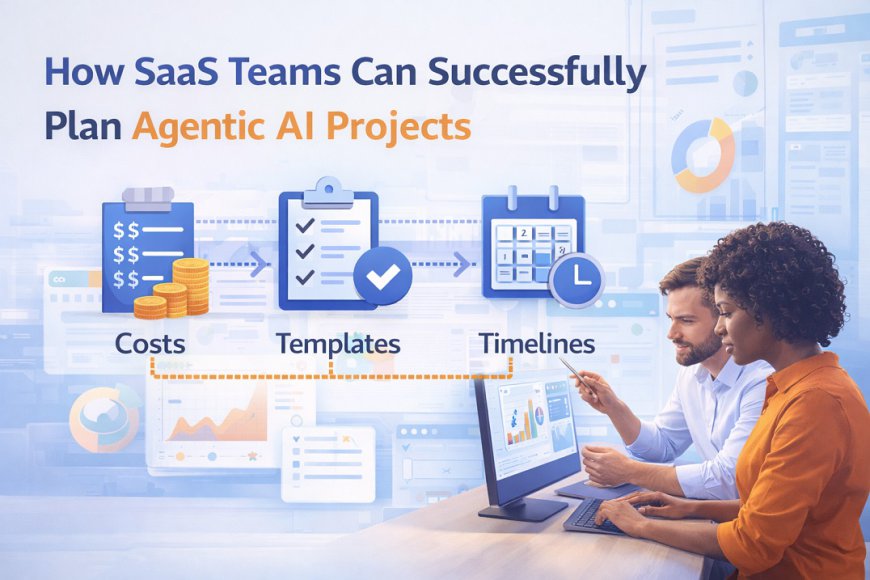
Most agentic AI projects fail not because of weak models or immature tools, but because teams start building before completing proper planning. Common problems include unclear scope, missing templates, undefined ownership, and underestimated integration effort.
Agentic AI systems operate across multiple steps, tools, and decision points. Without a structured plan, teams often create impressive prototypes that never mature into stable, production-ready systems.
Successful teams treat agentic AI as a delivery initiative, not an experiment. That means defining scope early, aligning on outcomes, and planning costs and timelines before writing production code. A strong Agentic AI project planning framework helps teams avoid rework and delays.
What Goes Into an Agentic AI Project?
An agentic AI project is a complete system, not a single feature. At a minimum, it includes:
-
Business-focused goal definition
-
User workflows and functional steps
-
LLM and agent framework selection
-
Data preparation and retrieval strategy
-
Security and governance controls
-
Integration scope with internal systems
-
Human-in-the-loop approval checkpoints
Skipping any of these elements usually leads to costly revisions later.
The Complete Agentic AI Project Planning Framework
Step 1: Define the Core Use Case
Every project should start with one clearly defined use case.
Use Case Template
-
Objective: Business problem to solve
-
Users: Who benefits from the agent
-
Trigger Event: What starts the workflow
-
Agent Abilities: Actions and decisions
-
Success Metrics: Performance indicators
-
Dependencies: Systems and approvals
-
Constraints: Cost, latency, security limits
Common SaaS Use Cases
-
QA automation agents
-
Knowledge retrieval agents
-
Analytics monitoring agents
-
Release note automation agents
Starting with a focused use case improves delivery success.
Step 2: Technical Planning Template
Once the use case is clear, define how the agent works internally.
Architecture Checklist
-
Input sources
-
RAG vs non-RAG strategy
-
Workflow design
-
System integrations
-
Error handling
-
Fail-safe logic
-
Approval checkpoints
This prevents major redesigns later.
Step 3: Data Requirements Checklist
Agent performance depends on data quality and access.
Checklist
-
Required datasets
-
Preprocessing needs
-
Data validation
-
Access permissions
-
API readiness
-
Real-time vs historical data
Early planning avoids unstable agent behavior.
Step 4: Integration Mapping
Most projects connect multiple platforms.
Typical Integrations
-
Jira
-
GitHub / Bitbucket
-
Slack
-
HubSpot
-
Zendesk
-
Databases
-
Internal APIs
Each integration needs proper permissions and error handling.
Step 5: Team Roles and Responsibilities
Agentic AI projects are cross-functional.
Team Structure
-
AI Architect
-
Data Engineer
-
LLM Engineer
-
Workflow Designer
-
Product Manager
-
DevOps Engineer
-
QA Lead
Clear ownership ensures predictable delivery.
How Much Does an Agentic AI Project Cost?
Costs vary based on complexity, autonomy level, and integration depth. There is no fixed pricing model for agentic AI systems.
Simple internal automation projects are faster and cheaper. Larger systems spanning multiple departments require advanced orchestration, monitoring, and governance layers.
Key cost drivers include:
-
Workflow complexity
-
Model usage patterns
-
RAG implementation
-
Number of integrations
-
Infrastructure and monitoring
-
Ongoing optimization
Accurate estimates require clarity on scope, data readiness, and autonomy level.
Sample Project Timeline for SaaS Teams
A typical project includes:
-
Discovery and planning
-
Architecture design
-
Agent development
-
Integration testing
-
Pilot deployment
-
Production rollout
-
Optimization phase
Proper scheduling prevents scope creep and budget overruns.
Common Mistakes to Avoid
SaaS teams often fail due to:
-
Starting with overly complex systems
-
Ignoring early data preparation
-
Lacking governance controls
-
Missing fallback workflows
-
Skipping discovery phases
Most failures result from rushing into development.
Conclusion: Build Agents Like Systems, Not Experiments
Agentic AI delivers value when treated as a structured delivery initiative. Clear templates reduce execution risk. Defined scope accelerates development. Thoughtful planning ensures long-term stability.
At Invimatic, we help SaaS teams plan, build, and scale Agentic AI systems with predictable outcomes. Our experience spans engineering automation, knowledge systems, support workflows, and analytics platforms.
Teams that plan first do not just build agents. They build systems that last.