Strategic B2B Experience Centre Design: Transforming Enterprise Engagement Through Immersive Spaces
Discover how modern B2B experience centre design blends physical architecture with interactive technology to accelerate enterprise sales cycles and deepen stakeholder engagement.
 ViitorX
In high-stakes enterprise sales, static slide decks and standard boardroom presentations are no longer enough to communicate multifaceted value propositions. As organizations navigate longer sales cycles and larger buying committees, specialized design firms like
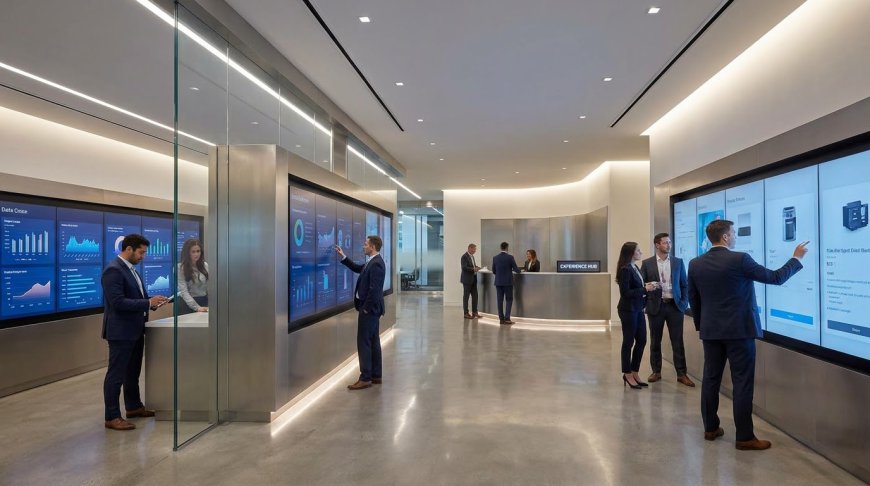
Designing a world-class B2B experience centre requires a harmonious balance of spatial architecture, interactive hardware, and responsive digital storytelling engineered specifically to foster stakeholder consensus and accelerate deal closures.
The Strategic Shift: From Showrooms to Decision-Making Hubs
Historically, corporate showrooms functioned as static product galleries—passive display floors where visitors observed hardware behind glass or read static print graphics. Today’s enterprise landscape requires an entirely different approach.
Enterprise solutions—such as industrial IoT architectures, enterprise SaaS platforms, and sustainable infrastructure—are largely invisible. Modern B2B experience centres function as strategic briefing hubs.
They do not merely show products; they create contextual, simulated environments where prospective clients experience the tangible business outcomes of adopting a solution. By tailoring the physical and digital narrative to the exact operational pain points of visiting executives, these spaces convert passive visitors into active participants in the solution design process.
Core Pillars of High-Impact Experience Centre Design
A successful corporate briefing or experience facility integrates physical ergonomics with digital layers to create seamless, intuitive journeys.
1. Zoned Spatial Narrative
A high-converting experience centre is arranged much like a three-act narrative structure, guiding visitors through distinct physical zones:
-
The Welcome & Context Area: A welcoming zone featuring ambient architectural lighting and large-format welcome walls that introduce the host brand's mission, scale, and core values.
-
The Discovery & Friction Zone: Interactive touchpoints and projection installations that visualize the client’s industry headwinds, market disruptions, and existing operational bottlenecks.
-
The Immersion & Simulation Suite: The functional core of the facility, equipped with interactive demo pods, digital twin simulations, and immersive spatial audio that demonstrate real-time problem-solving.
-
The Strategic Collaboration Suite: A dedicated, comfortable transition space designed for private roundtables, strategic whiteboarding, and commercial negotiation immediately following the demo experience.
2. Phygital Interactivity and Hardware Integration
"Phygital" design bridges physical objects with digital responsiveness. Incorporating tangible UI elements makes technical walkthroughs intuitive and memorable:
-
Object-Recognition Tables: Physical acrylic pucks or 3D-printed miniature models placed on interactive multi-touch tables instantly trigger deep-dive schematics, technical data, and case studies.
-
Transparent OLEDs and LED Volumes: High-contrast display surfaces layered over real physical prototypes allow visitors to view internal components, wiring, or digital overlays without obstructing the actual hardware.
-
Spatial Computing & Mixed Reality: AR/VR headsets or projection mapping allow facilities to showcase heavy industrial machinery, warehouse logistics, or architectural models that cannot fit physically within the room.
3. Persona-Driven Dynamic Content Management
No two visiting delegations have identical priorities. A Chief Information Security Officer (CISO) requires data governance validation, while a Chief Financial Officer (CFO) evaluates ROI models and deployment timetables.
Modern experience centre infrastructure relies on a centralized Content Management System (CMS). Briefing leaders can toggle entire room environments—from wall graphics and video loops to lighting palettes and dashboard presets—with a single tablet tap before a specific client group enters the room.
Accelerating the Enterprise Sales Cycle
The financial justification for investing in a dedicated experience centre lies in deal velocity and stakeholder alignment.
| Dimension | Traditional Sales Meeting | Interactive Experience Centre |
| Stakeholder Engagement | Passive listening to linear slide decks | Active, hands-on scenario testing and discovery |
| Value Comprehension | Conceptual and abstract | Contextualized through simulated real-world data |
| Consensus Velocity | Dispersed across weeks of follow-up memos | High alignment achieved on-site during interactive briefings |
| Brand Perception | Standard vendor | Strategic, authoritative industry partner |
By immersing cross-functional buying committees in interactive simulations, organizations dramatically reduce the ambiguity that typically stalls enterprise purchasing decisions. Visiting leaders leave with a unified mental model of how the solution operates within their own infrastructure.
Practical Implementation Best Practices
To ensure long-term utility and protect capital expenditure, organizations must build with adaptability and operational efficiency in mind.
-
Map the User Experience First: Never purchase AV hardware before designing the visitor journey. Define the narrative milestones, client emotional takeaways, and presenter workflows prior to selecting screens, sensors, or structural materials.
-
Prioritize Modular Hardware Architecture: Enterprise software and hardware evolve quickly. Ensure that display mounts, sensory arrays, and cabling raceways are modular and easily accessible for future retrofits and upgrades.
-
Standardize Operational Workflows: The most advanced multi-sensory room fails if internal staff cannot operate it reliably. Implement one-touch startup routines, pre-programmed presentation templates, and robust offline fallback modes for all digital assets.
-
Track Engagement and Space Analytics: Integrate occupancy sensors and touch-screen telemetry to track which product demonstrations capture the most dwell time, allowing content creators to continuously refine digital exhibits based on hard usage data.
A well-executed B2B experience centre represents the ultimate convergence of physical space, high-touch technology, and brand storytelling. By transforming abstract technological solutions into compelling, tactile narratives, forward-thinking enterprises elevate their market authority, foster cross-departmental buy-in, and turn routine sales conversations into lasting business partnerships.