Visitor Management System for Hospitals and Healthcare Facilities in Saudi Arabia
 TekYousuf26
Saudi Arabia's healthcare sector is expanding at a pace few other markets in the region can match, with new hospitals, specialist centers, and expanded facilities opening as part of the Kingdom's broader Vision 2030 healthcare transformation goals. A Visitor Management System has become essential infrastructure for this growth, giving hospitals a fast, digital way to register and track visitors that scales cleanly from a single facility to a large, multi-site hospital group without each location reinventing its own front-desk process.
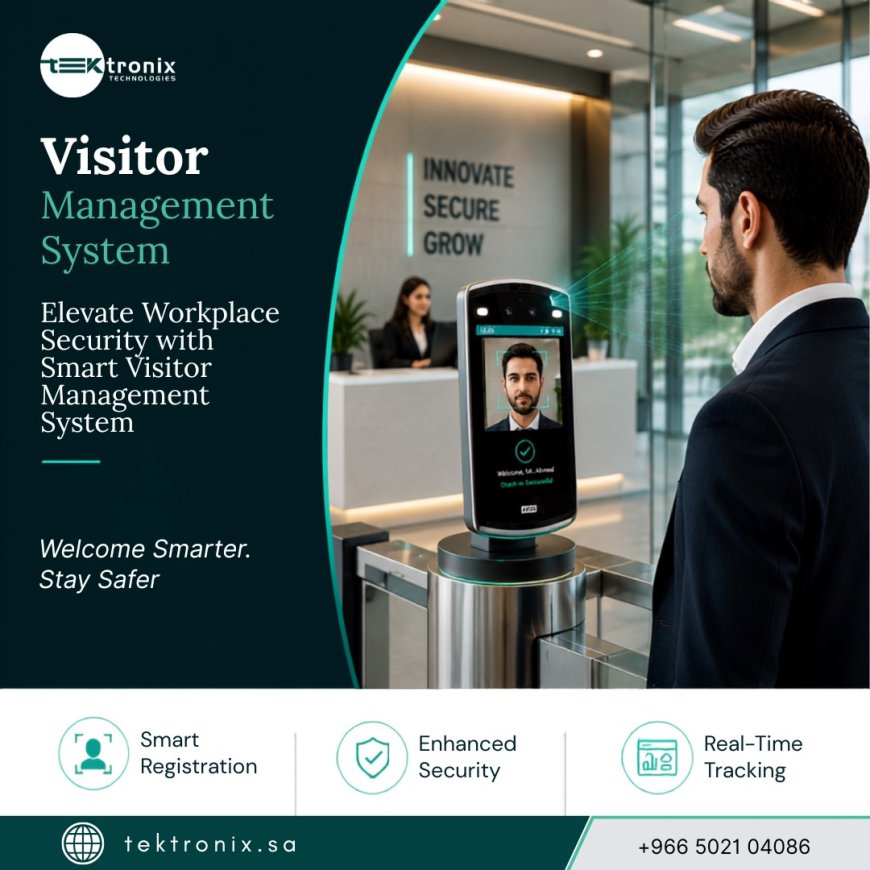
This scale matters more in Saudi Arabia than in many smaller healthcare markets. Whether a facility is a government hospital serving a large regional population or a private specialist clinic competing for premium patients, proper Visitor Management needs to work reliably across genuinely different patient volumes and facility sizes — a challenge that manual, paper-based reception was never designed to handle consistently.
Why Saudi Arabia's Healthcare Expansion Demands a Different Approach to Visitor Management
Many Saudi hospitals operate at a scale that makes informal or paper-based visitor tracking genuinely impractical rather than simply inconvenient. A large regional hospital serving hundreds of outpatient visits daily, alongside emergency admissions and inpatient family visits, generates visitor volume that a reception desk staffed with a notebook was never realistically built to handle accurately.
This challenge compounds for hospital groups managing multiple facilities across different Saudi cities, where each site historically developed its own informal visitor process independently. Standardizing on a single digital platform gives hospital leadership consistent visibility and reporting across an entire network, rather than a patchwork of different practices that make comparing performance or compliance across facilities genuinely difficult.
Visitor Management System for Hospitals: Reflecting Saudi Clinical Operations
A genuinely effective Visitor Management System for Hospitals in Saudi Arabia needs to reflect how local facilities actually operate — supporting patient lookup by name and room number, accommodating visiting hour policies that often differ by ward and by facility, and flagging visits to units under infection control precautions so staff can apply appropriate additional screening automatically.
This workflow-specific configuration distinguishes a system genuinely built for Saudi healthcare from a generic corporate visitor platform simply relabelled for hospital use — the underlying logic needs to reflect how facilities across the Kingdom actually manage patient privacy, visiting policy, and clinical workflow, not a template designed elsewhere and adapted only superficially.
Visitor Registration Software Built for High-Volume Facilities
Reliable Visitor Registration Software for a large Saudi hospital needs to handle genuinely high daily visitor volume without registration itself becoming a bottleneck. A well-designed system captures the essentials — visitor name, patient being visited, relationship — quickly enough to keep pace with the arrival rate a major regional facility experiences, particularly during peak visiting hours or following a mass casualty or emergency event.
For planned, non-urgent visits, pre-registration through a link sent ahead of a scheduled appointment or family meeting removes registration friction almost entirely, letting a visitor scan a code and proceed directly to the appropriate ward rather than queuing at a central desk during a busy period.
Visitor Check in System Coverage Across Large, Multi-Building Campuses
Many Saudi hospitals operate across sprawling, multi-building campuses rather than a single compact facility, which means a Visitor Check in System often needs coverage at several distinct entry points — a main outpatient building, a separate emergency department, and potentially specialist centers or research wings each requiring their own registration point rather than funnelling all visitors through one distant central lobby.
This distributed approach also allows different verification standards per zone, with a general outpatient building applying standard registration while a research facility or specialized treatment center requires more thorough visitor screening appropriate to that area's specific sensitivity.
Visitor Tracking System Supporting Large-Scale Emergency Preparedness
For a large hospital campus, a Visitor Tracking System carries particular weight during emergency evacuation planning, since an accurate, real-time headcount across a sprawling, multi-building site is considerably harder to achieve manually than in a single compact building — making digital tracking a genuine safety necessity rather than simply an operational convenience for facilities of this scale.
This same tracking capability supports infection control across a large campus as well, letting hospital administration quickly identify every visitor who entered a specific building or ward during a defined period — valuable during any isolation protocol or exposure investigation spanning a facility too large for staff to track this information manually with any real confidence.
Visitor Management Device Deployment Across Diverse Facility Types
Choosing the right Visitor Management Device mix across a large Saudi hospital campus involves matching hardware to each entry point's specific traffic and risk profile — high-capacity self-service kiosks for a busy main outpatient lobby, simpler tablet-based check-in for smaller specialist clinic entrances, and touchless, disinfection-friendly hardware throughout given the clinical hygiene standards every entry point needs to maintain.
For hospital groups managing several facilities across different Saudi cities, standardizing device selection across every location also simplifies maintenance and staff training considerably compared to managing entirely different hardware fleets independently at each site.
Visitor Management Software: The Platform Behind Multi-Facility Compliance
Underlying every visible reception improvement is the Visitor Management Software handling data storage, ward-level access rules, and the reporting hospital administration increasingly needs to demonstrate compliance across Saudi Arabia's healthcare regulatory framework. For multi-facility hospital groups, this platform layer becomes particularly valuable, giving leadership a single, comparable view of visitor activity and compliance posture across every site in the network.
Where appropriate and privacy-compliant, integration with existing patient information systems can also streamline the visitor experience considerably, letting reception confirm a patient's ward and visiting status instantly rather than relying on a separate manual lookup process for every visitor arriving throughout a busy shift.
Key Benefits of Modern Visitor Management for Saudi Healthcare Facilities
Hospitals and clinics adopting purpose-built visitor management across Saudi Arabia typically report improvements across several practical areas:
- Faster, more accurate check-in even during high-volume periods
- Stronger infection control support through ward-specific screening and tracking
- Improved patient privacy through restricted, need-to-know visitor access
- Accurate real-time occupancy data supporting large-campus evacuation planning
- Consistent reporting and compliance visibility across multi-facility hospital groups
- Reduced administrative burden on nursing and reception staff during peak periods
Visitor Management System KSA: Supporting Vision 2030 Healthcare Modernization
Deploying a Visitor Management System KSA-wide reflects the Kingdom's broader Vision 2030 healthcare transformation agenda, where digital infrastructure investment across hospitals is increasingly treated as core operational modernization rather than an optional technology upgrade. Facilities aligning their front-desk technology with this broader digital transformation push are better positioned to meet the documentation and reporting standards Saudi healthcare regulators increasingly expect.
For hospital groups operating across multiple Saudi regions, standardizing on one visitor management platform also creates consistency that a collection of independently managed facility processes never could, giving leadership a genuinely comparable view of visitor activity across the entire network.
Visitor Management System Riyadh: Meeting the Capital's Healthcare Standards
As Saudi Arabia's capital and largest healthcare hub, Riyadh hosts some of the Kingdom's largest hospital campuses and most competitive private healthcare providers. A Visitor Management System Riyadh hospital deploy needs to support the scale and sophistication expected of facilities competing for both local patients and the Kingdom's growing medical tourism ambitions, alongside multilingual check-in for an increasingly diverse patient population.
For private hospitals in Riyadh specifically competing for premium patient volume, a polished, efficient visitor experience has become a genuine differentiator in overall patient and family satisfaction, reinforcing the broader impression of clinical quality the facility is trying to convey.
Typical Deployment Process for Hospital Visitor Management in Saudi Arabia
Introducing a purpose-built visitor management system into an existing Saudi hospital generally follows a structured process designed around the campus's specific scale and clinical workflow needs.
1. Campus and zone assessment: mapping every building and ward requiring standard, restricted, or heightened screening visitor processes.
2. Workflow configuration: setting up patient lookup, visiting hour rules, and infection control screening steps per zone.
3. Device placement: installing appropriate kiosks or tablets across every entry point on a potentially large, multi-building campus.
4. Staff training: onboarding reception and nursing staff across every facility on the new check-in process.
5. Rollout and signage: introducing the system to visitors with clear signage throughout each building.
Deployment timelines for a large multi-building campus generally take longer than a single-building facility, though phased rollout by building or department can bring the system online incrementally rather than requiring a full simultaneous switch across the entire site.
Integrating Visitor Management with Hospital Access Control and Security
Visitor management delivers its greatest value in a healthcare setting when connected to the hospital's broader access control and security infrastructure. Linking a visitor's badge to ward-specific door access ensures a family member can only reach the specific unit they're authorized to visit, while integration with the hospital's overall security system supports faster response if an unregistered individual attempt to access a restricted clinical area.
This is where Tektronix's visitor management platform stands out for Saudi healthcare facilities — the system is designed to integrate with existing access control and security infrastructure, ensuring visitor management strengthens each facility's overall clinical security posture rather than operating as a disconnected front-desk convenience.
What Healthcare Facilities Should Look for in a Visitor Management Partner
Hospital administrators evaluating vendors should look for demonstrated experience deploying visitor management specifically within large-scale healthcare environments, since clinical workflow requirements and campus-scale deployment challenges differ considerably from a general corporate or retail installation. Support for multi-facility reporting, ward-specific configuration, and healthcare-appropriate data governance are all practical differentiators worth confirming directly.
Because hospital reception operates continuously around the clock, response time for on-site support during any system issue matters considerably more than in a typical office environment, making local support availability across the Kingdom a particularly important evaluation factor for healthcare deployments.
Why Saudi Healthcare Facilities Trust Tektronix for Visitor Management
Tektronix has deployed visitor management solutions across hospitals, clinics, and healthcare facilities throughout Saudi Arabia, giving the team direct, hands-on experience with the clinical workflow, infection control, and patient privacy demands unique to healthcare environments at the scale the Kingdom's expanding hospital network requires. Every deployment is supported end-to-end, from initial campus assessment through installation, staff training, and ongoing local maintenance.
For healthcare facilities across Riyadh and the wider Kingdom evaluating a visitor registration platform built for large-scale clinical environments, this healthcare-specific deployment experience translates into a system that genuinely reflects how Saudi hospitals operate, not a generic corporate platform relabelled for clinical use.
Conclusion
Visitor Management System technology purpose-built for Saudi healthcare scales from single facilities to large multi-building campuses without sacrificing Visitor Management quality. A dedicated Visitor Management System for Hospitals combines Visitor Registration Software, a fast Visitor Check in System, Visitor Tracking System, and Visitor Management Device coverage through unified Visitor Management Software, driving Visitor Management System KSA and Visitor Management System Riyadh adoption.
FAQs
1. How does hospital visitor management scale for large Saudi hospital campuses?
Multi-building campuses typically deploy check-in points at every major entrance rather than a single central lobby, with centralized reporting giving hospital leadership a unified view across the entire site.
2. Can visitor management support different rules for different hospital wards?
Yes. A properly configured system applies zone-specific screening and access rules, so a maternity ward or ICU can have stricter requirements than a general visiting area.
3. How does visitor tracking support emergency evacuation on a large hospital campus?
It provides a real-time, accurate headcount of visitors across every building and ward, which is considerably harder to achieve manually on a sprawling, multi-building campus than in a single compact facility.
4. Can a hospital group standardize visitor management across multiple Saudi facilities?
Yes. Centralized platforms allow hospital groups to apply consistent workflows and compliance reporting across every facility in their network rather than managing separate, independent systems at each site.
5. How long does it take to deploy a visitor management system across a large Saudi hospital?
Timelines depend on campus size, but phased rollout by building or department allows the system to go live incrementally rather than requiring a full simultaneous switch across an entire large facility.