Yoo Library - Best Library Management Software in India
Discover how Library Management Software helps Indian libraries manage books, members, circulation, records, and daily operations efficiently.
 yoolibrary
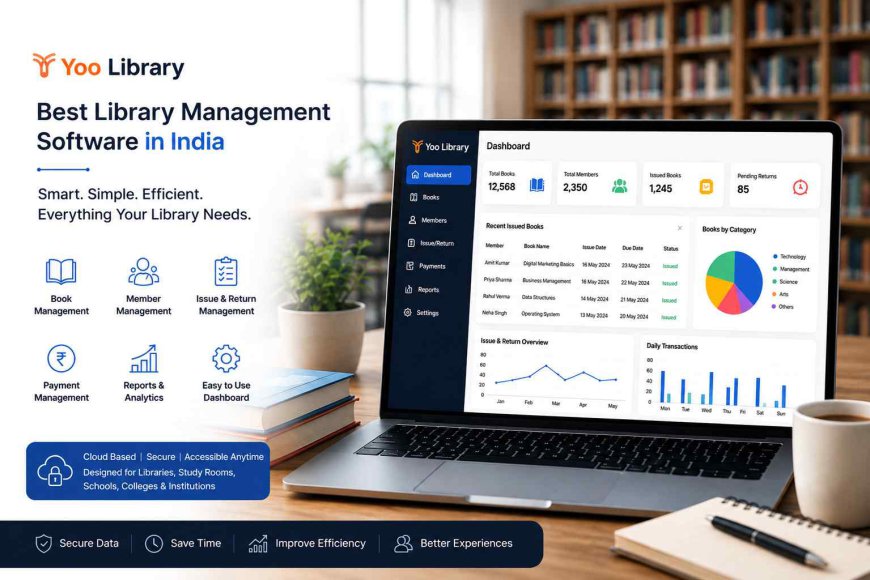
Libraries manage large amounts of information every day. Books, members, issue records, returns, catalogs, and reports all need proper organization. Library Management Software helps libraries move from manual record keeping to a more organized digital workflow. It can simplify routine tasks, improve record accuracy, and help staff find information faster. For schools, colleges, universities, public libraries, and private institutions, digital tools can make everyday administration more manageable.
What Is Library Management Software?
Library management software is a digital system designed to organize and manage different library activities from one place. Instead of maintaining separate registers and spreadsheets, staff can maintain important records through a centralized system.
A digital system can support book records, member information, circulation activities, catalog searches, and administrative reports. This reduces repetitive paperwork and makes information easier to access.
The exact features available can differ between software solutions. Therefore, libraries should evaluate their actual requirements before selecting a system.
Key Features of Modern Library Software
Book and Catalog Management
Managing book information is one of the most important library activities. A digital catalog can store details such as book title, author, publisher, category, edition, and availability.
Library Catalog Software can also make searching more convenient. Staff can locate records using relevant details instead of checking physical registers manually.
Member Management
Libraries need accurate information about students, teachers, researchers, or other members. A digital system can maintain member profiles and related circulation records.
This can make routine administration easier and help staff retrieve member information when required.
Issue and Return Management
Tracking issued and returned books manually can become difficult as the number of transactions increases. Digital circulation tools can record transactions and update availability information.
This helps staff monitor which books are currently issued and which resources are available for use.
Reports and Record Management
Reports can help library staff understand daily activities. Depending on the system, reports may cover books, members, circulation records, overdue items, and other administrative information.
Organized reports can support better planning and routine decision-making.
Benefits of Digital Library Management
Digital Library Management can offer several practical advantages when implemented correctly.
Reduced Paperwork
Traditional registers require continuous manual entries. Digital records can reduce the need for repetitive paperwork and make information easier to maintain.
Faster Information Retrieval
Searching through physical records can take time. Digital records allow staff to search relevant information more quickly.
Better Record Organization
A centralized database can keep different types of library information organized. This can make daily operations more systematic.
Improved Circulation Tracking
Digital records can help staff monitor book issues, returns, availability, and related transactions.
Better Staff Productivity
When repetitive administrative tasks become simpler, staff can spend more time assisting users and managing other library activities.
How an Online Library Management System Works
An Online Library Management System generally brings multiple library activities into one digital environment.
First, library staff add book information to the database. Member details can then be registered and maintained. When a book is issued, the transaction is recorded in the system. When the book is returned, its status can be updated.
Users or staff may also search the catalog to check available resources. Depending on the platform, the system may provide additional reports and administrative functions.
The main objective is to keep information organized and make common library tasks easier to manage.
Why Libraries Need Library Automation Software
Manual processes can become challenging when a library has a large collection or many members. Repeated data entry, physical registers, and separate spreadsheets may increase administrative workload.
Library Automation Software can help automate selected routine activities. For example, circulation records can be updated digitally instead of being maintained entirely through paper registers.
Automation does not replace library professionals. Instead, it provides tools that can support their daily responsibilities.
A well-designed system can also improve consistency because staff can follow a defined digital workflow for common tasks.
How to Choose the Right Library Software Solution
Choosing software should be based on the library's size, users, collection, workflow, and future requirements.
Consider the following factors before making a decision:
- Ease of use for library staff
- Book and catalog management
- Member record management
- Issue and return tracking
- Search functionality
- Reporting capabilities
- Data security
- Scalability
- Staff training requirements
- Technical support
- Overall cost and value
Libraries should avoid choosing software only because it has a long list of features. The most suitable system is one that solves actual operational problems without making daily work unnecessarily complicated.
Role of Yoo Library
Yoo Library provides a library-focused digital approach for institutions looking to organize their library operations more efficiently. When evaluating any software, libraries should consider how well its features match their collection, users, workflow, and administrative requirements.
Library Information System for Modern Institutions
A modern Library Information System can connect different areas of library administration within a structured digital environment. Instead of keeping information in disconnected records, staff can work with centralized data.
Library Database Management is especially important for maintaining organized information as collections grow. Similarly, Book Management Software can support the maintenance of book records and circulation details.
An Integrated Library System can bring multiple functions together, helping staff manage resources through a unified workflow. Library Administration Software can further support administrative activities and reporting.
The goal is not simply to digitize existing records. A useful system should make information easier to manage, improve operational efficiency, and provide a better experience for both staff and library users.
Final Thoughts
Libraries are becoming increasingly dependent on organized digital processes to manage growing collections and user requirements. A suitable digital solution can reduce manual work, improve information access, and create a more structured approach to daily administration.
Before selecting a system, institutions should identify their requirements, compare relevant features, consider data security, and evaluate long-term usability. The right Library Management Software should support practical library workflows while remaining simple enough for staff to use consistently.
For institutions planning to modernize their library operations, the next step is to review their current workflow, identify areas that require improvement, and explore a suitable digital solution based on their specific needs. A thoughtful technology choice can help build a more organized, efficient, and user-friendly library environment.