

3D Printing in Australia: Optimising Warehousing and Logistics With Custom Solutions
Discover how 3D printing in Australia supports warehouses and logistics operations with custom tools, equipment parts, storage solutions, prototypes, and on-demand manufacturing.
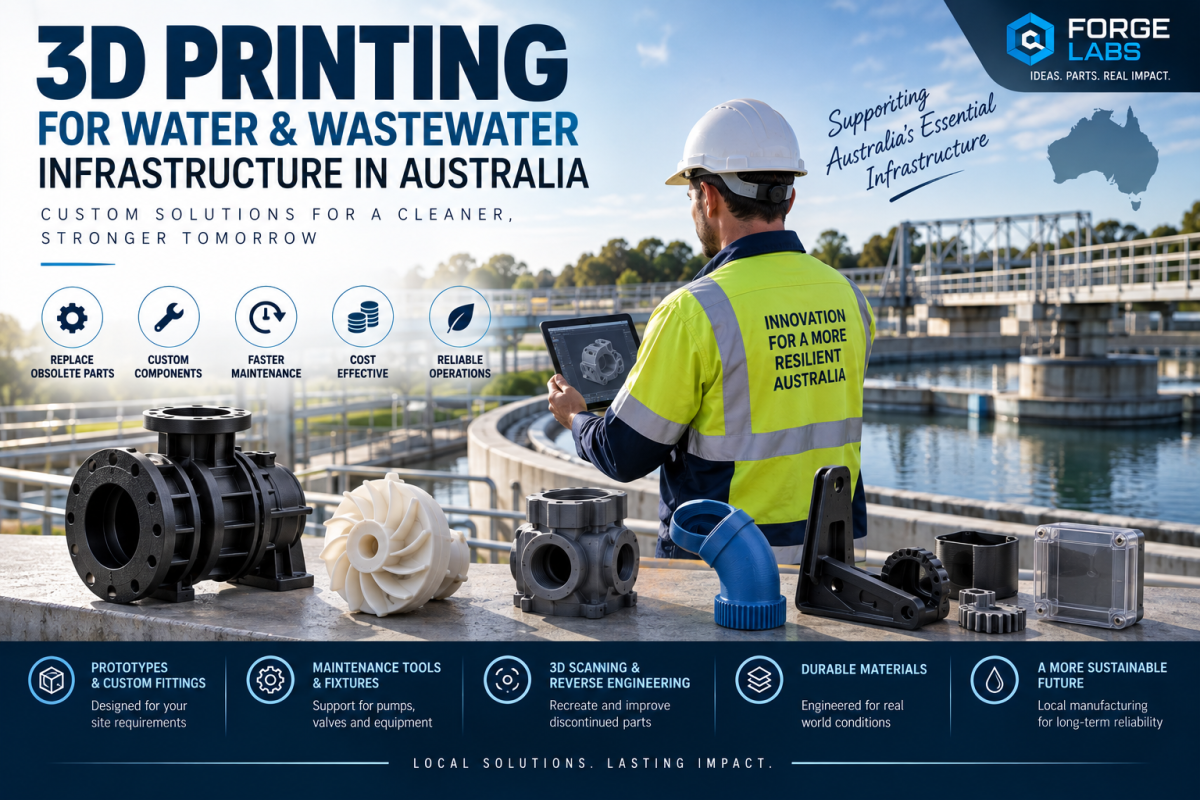
Introduction
Warehouses and logistics facilities depend on efficient movement, storage, identification, and handling of products. From conveyor systems and sorting equipment to shelving, scanners, packaging stations, and automated machinery, countless components work together to keep operations moving.
When a small component breaks or a customised tool is required, however, businesses may face delays sourcing the right replacement. Standard products do not always fit every warehouse configuration, particularly when equipment has been modified or adapted over time.
3D printing in Australia offers businesses another way to approach these requirements. Additive manufacturing can produce customised fixtures, equipment holders, brackets, protective components, prototypes, and selected replacement parts without requiring conventional tooling for every low-volume requirement.
The Growing Need for Flexible Warehouse Solutions
Modern warehouses are becoming increasingly automated and data-driven. Automated storage systems, conveyors, scanners, robotics, sensors, and specialised material-handling equipment create unique engineering requirements.
A warehouse may need a component that is:
- Designed for a specific machine
- Produced in a small quantity
- Modified around existing equipment
- Difficult to source
- Required quickly
- Used for testing a new process
3D printing provides flexibility because a digital design can be modified and manufactured without creating dedicated moulds for every new version.
Creating Custom Warehouse Fixtures
Fixtures can help workers position, organise, inspect, or assemble products consistently.
3D printing can be used to create:
- Assembly fixtures
- Positioning guides
- Product holders
- Inspection templates
- Tool organisers
- Component trays
- Picking aids
- Equipment mounts
A fixture can be designed around the exact dimensions of a product or workstation.
This can help warehouses develop solutions that are more closely matched to their workflows than generic commercial accessories.
Improving Workstation Organisation
Packing and picking stations often contain scanners, labels, tools, packaging materials, screens, and other equipment.
Poor organisation can result in unnecessary movement and wasted time.
Custom printed accessories can help create:
- Scanner holders
- Tool mounts
- Device stands
- Cable guides
- Label dispensers
- Component organisers
- Small-parts trays
Because the dimensions can be customised, these solutions can be designed around the actual workstation rather than forcing the workspace to accommodate a standard product.
Supporting Automated Warehouse Systems
Automation equipment requires numerous brackets, guides, sensor mounts, protective covers, and prototype components.
3D printing can support the development and testing of such hardware.
Potential applications include:
- Sensor brackets
- Cable-routing components
- Robotic fixtures
- Conveyor guides
- Equipment housings
- Protective guards
- Camera mounts
- Prototype grippers
These components can be developed quickly during the automation design process.
When equipment changes, the associated component can also be modified digitally.
Prototyping Warehouse Automation Equipment
Businesses introducing automation often need to test several equipment layouts or mechanical concepts before installation.
3D printing can create physical prototypes for:
- Robotic workstations
- Conveyor interfaces
- Sorting systems
- Picking mechanisms
- Storage fixtures
- Product-handling devices
Physical prototypes allow teams to evaluate fit, access, movement, and interaction with surrounding equipment.
This can reveal design problems before expensive full-scale equipment is fabricated.
Replacing Hard-to-Find Equipment Components
Warehouses may use machinery for many years. Some equipment eventually becomes obsolete, while specific supporting components may no longer be stocked.
For suitable non-critical components, reverse engineering can create an alternative route.
The existing item can be measured or 3D scanned and converted into a digital CAD model. That design can then be manufactured when required.
This may be useful for:
- Equipment covers
- Mounts
- Brackets
- Cable-management components
- Protective housings
- Custom fixtures
- Selected machine accessories
The digital design can also be archived for future replacement.
Using 3D Scanning for Legacy Equipment
Older warehouse equipment may not have current digital documentation. Original CAD files can be missing or may not reflect modifications made during years of operation.
3D scanning can help capture the current geometry of a physical component.
The scan can support:
- Reverse engineering
- Replacement-part design
- Equipment upgrades
- Custom mounting systems
- Retrofit development
- Installation planning
This makes scanning useful when a business needs to work from the equipment that actually exists rather than outdated drawings.
Developing Custom Packaging and Handling Aids
Logistics operations frequently handle products with different dimensions, shapes, and packaging requirements.
3D printing can support specialised handling accessories such as:
- Product positioning fixtures
- Reusable inserts
- Sorting guides
- Component trays
- Protective holders
- Picking aids
These can be designed around specific products or workflows.
Businesses can also modify the design when product dimensions change, reducing the need to replace an entire range of standard equipment.
Reducing Downtime With On-Demand Manufacturing
A small failed component can sometimes stop an otherwise operational machine.
For suitable replacement parts, on-demand manufacturing can provide an alternative to waiting for a conventional supplier.
The process may involve:
Identify Part → Measure or Scan → CAD Development → Material Selection → Printing → Inspection → Delivery
The approach is particularly useful for low-volume items where maintaining large stocks is impractical.
Creating Digital Spare-Part Libraries
Warehouses and logistics companies can maintain digital records for selected hard-to-source components.
A digital library can contain:
- CAD models
- Material requirements
- Part information
- Revision history
- Manufacturing notes
- Inspection requirements
When a suitable component is needed, the approved digital model can be used for production.
This can complement existing physical inventory strategies.
Material Selection for Logistics Environments
Printed components used around warehouse machinery can encounter repeated handling, impact, vibration, dust, temperature changes, and mechanical loads.
Possible material options include:
- PLA for basic prototypes
- PETG for selected practical parts
- ABS for suitable engineering applications
- ASA for some outdoor equipment
- Nylon for durable components
- TPU for flexible accessories
- Engineering resins for detailed prototypes
The correct choice depends on the application.
A small workstation organiser has different requirements from a component exposed to repeated mechanical stress on an automated conveyor.
Improving Ergonomics for Warehouse Workers
Warehouse workers frequently perform repetitive actions such as picking, scanning, packing, sorting, and labelling.
Custom-designed tools can help improve how equipment is positioned and accessed.
3D printing can support prototypes for:
- Ergonomic handles
- Scanner holders
- Tool grips
- Picking aids
- Device mounts
- Positioning fixtures
- Workstation accessories
A prototype can be tested by workers and modified based on practical feedback.
This can create a continuous improvement process where equipment evolves around real workplace requirements.
Developing Custom Material-Handling Components
Material-handling systems often require components that guide, position, separate, or protect products.
3D printing can support the development of:
- Conveyor guides
- Product separators
- Component holders
- Equipment brackets
- Protective covers
- Alignment fixtures
These parts can be designed around product dimensions and conveyor layouts.
The ability to create small quantities is useful when a warehouse has unique equipment configurations that do not justify conventional tooling.
Supporting Warehouse Robotics
Robotics systems often require custom physical hardware in addition to software and electronics.
Developers can use 3D printing to prototype:
- Robot attachments
- Sensor mounts
- Protective covers
- Grippers
- Cable guides
- Equipment interfaces
- Tooling components
A robot attachment can be printed, installed, tested, and redesigned several times before the final manufacturing process is selected.
This supports faster hardware iteration during automation projects.
Using Additive Manufacturing for Training Equipment
Warehouses can also use printed models and components for staff training.
Scaled or representative models can demonstrate:
- Equipment layouts
- Conveyor operations
- Product-handling procedures
- Mechanical systems
- Safety concepts
- Automation equipment
Physical training aids can make complex systems easier to understand, particularly when employees need to become familiar with equipment without interrupting live operations.
Supporting Facility Upgrades
Warehouse layouts frequently change as companies increase capacity, introduce new products, or install automation.
Existing infrastructure may need to accommodate additional equipment.
3D printing can help create prototypes for:
- New equipment mounts
- Cable-routing solutions
- Sensor brackets
- Storage accessories
- Workstation modifications
- Protective structures
A prototype can be tested before the final component is manufactured.
Low-Volume Production for Logistics Businesses
Some warehouse and logistics products are highly specialised and only required in limited quantities.
Examples may include:
- Custom equipment accessories
- Specialised holders
- Replacement components
- Prototype tools
- Facility-specific fixtures
Conventional manufacturing may involve tooling costs that are difficult to justify for small orders.
Additive manufacturing can provide a more flexible option for selected low-volume production requirements.
Designing for Additive Manufacturing
Printed components should be designed according to the characteristics of the manufacturing process.
Key considerations can include:
- Wall thickness
- Print orientation
- Layer direction
- Mechanical loads
- Tolerances
- Support requirements
- Fastener placement
- Material behaviour
- Surface requirements
Designers can also integrate several features into a single component, potentially reducing assembly requirements.
The final design should nevertheless be evaluated for durability, maintainability, and operating conditions.
Quality Control for Warehouse Components
A printed component should be inspected according to its purpose.
Evaluation may include:
- Dimensional checks
- Fit testing
- Functional testing
- Mechanical evaluation
- Material verification
- Repeatability checks
- Environmental testing
A simple storage organiser has very different requirements from a component attached to automated machinery.
Parts related to safety or critical equipment should receive appropriate engineering assessment before operational use.
Working With Professional 3D Printing Services
Businesses can benefit from professional 3D printing services when projects require industrial equipment, advanced materials, scanning, reverse engineering, or engineering support.
Professional capabilities may include:
- Industrial FDM printing
- SLS manufacturing
- Metal 3D printing
- 3D scanning
- Reverse engineering
- CAD development
- Rapid prototyping
- Low-volume manufacturing
- Custom tooling
- Post-processing
Forge Labs supports Australian businesses with industrial 3D printing, rapid prototyping, 3D scanning, reverse engineering, and customised manufacturing solutions.
This can help logistics and warehousing businesses develop components based on actual equipment and operational requirements.
Conclusion
3D printing in Australia is opening up practical opportunities for warehouses, logistics businesses, automation providers, and material-handling operations. Custom fixtures, equipment mounts, protective housings, workstation accessories, prototypes, and selected replacement components can all benefit from additive manufacturing when the application is appropriate.
The ability to move from a digital design to a physical component without extensive tooling makes the technology particularly useful for low-volume and customised requirements.
Combined with 3D scanning and reverse engineering, 3D printing can also provide a practical response to ageing equipment and hard-to-source components.
For Australian logistics businesses seeking greater flexibility in equipment development, maintenance, and workflow optimisation, additive manufacturing can become an effective tool for turning specific operational challenges into customised physical solutions.
At forgelabs, we provide professional 3D printing services in Australia for businesses, startups, engineers, and creators. We help turn ideas into real products with clean, accurate, and reliable results. We offer FDM 3D printing, resin printing, nylon parts, metal 3D printing, and full support services like CAD design, 3D scanning, and reverse engineering. From rapid prototyping to custom parts and small batch production, we handle every project with care and attention to detail. forgelabs proudly serves Melbourne, Sydney, and all of Australia. Our clients trust us for fast turnaround, strong materials, fair pricing, and clear communication. If you are looking for the best 3D printing services in Australia, then you are at right place





Comments (0)