Armored Doors: The Complete Guide to Home and Business Security
When it comes to protecting a home, office, or storage facility, few upgrades deliver as much peace of mind as an armored door. Also known as security doors or reinforced steel doors, these entry systems are engineered specifically to resist forced entry, and understanding how they work — and how they're rated — makes the difference between buying real protection and buying a false sense of safety.
 newideasagency
When it comes to protecting a home, office, or storage facility, few upgrades deliver as much peace of mind as an armored door. Also known as security doors or reinforced steel doors, these entry systems are engineered specifically to resist forced entry, and understanding how they work — and how they're rated — makes the difference between buying real protection and buying a false sense of safety.
An armored door isn't just a heavier version of a regular door. It's a complete system built around a steel or reinforced frame, a multi-layered door leaf (often combining steel sheets, wood composite, and insulating cores), and a high-security locking mechanism with multiple locking points along the frame. The strongest models also include anti-lever pins near the hinges, hardened steel plates around the lock cylinder, and reinforced hinges that prevent the door from being pried off with a crowbar [web:13].
Some of the practical benefits go beyond burglary prevention. Many armored doors also offer meaningful sound insulation — a real advantage in apartment buildings or on busy streets — and some models add fire resistance, which matters in commercial or high-density residential settings [web:15][web:11].
Understanding RC Security Ratings
The industry standard for measuring a door's break-in resistance is the European standard EN 1627, which classifies doors into Resistance Classes from RC1 (lowest) to RC6 (highest). This isn't a marketing label — it's based on laboratory testing where technicians attempt to force the door open using a defined toolkit within a set time limit [web:3][web:6].
|
Class |
Burglar profile |
Tools used in testing |
Resistance time |
Typical use |
|
RC1 |
Opportunistic, no tools |
Physical force only |
~1 minute |
Sheds, interior doors |
|
RC2 |
Casual, simple tools |
Screwdriver, pliers, wedges |
~3 minutes |
Apartments, standard homes |
|
RC3 |
Experienced, determined |
Crowbar, extra screwdriver, small hammer |
~5 minutes |
Isolated villas, ground-floor flats, offices with valuables |
|
RC4+ |
Professional, power tools |
Cordless drills, saws |
Longer, higher force |
Commercial premises, high-risk properties |
RC2 is generally considered the practical minimum for residential exterior doors, since it stops the majority of casual break-in attempts [web:10][web:14]. RC3 is the recommended step up for properties that are more exposed — a detached house, a ground-floor apartment with direct street access, or a home where a slow emergency response is likely [web:12]. Security professionals note that true resistance to leverage tools like crowbars really only starts at RC3, meaning RC1 and RC2 doors mainly deter opportunistic intruders rather than determined ones [web:9].
When comparing armored door products, a few technical details matter more than brand name or finish:
· Multi-point locking systems that engage the frame at several points, not just at the handle height.
· Anti-lever security pins near the hinge side, which stop the door from being pried outward.
· A certified RC rating (RC2 or RC3 for most homes) backed by EN 1627 test documentation, rather than unverified "bulletproof" claims.
· Reinforced glazing if the door has glass panels, rated at least P4A or higher to match the door's resistance class.
· Hinge protection, since standard hinges are a common weak point that attackers target directly.
Choosing the Right Class for Your Property
The right resistance class depends on the actual risk profile of the property, not just budget. A city-center apartment on an upper floor with a secured building entrance may be adequately served by RC2. A standalone house, a shop with valuable inventory, or a ground-floor unit with a door that's not visible from the street benefits far more from RC3, since it resists the heavier tools and longer attack times that determined burglars actually use [web:12][web:10].
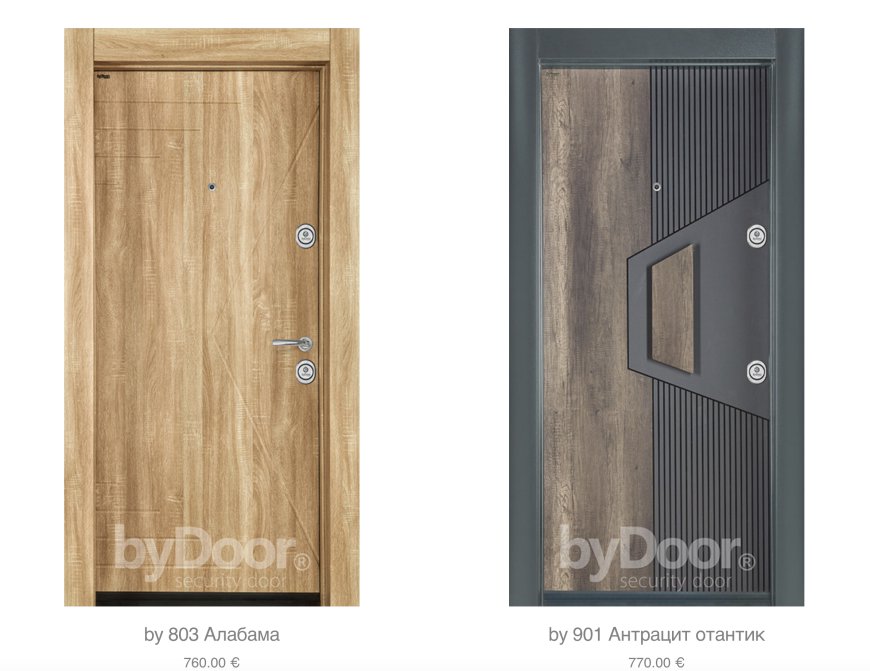
For buyers looking at the Bulgarian and wider Balkan market, ByDoor is a brand worth mentioning alongside the bigger European names. ByDoor imports Turkish-manufactured armored doors under the "byDoor" label and complements them with solid-core Variodor interior doors, giving customers a single supplier for both entrance security and interior finishing [web:20].
What makes ByDoor stand out in comparisons is its pricing structure. Entry-level armored doors start around €300–€330 (models like Oziqo, Atlantis, or the VDA series), while premium finishes with decorative glass panels or upgraded hardware go up to roughly €970 [web:17][web:23]. That's substantially below Western European premium brands such as Gerda or SteelR, which commonly list in the $1,500–$5,000 range for comparable security doors [web:27][web:30]. The catalog also offers a wide range of finishes — anthracite, walnut, marble-effect, white inox, and more — which helps ByDoor compete on design flexibility as well as price [web:23].
The one caveat worth flagging to security-conscious buyers: ByDoor's product listings don't prominently advertise EN 1627 RC certification (RC2/RC3), unlike some competitors who lead with that spec [web:30]. For buyers who prioritize documented, lab-tested burglary resistance over price, it's worth requesting certification details directly. For buyers who want solid, good-looking security at a lower price point without needing the highest resistance classes, ByDoor's turkish-manufactured lineup is a practical and cost-effective choice.
For anyone selling or specifying these products — relevant if you're running an e-commerce storefront for doors — it's worth noting that RC ratings, resistance times, and specific tool resistance are exactly the kind of concrete, verifiable details that build buyer trust and perform well in search, since customers increasingly search for these standards by name rather than generic terms like "strong door." Brands like ByDoor that combine affordability with a broad model range can compete well in that search landscape, provided they're transparent about where their products stand on the RC scale.