Real-Time Fuel Tank Monitoring Solutions for Qatar Facilities
 TekYousuf26
For facilities, logistics operators, and energy-intensive industries across Qatar, Fuel Tank Monitoring has become a mission-critical capability rather than an operational luxury. Rising global energy costs, Qatar's ambitious National Vision 2030 sustainability agenda, and the increasing regulatory scrutiny applied to fuel procurement and consumption records are driving organisations to replace manual dip-stick measurements and paper-based logs with real-time, IoT-powered intelligence. Expedite IoT delivers the most advanced Fuel Usage Tracking infrastructure available in the Qatari market, empowering facility managers, fleet operators, construction firms, and energy companies to make data-driven decisions with complete confidence.
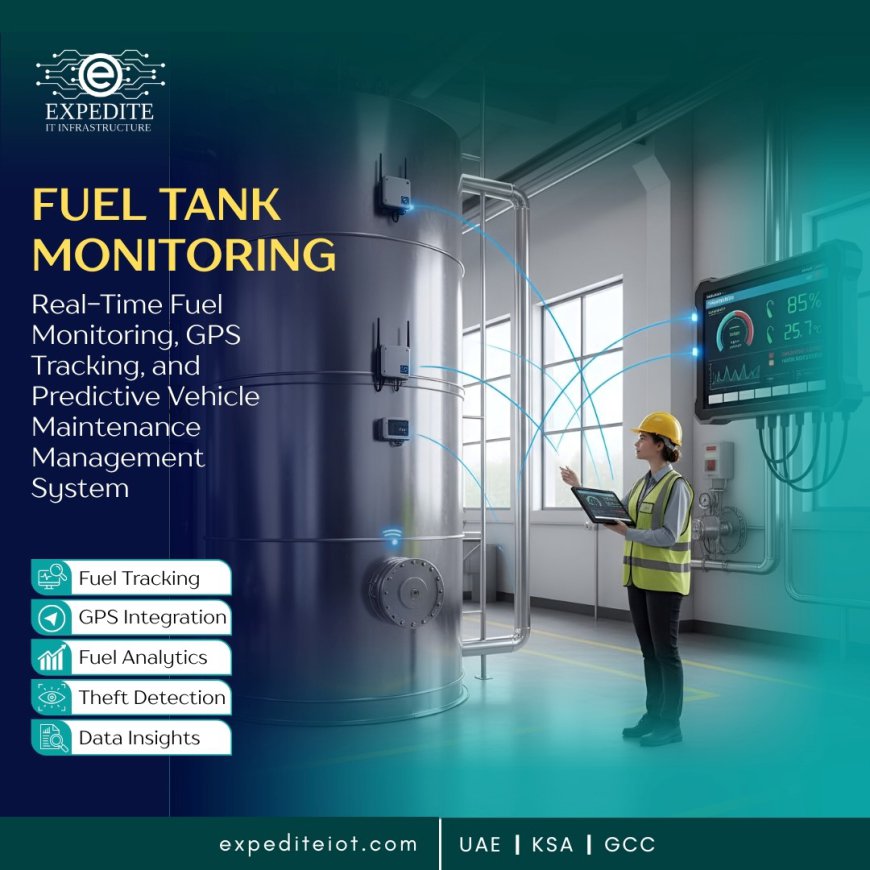
From Doha's industrial heartland to remote energy installations across Qatar's interior, Expedite IoT's solutions connect dispersed fuel assets to a single cloud-based command centre — giving operations teams the visibility, control, and audit trail they need to protect every litre of fuel in their inventory.
Why Qatar's Industries Cannot Afford Outdated Fuel Oversight
Qatar's energy and infrastructure sectors operate at extraordinary scale. The nation hosts one of the world's largest liquefied natural gas (LNG) operations, an extensive network of power generation facilities, a rapidly growing construction sector fuelled by post-World Cup infrastructure investment, and a logistics ecosystem servicing a population and economy that continue to expand at pace. In each of these domains, fuel is not simply a commodity — it is the operational lifeblood that keeps generators, vehicles, heavy plant, and HVAC systems running around the clock.
Without automated Fuel Consumption Management, Qatari organisations routinely face three categories of loss: undetected leakage from ageing tank infrastructure, administrative errors in manual fuel logging that obscure true consumption patterns, and deliberate misappropriation by personnel with unsupervised access to fuel assets. Industry research consistently estimates that unmonitored fuel environments experience losses of between 3% and 8% of total fuel throughput — figures that translate to substantial financial exposure for any organisation operating generators, fleets, or industrial equipment at volume.
Expedite IoT's IoT-based platform closes every one of these gaps, delivering automated accountability from tank to engine to report.
Our Core Fuel Monitoring Capabilities
Fuel Usage Tracking
Fuel Usage Tracking — At the foundation of our platform lies a precision sensor network installed directly within your fuel tanks and connected to our cloud analytics engine via cellular (4G/5G) or LoRaWAN connectivity. Ultrasonic and pressure-based level sensors capture fuel volume readings at configurable intervals as frequent as every 30 seconds, feeding a continuous consumption timeline that is visualised on our real-time dashboard. Operations teams can monitor actual versus projected consumption per asset, per site, or across the entire Qatari estate from a single screen — eliminating the need for manual site visits and paper-based inventory records.
Fuel Consumption Management
Fuel Consumption Management — Understanding how much fuel is consumed is only the beginning. Our analytics layer contextualises consumption data against operational parameters — generator load profiles, vehicle mileage, equipment run-hours, and ambient temperature records — to establish verified consumption benchmarks. Deviations from these benchmarks trigger automated alerts, enabling facility managers to identify inefficient equipment, suboptimal operational practices, or unexpected consumption spikes before they escalate into significant cost overruns. Monthly, quarterly, and annual consumption reports are generated automatically and formatted for submission to procurement, finance, and compliance teams.
Fuel Efficiency Solutions
Fuel Efficiency Solutions — Expedite IoT's platform moves beyond monitoring into active optimisation. By analysing consumption patterns across connected assets, our system identifies opportunities to reduce fuel draw through load-balancing across generator sets, scheduling fuel-intensive operations during cooler overnight periods to reduce HVAC-related demand, and flagging ageing equipment that is consuming disproportionately high volumes relative to its output. For organisations committed to Qatar's National Vision 2030 sustainability targets and the country's evolving environmental reporting standards, our efficiency analytics provide the quantified, auditable data required for carbon accounting and environmental, social, and governance (ESG) disclosures.
Fuel Management System
Fuel Management System — The full enterprise tier of our platform encompasses procurement planning, automated reorder triggers, supplier delivery verification, and multi-site inventory consolidation. When a tank reaches its configurable minimum threshold, the system generates a purchase requisition and, where integrated, transmits it directly to the approved fuel supplier's ordering portal. Every delivery is validated against sensor-measured inflow volumes, creating an unbroken chain of custody from supplier tanker to tank to consumption — an audit trail of critical value for organisations subject to Qatar's Public Works Authority (Ashghal), Qatar Petroleum (QatarEnergy) contractor requirements, or ISO 50001 energy management certification.
Fuel Theft Monitoring System
Fuel Theft Monitoring System — Fuel theft is a persistent and costly challenge across Qatar's construction sites, logistics yards, and remote generator installations. Our anti-theft engine uses multi-parameter anomaly detection to identify suspicious activity in real time: unexplained volume drops outside scheduled dispensing windows, dispensing events that exceed authorised quantities, after-hours access attempts, and sudden tank level falls inconsistent with equipment consumption profiles. When any of these signatures are detected, the system triggers immediate multi-channel alerts — SMS, email, and mobile push notifications — to designated security and operations personnel, enabling a rapid on-ground response before losses compound.
Remote Fuel Monitoring
Remote Fuel Monitoring — Many of Qatar's most fuel-intensive assets are located far from permanent staffing — remote power stations, desalination plant generators, oil field support installations, and temporary construction camps across the country's interior. Expedite IoT's satellite-capable and cellular remote connectivity architecture ensures that tank status, consumption data, and alarm notifications reach the central operations centre regardless of geographic isolation. Our ruggedized sensor units are rated for Qatar's extreme ambient temperatures — withstanding summer heat exceeding 50°C — and are certified for installation in hazardous area Zone 1 and Zone 2 environments in accordance with ATEX and IECEx standards.
Geographic Focus: Qatar-Wide Coverage
Fuel Tank Monitoring Doha
Doha's industrial zones — including the Doha Port logistics hub, the Salwa Industrial Area, and Msheireb's smart city infrastructure — represent the densest concentration of fuel-consuming assets in Qatar. Our Fuel Tank Monitoring Doha deployments are supported by a resident engineering team based in the capital, offering rapid installation, commissioning, and on-site technical support. Clients in Doha benefit from same-day response SLAs for any hardware issues and dedicated account management from our local office.
Fuel Tank Monitoring Qatar — National Coverage
Beyond Doha, Expedite IoT's Fuel Tank Monitoring Qatar infrastructure extends to Al Wakrah, Al Khor, Ras Laffan Industrial City — the epicentre of Qatar's LNG and petrochemical industries — Mesaieed Industrial City, and remote sites across the central and southern interior. Our cellular and satellite dual-connectivity architecture ensures uninterrupted monitoring coverage regardless of whether your assets are located in Doha's urban core or at isolated field installations hundreds of kilometres from the nearest town.
Industries Served Across Qatar
Expedite IoT's fuel monitoring platform is deployed across a diverse range of sectors in Qatar:
- Oil and Gas: QatarEnergy contractor sites, offshore support bases, and upstream field installations requiring hazardous-area certified sensor equipment and 24/7 uptime.
- Construction and Infrastructure: Post-World Cup mega-projects, road and rail construction sites, and real estate developments where generator fuel accounts for a significant share of project operating costs.
- Logistics and Transport: Fleet fuel depots and vehicle refuelling stations operated by logistics companies, courier firms, and public transport operators requiring per-vehicle consumption accountability.
- Hospitality and Facilities Management: Hotels, shopping malls, and commercial complexes in Doha and beyond where backup generator fuel represents both a business continuity asset and a significant budget line.
- Healthcare: Hospitals and medical facilities where uninterrupted generator fuel supply is a patient safety requirement, making continuous tank monitoring a clinical necessity.
- Government and Municipalities: Public sector entities managed under the oversight of Qatar's Ministry of Municipality, requiring transparent fuel procurement and consumption records for public accountability.
Why Qatar Operators Trust Expedite IoT
- Gulf-Specialist IoT Expertise: Expedite IoT is a dedicated Gulf-region IoT infrastructure company with deployments across Qatar, Oman, Saudi Arabia, and the UAE, backed by teams with deep knowledge of local regulatory environments, climatic conditions, and operational culture.
- Hazardous Area Certification: Our sensor hardware carries ATEX and IECEx certifications, making it approved for deployment in the fuel-handling environments found across Qatar's oil and gas and industrial sectors.
- ISO 50001 Alignment: Our consumption analytics and reporting outputs are designed to support ISO 50001 energy management system certification — an increasingly sought-after credential for Qatari organisations seeking to demonstrate ESG leadership.
- 24/7 NOC Support: A dedicated Network Operations Centre monitors all connected assets around the clock, with escalation protocols ensuring that critical alerts reach the right personnel within minutes of detection.
- Data Sovereignty: All monitoring data generated by Qatari clients is stored within compliant regional cloud infrastructure, satisfying the data residency expectations of government and quasi-government clients operating under Qatar's Personal Data Privacy Protection Law (PDPPL) and associated frameworks.
- Proven Delivery Track Record: From single-site generator monitoring installations to multi-site enterprise deployments spanning dozens of locations, Expedite IoT has consistently delivered projects on schedule and within budget across the Gulf.
Technical Architecture: Built for Qatar's Environment
Qatar's operating environment presents unique engineering challenges — extreme heat, dust ingress, corrosive salt-laden air in coastal installations, and the electromagnetic interference found in heavy industrial settings. Expedite IoT's hardware and software stack is engineered to perform reliably in precisely these conditions:
- IP67 and IP68-rated sensor enclosures for dust and water intrusion resistance
- Operating temperature range of -20°C to +70°C, covering Qatar's full seasonal and industrial exposure spectrum
- Dual SIM cellular modems with automatic network failover between Ooredoo and Vodafone Qatar
- Edge computing capability for local data processing and alert generation in the event of connectivity interruption
- Solar-powered remote terminal units (RTUs) for off-grid installations where mains power is unavailable
- Open API and MQTT protocol support for integration with existing SCADA, ERP, and facilities management platforms
The Broader Fuel Intelligence Ecosystem
Expedite IoT's platform operates within a wider connected infrastructure ecosystem encompassing IoT-based asset tracking, predictive maintenance systems, energy management platforms, SCADA integration, tank level telemetry, automated meter reading (AMR), fleet telematics, and digital twin technology. For organisations pursuing smart facility management or Industry 4.0 transformation in Qatar, our fuel intelligence layer integrates seamlessly with building management systems (BMS), enterprise resource planning (ERP) platforms such as SAP and Oracle, and environmental monitoring systems — creating a unified operational intelligence environment across energy, assets, and facilities.
Conclusion
Qatar's facilities, energy operators, and logistics companies can no longer rely on manual processes to manage the financial and operational risks associated with fuel assets. A real-time Fuel Tank Monitoring solution from Expedite IoT delivers the complete intelligence stack — from Fuel Usage Tracking and Fuel Consumption Management through Fuel Efficiency Solutions, a fully integrated Fuel Management System, and a proactive Fuel Theft Monitoring System — all accessible via our Remote Fuel Monitoring platform from anywhere in the world. Whether your operations are concentrated in Doha or distributed across Qatar's industrial cities and remote installations, Expedite IoT provides the regional expertise, certified hardware, and enterprise software to protect your fuel assets and optimise your energy expenditure.
FAQs
Q1. What types of fuel tanks and storage assets can Expedite IoT's system monitor?
Our platform supports monitoring of above-ground storage tanks (ASTs), underground storage tanks (USTs), day tanks adjacent to generators, mobile bowsers, and bulk fuel farms of any capacity. Sensor selection is tailored to tank geometry, fuel type (diesel, petrol, aviation fuel, heavy fuel oil), and site classification. For hazardous area installations — common across Qatar's oil and gas facilities — we deploy ATEX and IECEx-certified sensor equipment to ensure full regulatory compliance alongside our Remote Fuel Monitoring connectivity layer.
Q2. How does the platform detect and alert on fuel theft in real time?
Our Fuel Theft Monitoring System uses multi-variable anomaly detection algorithms that continuously compare live tank level readings against authorised dispensing schedules, equipment consumption benchmarks, and historical flow patterns. When a volume drop occurs outside a scheduled dispensing event, exceeds authorised quantities, or follows a pattern inconsistent with legitimate equipment use, the system triggers immediate alerts via SMS, email, and mobile push notification to designated security and operations contacts — typically within 60 to 90 seconds of the anomaly being detected.
Q3. Can the system integrate with our existing ERP or facilities management platform?
Yes. Expedite IoT's platform is built on open API and MQTT protocol architecture, enabling integration with leading ERP systems including SAP, Oracle, and Microsoft Dynamics, as well as SCADA platforms, building management systems (BMS), and specialist facilities management software. Our Fuel Management System tier includes pre-built connectors for common enterprise platforms and a dedicated integration engineering team to support bespoke connectivity requirements for Qatari clients with existing digital infrastructure.
Q4. What connectivity options are available for remote sites in Qatar's interior?
Remote sites without reliable terrestrial cellular coverage are served by our dual-mode connectivity units, which combine cellular (4G/5G via Ooredoo and Vodafone Qatar) with satellite backup via Inmarsat or Iridium networks. Edge computing capability within our remote terminal units (RTUs) ensures that local alarm generation and data logging continue uninterrupted during any connectivity outage, with automatic data synchronisation to the central platform once connectivity is restored. Solar power options are available for fully off-grid installations.
Q5. How does Expedite IoT's platform support Qatar's sustainability and ESG reporting requirements?
Our Fuel Efficiency Solutions and Fuel Consumption Management analytics modules generate quantified, auditable consumption and efficiency data that directly supports carbon footprint calculation, ISO 50001 energy management certification, and ESG disclosure reporting. Consumption reports can be exported in formats compatible with international sustainability reporting frameworks, including GRI and CDP. For organisations working toward Qatar National Vision 2030 sustainability commitments or seeking to meet the ESG requirements of international investors and project owners, our platform provides the verified data foundation required for credible environmental reporting.