Best HRMS Software for Small & Medium Businesses in India: 10 Platforms Compared
Compare the 10 best HRMS software for small and medium businesses in India. Explore AIWI Team, Keka, Zoho People, greytHR and more by features, use cases, payroll, attendance and workforce management.
 aiwi
aiwi
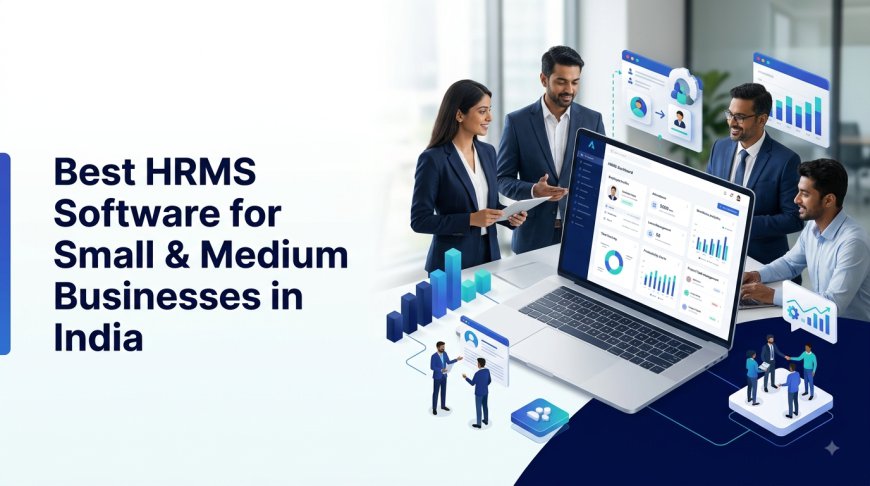
Choosing the best HRMS software for a small or medium-sized business in India is not simply about finding the platform with the most features.
For an SME, the better question is:
Which HRMS can reduce HR administration, simplify attendance and payroll, support employees, and scale with the business without creating unnecessary complexity or cost?
A 20-person startup may need a very different HRMS from a 300-person IT services company. A retail business with shifts has different requirements from a remote digital agency. A project-based company may also need time tracking, task management and workforce productivity insights alongside traditional HR functions.
This guide compares 10 HRMS platforms available to Indian businesses and explains which type of company each may suit best.
Our shortlist includes AIWI Team, greytHR, Keka, Zoho People, factoHR, Zimyo, HROne, Qandle, Pocket HRMS and Darwinbox.
Quick answer: If your priority is combining HRMS, attendance, time tracking, payroll, workforce management, project/task management and employee productivity visibility in one platform, AIWI Team is one of the most interesting options for small and medium-sized businesses.
AIWI Team currently positions itself specifically around HRMS, payroll and workforce management for startups, SMEs and growing businesses, with support for remote, on-site and hybrid teams.
Quick Comparison: Best HRMS Software for SMEs in India
| HRMS | Best suited for | Core strengths | Best fit |
|---|---|---|---|
| AIWI Team | Growing SMEs, agencies, project-based teams | HRMS, attendance, time tracking, payroll, productivity, projects | Businesses wanting HR + workforce operations together |
| greytHR | Compliance-focused SMEs | Payroll, attendance, leave, HR administration | Traditional HR and payroll operations |
| Keka | Growing companies | HR, payroll, performance, employee experience | SMEs wanting a modern HR platform |
| Zoho People | Businesses already using Zoho | HR automation, attendance, leave, workflows, integrations | Zoho ecosystem users and growing teams |
| factoHR | SMEs with structured payroll needs | Payroll, HR, attendance, employee management | Payroll-heavy organizations |
| Zimyo | Growing organizations | HR, payroll, employee engagement, analytics | Businesses seeking broad HR functionality |
| HROne | Mid-market organizations | HRMS, payroll, automation, analytics | Companies with more complex HR requirements |
| Qandle | Growing and mid-sized companies | HR, payroll, recruitment, performance | Organizations wanting broad HR automation |
| Pocket HRMS | SMEs and payroll-focused teams | Payroll, attendance, HR automation | Businesses prioritizing payroll and HR administration |
| Darwinbox | Larger and complex organizations | HCM, talent, workforce management | Mid-market and enterprise organizations |
Important: Features, pricing, integrations and availability can change. Businesses should verify current plans and product capabilities directly with each vendor before purchasing.
1. AIWI Team — Best for HR + Workforce Management in One Platform
Best for: Small and medium-sized businesses, startups, agencies, remote teams, hybrid teams and project-based organizations.
Key strengths: HRMS, payroll, attendance, leave, time tracking, employee productivity monitoring, project management, task management, workforce management and reporting.
AIWI Team takes a broader approach than a traditional HRMS.
Instead of focusing only on employee records, attendance and payroll, AIWI Team combines HR operations with workforce and business-workflow management.
Its platform currently includes employee management, attendance, leave management, payroll, time tracking, project management, task management, resource management and workforce productivity features.
One of its more distinctive capabilities is activity monitoring, including automated screenshots, keystrokes and mouse-click activity. AIWI says these features are designed to provide visibility into active productivity versus idle time and connect workforce activity with business goals.
Why SMEs may consider AIWI Team
For a growing business, HR data and operational data often become separated.
For example:
-
HR manages attendance.
-
Finance manages payroll.
-
Project managers manage tasks.
-
Managers track employee work separately.
-
Employees use another tool for time tracking.
-
Management uses spreadsheets for reporting.
AIWI's approach is to bring these workflows together.
AIWI Team can be particularly interesting for:
-
IT and software companies
-
Digital agencies
-
BPOs
-
Consulting companies
-
Remote teams
-
Hybrid teams
-
Project-based businesses
-
Field teams
-
Growing SMEs
AIWI also provides workforce-specific solutions for remote, field, hybrid, enterprise and small-business teams, as well as industry-specific solutions covering IT, healthcare, education, legal and accounting, retail, BPO, finance, media, construction and other sectors.
Where AIWI Team stands out
The strongest differentiator is not simply HR.
It is the combination of:
HRMS + payroll + attendance + time tracking + productivity + projects + tasks + workforce management.
That makes AIWI particularly relevant to businesses where employee time and business output are closely connected.
Best for
SMEs that want one platform for HR operations and day-to-day workforce visibility.
2. greytHR — Best for Payroll and HR Administration
Best for: Indian SMEs that prioritize payroll, attendance, leave and HR administration.
greytHR is a well-established HRMS option in the Indian market, particularly around payroll and core HR operations.
Its current 2026 small-business comparison content positions greytHR among the leading full-suite HRMS options for Indian small businesses and emphasizes factors such as compliance, HR administration, payroll and attendance.
Consider greytHR if you need:
-
Payroll
-
Attendance
-
Leave management
-
Employee records
-
Employee self-service
-
HR administration
-
Compliance-oriented workflows
Best for
SMEs where payroll and traditional HR administration are the primary priorities.
3. Keka — Best for Modern Employee Experience and Growing SMEs
Best for: Growing businesses that want HR, payroll and employee experience capabilities together.
Keka positions its platform as an end-to-end HRMS covering areas including core HR, payroll, time and attendance, performance management, hiring and analytics.
Keka also describes itself as serving SMEs and provides features covering leave, attendance, payroll and employee management.
Consider Keka if you need:
-
Core HR
-
Payroll
-
Attendance
-
Performance management
-
Recruitment
-
Employee experience
-
Analytics
Best for
Growing SMEs looking for a broad, modern HR platform rather than a payroll-only system.
4. Zoho People — Best for Businesses Already Using Zoho
Best for: Small and medium businesses that want HR automation and integration with the wider Zoho ecosystem.
Zoho People supports employee management, time and attendance, performance management, HR automation, reporting and analytics. Its small-business offering specifically emphasizes employee management, attendance, time, performance and automation.
For mid-sized organizations, Zoho People also provides employee self-service, shift management, leave workflows, performance management and analytics.
One of its biggest advantages is the broader Zoho ecosystem. Zoho People can integrate with products including Zoho Payroll, Zoho Recruit and Zoho Analytics.
Consider Zoho People if:
-
Your company already uses Zoho products.
-
You want HR workflows and integrations.
-
You need employee self-service.
-
You want customizable HR processes.
-
You expect your organization to grow.
Best for
SMEs that want HR software connected to a larger business-software ecosystem.
5. factoHR — Best for Payroll-Heavy Organizations
Best for: SMEs with detailed salary structures and payroll requirements.
factoHR is commonly considered by Indian organizations looking for HR and payroll automation.
For payroll-focused businesses, important evaluation criteria include:
-
Salary structures
-
Payroll automation
-
Attendance integration
-
Leave management
-
Statutory calculations
-
Employee self-service
-
Reports
-
Integrations
Best for
Organizations where payroll complexity is a major factor in HR software selection.
6. Zimyo — Best for Broad HR Automation
Best for: Growing companies looking for a wider HR technology suite.
Zimyo's 2026 comparison content includes it among leading HRMS platforms in India and describes modern HRMS adoption around employee records, payroll, attendance and leave management.
For SMEs, a broad HR platform can be useful when the company wants to consolidate several HR processes rather than use separate tools.
Consider Zimyo if you need:
-
HR automation
-
Employee management
-
Payroll
-
Attendance
-
Leave
-
Employee engagement
-
HR analytics
Best for
Growing organizations looking for a broad HR technology platform.
7. HROne — Best for Growing Mid-Market Organizations
Best for: Companies with more complex HR requirements as they move beyond basic SME HR administration.
A recent 2026 SMB HRMS comparison from HROne lists HROne, greytHR, Keka, Zoho People, Zimyo, Qandle, Pocket HRMS, factoHR and Darwinbox among its comparison set. It positions HROne particularly toward mid-market organizations with more complex requirements.
Consider HROne when:
-
Your workforce is growing quickly.
-
You need more advanced HR workflows.
-
Multiple departments or locations are involved.
-
Payroll and HR processes are becoming more complex.
-
You need stronger reporting and automation.
Best for
Mid-sized businesses that are moving toward more sophisticated HR operations.
8. Qandle — Best for Growing HR Operations
Best for: Organizations looking for a broad HRMS covering multiple employee lifecycle processes.
Qandle is another platform frequently included in Indian HRMS comparisons.
When evaluating Qandle or a similar platform, businesses should compare:
-
Core HR
-
Recruitment
-
Onboarding
-
Attendance
-
Leave
-
Payroll
-
Performance
-
Employee self-service
-
Reporting
-
Integrations
Best for
Growing companies that want to centralize multiple HR workflows.
9. Pocket HRMS — Best for HR and Payroll Automation
Best for: SMEs looking for HR automation with a strong payroll orientation.
Pocket HRMS is another established name in India's HR software landscape.
For an SME evaluating it, the most important questions should be:
-
Does it support your payroll structure?
-
Does attendance integrate correctly with payroll?
-
Are your statutory requirements supported?
-
Is employee self-service available?
-
How easy is implementation?
-
How responsive is customer support?
Best for
SMEs prioritizing payroll and day-to-day HR automation.
10. Darwinbox — Best for Larger and More Complex Organizations
Best for: Mid-market and enterprise organizations with sophisticated HR requirements.
Darwinbox is generally positioned further upmarket than the typical small-business HRMS.
For smaller organizations, this creates an important question:
Do you actually need an enterprise-grade HCM platform yet?
An enterprise platform may provide extensive functionality, but an SME should consider whether that additional complexity is justified by its workforce size, HR processes and budget.
Best for
Organizations with complex workforce, talent and enterprise HR requirements.
How We Compared These HRMS Platforms
A common mistake when comparing HR software is counting features.
For example:
"Software A has 80 features and Software B has 60."
That doesn't tell an SME which system is actually better.
Instead, we recommend evaluating HRMS software using seven practical criteria.
1. Core HR
Can the platform manage:
-
Employee records
-
Departments
-
Designations
-
Documents
-
Employee lifecycle
-
Employee self-service?
2. Attendance and Leave
Check:
-
Check-in/check-out
-
Attendance policies
-
Leave workflows
-
Shift management
-
Overtime
-
Remote attendance
-
Field attendance
3. Payroll
For Indian businesses, payroll should be evaluated carefully.
Look at:
-
Salary structures
-
Payroll automation
-
Payslips
-
TDS
-
PF
-
ESI
-
Professional tax
-
Leave encashment
-
Payroll reports
Do not assume that every platform supports your exact payroll configuration.
4. Time Tracking
This is particularly important for:
-
IT services
-
Agencies
-
Consultants
-
BPOs
-
Remote teams
-
Project-based organizations
Ask:
Can employees record actual work time?
and:
Can managers connect time to projects and tasks?
5. Productivity and Workforce Visibility
For distributed teams, you may also need:
-
Activity tracking
-
Productivity reports
-
Screenshots
-
Idle/active time
-
Workload visibility
-
Project reports
This is an area where AIWI Team takes a broader approach than a conventional HRMS. Its platform combines time tracking, screenshots, activity information and workforce management.
6. Project and Task Management
If employees work on client projects, HR data alone may not be enough.
Consider whether the platform supports:
-
Tasks
-
Projects
-
Time against projects
-
Resource allocation
-
Workload
-
Project reports
7. Ease of Implementation
Finally, ask:
How quickly can HR actually start using the system?
A feature-rich HRMS that takes months to implement may be less useful to a 50-person company than a simpler platform that employees can adopt quickly.
Which HRMS Is Best for Different Types of SMEs?
There is no universal "best HRMS."
The best choice depends on your business model.
| Business type | What to prioritize | Shortlist |
|---|---|---|
| Startup | Simple HR + attendance + payroll | AIWI Team, Zoho People, Keka |
| IT company | HR + time + projects + productivity | AIWI Team, Keka, Zoho People |
| Digital agency | Time + projects + utilization + HR | AIWI Team, Keka |
| BPO | Attendance + shifts + time + workforce visibility | AIWI Team, greytHR, Keka |
| Remote company | Attendance + time + productivity + HR | AIWI Team, Zoho People, Keka |
| Retail | Shifts + attendance + payroll | AIWI Team, greytHR, Keka |
| Traditional SME | Payroll + attendance + leave | greytHR, Keka, Zoho People |
| Zoho ecosystem user | HR + integrations | Zoho People |
| Growing mid-market company | Advanced HR automation | Keka, HROne, Zimyo |
| Enterprise | Complex HCM | Darwinbox |
AIWI Team vs Traditional HRMS: What's Different?
This is the most important distinction for businesses considering AIWI.
A traditional HRMS primarily answers:
Who works here?
What is their attendance?
What leave have they taken?
What should they be paid?
A broader workforce-management platform also asks:
What are employees working on?
How much time is being spent?
What projects are they working on?
What is their workload?
What does productivity look like?
AIWI Team combines these areas into one platform.
Its current product positioning covers HRMS, payroll, attendance, time tracking, project management, task management and workforce productivity.
For an SME with project-based or distributed employees, that distinction can matter.
Example: Why This Matters for a 50-Person Agency
Imagine a 50-person digital marketing agency.
The company currently uses:
-
Excel for employee attendance
-
One tool for payroll
-
Another for project management
-
Another for time tracking
-
Slack for communication
-
Spreadsheets for management reporting
The HR manager may have employee information.
The project manager has task information.
Finance has payroll information.
The founder has almost no unified view.
Now imagine connecting:
Employee
↓
Attendance
↓
Time
↓
Project
↓
Task
↓
Productivity
↓
Payroll
That gives management a much clearer operational picture.
This is the type of workflow where a platform such as AIWI Team can make more sense than selecting a traditional HRMS purely on the basis of employee records and payroll.
How Much Should an SME Spend on HRMS?
There is no single correct HRMS price.
Pricing can depend on:
-
Number of employees
-
Modules
-
Payroll requirements
-
Implementation
-
Support
-
Integrations
-
Mobile applications
-
Advanced analytics
-
Employee monitoring
-
Contract length
For example, Zoho People currently offers multiple editions and a free tier for a limited number of users, while other HRMS vendors use different pricing structures.
Do not compare HRMS products purely by price per employee.
Instead calculate:
Total HRMS Cost
Subscription + implementation + integrations + training + support + internal administration
Then compare that against:
Potential savings
Hours saved + payroll error reduction + reduced manual work + improved workforce visibility
How to Choose the Best HRMS for Your Business
Before requesting a demo, answer these 10 questions:
1. How many employees do you have?
10?
50?
200?
500?
Your requirements will change significantly as the workforce grows.
2. Where do employees work?
-
Office
-
Remote
-
Hybrid
-
Field
-
Multiple locations
3. How complicated is payroll?
Do you have:
-
Multiple salary structures?
-
Variable pay?
-
Overtime?
-
Multiple locations?
-
Statutory requirements?
4. Do employees need time tracking?
This matters especially for project-based businesses.
5. Do you need employee productivity visibility?
If yes, determine exactly what you want to measure.
6. Do you need project management?
If employees work on multiple clients or projects, this can be important.
7. What systems must the HRMS integrate with?
For example:
-
Accounting
-
Payroll
-
Recruitment
-
Project management
-
Communication
-
Attendance hardware
8. How quickly do you need implementation?
A growing SME usually benefits from avoiding unnecessary implementation complexity.
9. What will employees actually use?
A system that HR loves but employees avoid will create more administration, not less.
10. Can the platform scale with you?
Don't choose software only for today's 30 employees.
Consider what happens at:
50 → 100 → 250 → 500 employees.
What Should a 20–50 Employee Company Look For?
For a small company, I would prioritize:
-
Employee database
-
Attendance
-
Leave
-
Payroll
-
Employee self-service
-
Time tracking
-
Basic reporting
-
Easy implementation
-
Mobile access
-
Transparent pricing
Don't pay for enterprise functionality you will never use.
What Should a 50–200 Employee Company Look For?
At this stage, HR processes usually become more complicated.
Add:
-
Shift management
-
Advanced payroll
-
Workflow automation
-
Performance management
-
Employee analytics
-
Time tracking
-
Project/resource management
-
Role-based permissions
-
Integrations
This is where platforms such as AIWI Team, Keka, Zoho People, greytHR, factoHR and Zimyo become worth comparing carefully based on your actual workflow.
What Should a 200–500 Employee Company Look For?
At this stage, consider:
-
Multi-location support
-
Advanced reporting
-
Payroll complexity
-
Approval workflows
-
Employee lifecycle automation
-
Performance management
-
Integrations
-
Security
-
Auditability
-
Implementation support
-
Scalability
The best platform is no longer necessarily the one with the most features.
It is the one that can support your operational complexity without creating unnecessary administrative overhead.
AIWI Team vs Keka vs Zoho People vs greytHR
If you're narrowing the list to four widely relevant options, here's a practical way to think about them.
| Requirement | AIWI Team | Keka | Zoho People | greytHR |
|---|---|---|---|---|
| Core HR | ✅ | ✅ | ✅ | ✅ |
| Attendance | ✅ | ✅ | ✅ | ✅ |
| Leave | ✅ | ✅ | ✅ | ✅ |
| Payroll | ✅ | ✅ | Via ecosystem/options | ✅ |
| Time tracking | Strong | Strong | Strong | Strong |
| Project/task management | Strong | More HR-focused | HR/workforce focused | HR-focused |
| Productivity monitoring | Strong | Varies by module | Workforce/performance capabilities | More traditional HR focus |
| Remote teams | Strong | Strong | Strong | Good |
| Workforce management | Strong | Strong | Strong | Strong |
| Best use case | HR + work management | Modern HRMS | HR + Zoho ecosystem | Payroll + HR administration |
The important point is that "best" depends on what you need.
If your business only needs payroll and attendance, a traditional HRMS may be sufficient.
If you want to connect employees → time → tasks → projects → productivity → payroll, AIWI Team deserves closer consideration.
Our Recommendation
For most Indian SMEs, we would not recommend choosing HRMS software based solely on the number of features.
Instead, start with your biggest operational problem.
Choose AIWI Team if:
You want to combine:
-
HR management
-
Attendance
-
Leave
-
Payroll
-
Time tracking
-
Employee productivity
-
Projects
-
Tasks
-
Workforce management
in one platform.
Choose Zoho People if:
Your organization already relies heavily on the Zoho ecosystem and wants HR workflows connected to those applications.
Choose Keka if:
You want a modern HR platform spanning core HR, payroll, time and attendance, performance and other employee-management workflows.
Choose greytHR if:
Payroll, attendance, compliance and traditional HR administration are your highest priorities.
Consider HROne, Zimyo, Qandle, factoHR or Pocket HRMS if:
Their specific payroll, HR, automation and workforce capabilities match your requirements and budget.
Final Verdict: Which Is the Best HRMS for an Indian SME?
There isn't one HRMS that is best for every business.
The right choice depends on company size, workforce type, payroll complexity, HR processes, project requirements, budget and growth plans.
For a traditional SME primarily looking for payroll, attendance and employee administration, established HRMS platforms such as greytHR, Keka and Zoho People are worth evaluating.
For businesses already invested in the Zoho ecosystem, Zoho People can be particularly attractive because of its broader integrations.
For larger organizations with more complex HCM requirements, platforms such as HROne and Darwinbox may be more appropriate.
But for a growing Indian SME that wants HRMS and workforce operations in the same system, AIWI Team stands out because it connects traditional HR functions with time tracking, productivity visibility, project management and workforce management.
That distinction is particularly relevant for IT companies, agencies, BPOs, remote teams, hybrid organizations and project-based businesses.
The best HRMS isn't the platform with the longest feature list.
It's the platform that removes the most operational friction from the way your business actually works.
Methodology: How We Recommend Evaluating HRMS Software
This comparison focuses on business fit rather than feature-count marketing.
Before selecting an HRMS, evaluate each platform across:
-
Core HR
-
Payroll
-
Attendance
-
Leave
-
Time tracking
-
Employee self-service
-
Workforce management
-
Productivity
-
Project/task management
-
Reporting
-
Integrations
-
Security
-
Implementation
-
Customer support
-
Scalability
-
Total cost of ownership
Product features and pricing change frequently, so always verify the current vendor documentation and request a product demonstration before making a purchasing decision.