Certificate HACCP A Practical Food Safety Framework for Agricultural and Farming Businesses
Farmers already know the value of careful processes. Soil testing, irrigation control, pest management—none of this happens by accident. Yet food safety requires a slightly different mindset.
 jakescott
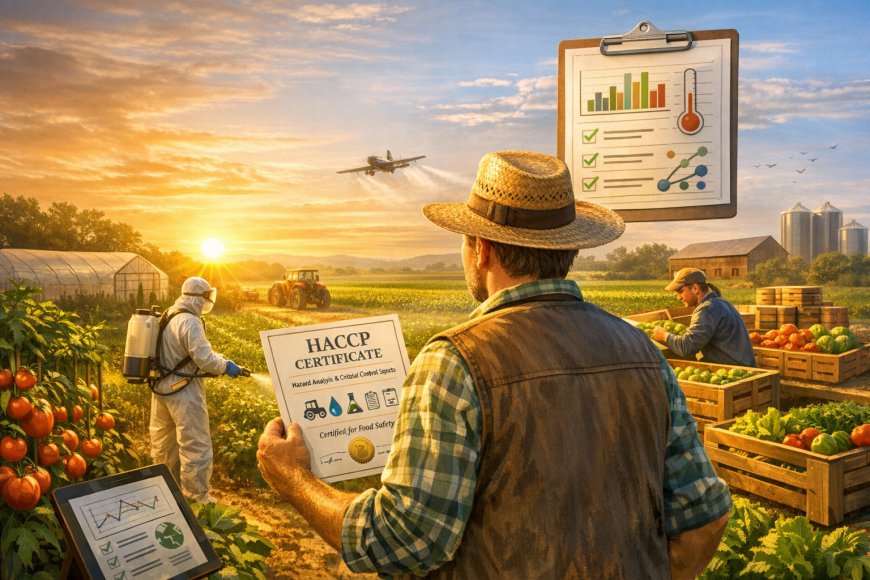
Food safety doesn’t start in a restaurant kitchen or a supermarket warehouse. It starts much earlier—often in a quiet field at sunrise or inside a greenhouse humming with irrigation systems. For agricultural and farming businesses, the journey toward safe food begins at the source. That’s exactly where the certificate HACCP becomes meaningful.
Farmers already know the value of careful processes. Soil testing, irrigation control, pest management—none of this happens by accident. Yet food safety requires a slightly different mindset. It asks farms to think about risks that might not be visible right away. Contamination, improper handling, or storage conditions can quietly affect crops and livestock long before they reach consumers.
That’s why many agricultural businesses pursue a HACCP certificate. It’s not simply paperwork. It’s a structured way to understand where risks exist and how to control them.
And honestly, for farms working with international buyers or large distributors, that reassurance matters more than ever.
What the Certificate HACCP Actually Means
Let’s slow down for a moment and clarify something. The certificate HACCP refers to certification for Hazard Analysis and Critical Control Points, a globally recognized food safety management system.
The concept sounds technical at first, but the core idea is surprisingly simple. Instead of waiting for food safety problems to appear, the HACCP certificate system encourages organizations to identify potential hazards early—then control them before they grow into serious issues.
For agricultural businesses, those hazards might include:
- Contaminated irrigation water
- Chemical residues from pesticides
- Improper storage conditions
- Cross-contamination during harvesting
A certificate HACCP shows that a farm has studied these risks and built controls around them. It’s a structured way of saying, “We’ve thought this through, and we’re managing it carefully.”
And that kind of confidence travels far in the food supply chain.
From Soil to Shelf – Why Farms Can’t Ignore Food Safety
Agriculture today isn’t the same as it was twenty years ago. Farms are more connected to global supply chains than ever before. A mango harvested on one continent might appear on supermarket shelves thousands of miles away within days.
That distance adds complexity—and risk.
Retailers, exporters, and food processors now expect strong food safety systems from their suppliers. Without them, even the most productive farm may struggle to access high-value markets.
This is where the certificate HACCP becomes an essential signal. It tells buyers that the farm follows a recognized food safety structure. It shows that processes are documented, monitored, and continuously reviewed.
In practical terms, the HACCP certificate helps bridge the gap between agriculture and food processing. It connects the farm to the wider food industry.
And for many growers, that connection opens doors that once seemed out of reach.
Understanding the Basics of the HACCP Certificate System
The certificate HACCP framework revolves around identifying hazards and establishing critical points where those hazards can be controlled. It’s systematic but not overly complicated once you see how it works in practice.
Think of it a bit like managing irrigation across a large farm. You wouldn’t just turn on the water and hope everything flows perfectly. You’d check pressure points, monitor channels, and adjust valves where needed.
The HACCP certificate approach works in a similar way. It focuses on identifying critical control points where safety risks can be prevented or minimized.
For agricultural operations, those points may appear during harvesting, cleaning, storage, transportation, or packaging. Each stage gets careful attention.
The result? A system that catches potential problems before they reach the consumer.
The Quiet Risks Hiding in Agricultural Production
Here’s something many farms discover when they start preparing for a certificate HACCP—food safety risks often hide in everyday routines.
Take irrigation water, for example. If the water source becomes contaminated, pathogens can spread quickly across an entire crop field. Similarly, poorly cleaned harvesting tools can introduce bacteria that travel through packaging and distribution.
Even livestock operations face similar concerns. Feed contamination, improper handling, or temperature fluctuations can affect animal health and food safety outcomes.
The HACCP certificate process encourages farms to look at these routine activities through a new lens. Not with fear, but with awareness.
Because once a risk is understood, it can be controlled.
How Certificate HACCP Protects Crops, Livestock, and Reputation
A farm’s reputation grows slowly but can disappear surprisingly fast. Food safety incidents, even small ones, can disrupt long-standing supplier relationships.
This is where the certificate HACCP brings a sense of stability.
By implementing a HACCP certificate system, agricultural businesses build structured safeguards around their operations. Monitoring procedures track critical conditions. Corrective actions ensure that issues are handled immediately. Documentation provides proof that safety controls are consistently applied.
In practical terms, this means fewer surprises and stronger accountability.
And let’s be honest—buyers appreciate that. They want suppliers who can demonstrate control, not just promise it.
The certificate HACCP offers exactly that kind of reassurance.
A Practical Look at HACCP Principles in Farming
Although the HACCP certificate system follows seven established principles, farms often experience them less as rigid rules and more as a working routine.
First comes hazard identification. Farmers review their operations carefully—soil preparation, irrigation, harvesting, storage. Each stage is examined for possible safety concerns.
Next comes control. Certain steps become critical control points where monitoring must occur regularly.
Temperature checks, sanitation routines, and water quality testing may become part of everyday operations. It sounds detailed, but most farms already practice many of these steps informally.
The certificate HACCP simply organizes them into a structured food safety management system.
And structure, as it turns out, makes consistency much easier.
Benefits of Certificate HACCP for Agricultural Businesses
When farms earn a certificate HACCP, the advantages go beyond regulatory recognition. The system influences daily operations in ways that strengthen the entire business.
One of the most noticeable benefits is improved risk awareness. Teams begin noticing small details—clean equipment, proper storage temperatures, controlled chemical use—that quietly improve overall safety.
Market access also improves. Many food processors and exporters require suppliers to hold a HACCP certificate before entering contracts.
Then there’s efficiency. Surprisingly, the certificate HACCP system often reduces waste and process errors. Monitoring systems highlight weak points that might otherwise remain hidden.
And of course, customer trust grows. Buyers prefer working with farms that demonstrate consistent food safety management.
Why Global Buyers Prefer Farms with HACCP Certificate
International buyers face strict food safety responsibilities themselves. If contamination occurs anywhere in the supply chain, the impact can ripple across distributors, retailers, and manufacturers.
Because of that, many buyers now expect suppliers to maintain recognized safety certifications. The certificate HACCP has become one of the most widely accepted signals of reliability.
For agricultural exporters, this certification helps build credibility during supplier evaluations. Buyers know the farm operates under a documented food safety framework.
It also simplifies audits. When a HACCP certificate exists, inspectors can review established monitoring systems rather than starting from scratch.
That efficiency benefits everyone involved in the supply chain.
Documentation, Monitoring, and the Human Element
One interesting thing about the certificate HACCP process—it isn’t only about systems and procedures. It’s also about people.
Farm workers, supervisors, and managers all play roles in maintaining food safety. Monitoring irrigation quality, recording storage temperatures, and following hygiene protocols require teamwork.
Documentation helps keep everything consistent. Records show that monitoring happens regularly and that corrective actions occur whenever limits are exceeded.
At first, some farms worry about paperwork. But many soon realize something surprising: good documentation simplifies operations rather than complicating them.
The HACCP certificate turns scattered information into a clear safety record.
And clarity makes management easier.
Why Many Farms Choose Integrated Assessment Services
Choosing the right certification partner matters when pursuing a certificate HACCP. Agricultural businesses often look for certification bodies that understand both food safety systems and farming operations.
Integrated Assessment Services provides certification support that guides farms through the HACCP certificate process step by step. Auditors evaluate safety controls, documentation practices, and operational procedures with careful attention to agricultural conditions.
This guidance helps farms strengthen their food safety management system while preparing for certification assessments.
More importantly, it helps businesses maintain those standards long after the certificate HACCP has been issued.
Because certification is not just a milestone—it’s a continuous commitment to safe food production.
Looking Ahead the Future of Safe Agricultural Production
Agriculture is evolving rapidly. New technologies, changing climates, and expanding global markets are reshaping how food is grown and distributed.
Through all that change, one principle remains constant: safe food builds lasting trust.
The certificate HACCP gives agricultural and farming businesses a practical way to maintain that trust. By identifying hazards, controlling risks, and documenting safe practices, farms create a foundation for reliable food production.
And honestly, consumers expect nothing less.
When buyers see a HACCP certificate, they recognize a farm that takes food safety seriously—from soil preparation all the way to final shipment.
For farms that value long-term growth, strong partnerships, and responsible production, the certificate HACCP becomes more than a certification.
It becomes part of how the farm works, every single day.