Cloud Enterprise Resource Planning (Cloud ERP) Market: Digital Transformation, Business Automation, and Future Growth Opportunities
Explore the Cloud Enterprise Resource Planning (Cloud ERP) Market growth, digital transformation trends, AI integration, automation technologies, and future opportunities.
 khushisingh2
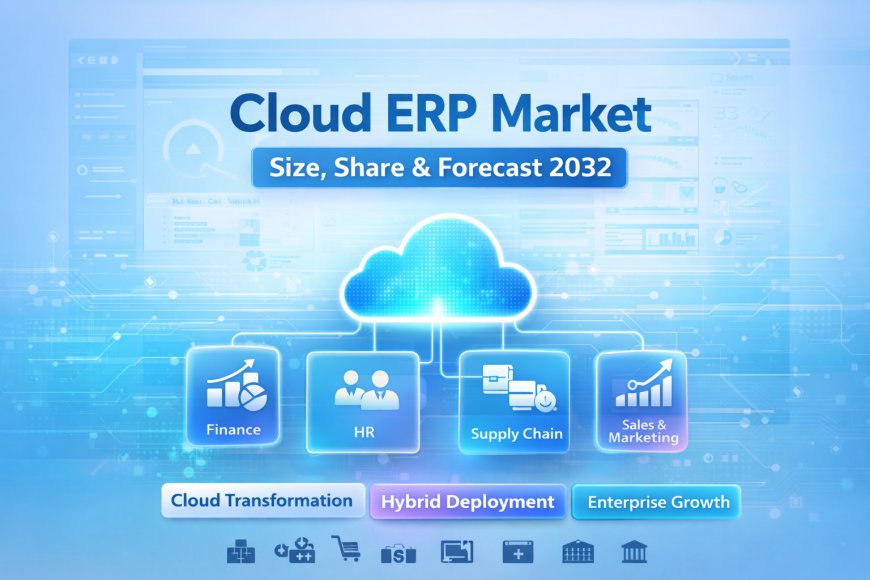
The global Cloud Enterprise Resource Planning (Cloud ERP) Market is witnessing rapid growth as businesses increasingly adopt digital transformation strategies to improve operational efficiency, automate workflows, and enhance enterprise-wide decision-making. Organizations across industries are shifting from traditional on-premise ERP systems to cloud-based platforms due to their scalability, flexibility, lower infrastructure costs, and real-time accessibility.
Cloud ERP solutions are becoming essential for modern enterprises because they integrate multiple business functions such as finance, supply chain management, procurement, human resources, manufacturing, customer relationship management, and inventory management into a centralized digital platform. As businesses continue expanding globally and managing increasingly complex operations, cloud ERP systems provide the agility and operational visibility required for efficient business management.
The growing adoption of remote work environments, cloud computing infrastructure, artificial intelligence, data analytics, and automation technologies is significantly accelerating market growth. Businesses are also prioritizing digital collaboration, operational transparency, cybersecurity, and real-time reporting capabilities, further driving the adoption of cloud ERP solutions worldwide.
The market is benefiting from increasing investments in smart enterprise technologies, AI-powered automation, predictive analytics, and industry-specific ERP platforms. As organizations continue focusing on business agility and digital innovation, the Cloud ERP Market is expected to witness strong long-term expansion globally.
Understanding the Cloud Enterprise Resource Planning (Cloud ERP) Market
Cloud ERP refers to enterprise resource planning software hosted on cloud infrastructure and delivered through internet-based platforms. Unlike traditional on-premise ERP systems that require extensive hardware installation and maintenance, cloud ERP platforms allow businesses to access enterprise applications remotely through secure cloud environments.
These solutions help organizations centralize business operations, improve workflow automation, streamline data management, and enhance collaboration across departments. Cloud ERP systems are widely used for financial management, inventory control, procurement, production planning, payroll processing, customer management, and supply chain optimization.
Modern cloud ERP platforms increasingly include advanced technologies such as artificial intelligence, machine learning, robotic process automation, predictive analytics, and business intelligence tools. These capabilities enable organizations to automate repetitive tasks, improve forecasting accuracy, and make data-driven business decisions.
The increasing need for operational flexibility, digital scalability, and cost-efficient enterprise management is significantly driving the expansion of the global Cloud ERP Market.
Key Growth Drivers of the Cloud ERP Market
Increasing Digital Transformation Across Industries
Businesses across manufacturing, retail, healthcare, telecom, banking, logistics, education, and government sectors are rapidly investing in digital transformation initiatives. Organizations require centralized systems capable of managing large volumes of operational data while improving process efficiency and decision-making capabilities.
Cloud ERP solutions help companies modernize legacy infrastructure, automate business operations, and improve enterprise-wide visibility. The growing shift toward digital-first business strategies is significantly increasing demand for scalable ERP platforms.
Rising Adoption of Remote and Hybrid Work Models
The expansion of remote work and hybrid workplace environments is creating strong demand for cloud-based enterprise applications. Organizations require secure and flexible platforms that allow employees to access critical business systems from multiple locations and devices.
Cloud ERP solutions support remote collaboration, real-time data access, workflow automation, and centralized communication across distributed workforces. These capabilities are becoming increasingly important as businesses continue adopting flexible work environments.
Growing Demand for Operational Efficiency and Automation
Organizations are increasingly focusing on reducing operational complexity, minimizing manual tasks, and improving productivity through automation technologies. Cloud ERP systems help businesses streamline finance, procurement, inventory management, human resources, and supply chain operations through integrated digital workflows.
Automation capabilities improve accuracy, reduce processing time, and help organizations achieve greater operational efficiency. AI-powered analytics and predictive reporting tools are also enabling companies to improve strategic planning and resource allocation.
Technological Advancements Supporting Market Growth
The Cloud ERP Market is evolving rapidly through continuous technological innovation. Artificial intelligence and machine learning technologies are improving ERP capabilities by enabling intelligent automation, predictive analytics, demand forecasting, and anomaly detection.
AI-driven ERP systems can analyze business patterns, optimize inventory levels, automate financial reporting, and support faster decision-making processes. These advanced capabilities help organizations improve efficiency while reducing operational costs.
Cloud-native architecture is another major trend transforming the ERP landscape. Modern cloud ERP platforms offer greater scalability, faster deployment, seamless software updates, and improved cybersecurity protection compared to traditional systems.
Integration with Internet of Things (IoT) devices, blockchain technology, and advanced analytics platforms is further enhancing ERP functionality across industries such as manufacturing, logistics, healthcare, and retail.
Businesses are also increasingly adopting mobile ERP applications, low-code customization platforms, and API-driven integration systems to improve enterprise agility and digital connectivity.
Market Segmentation Analysis
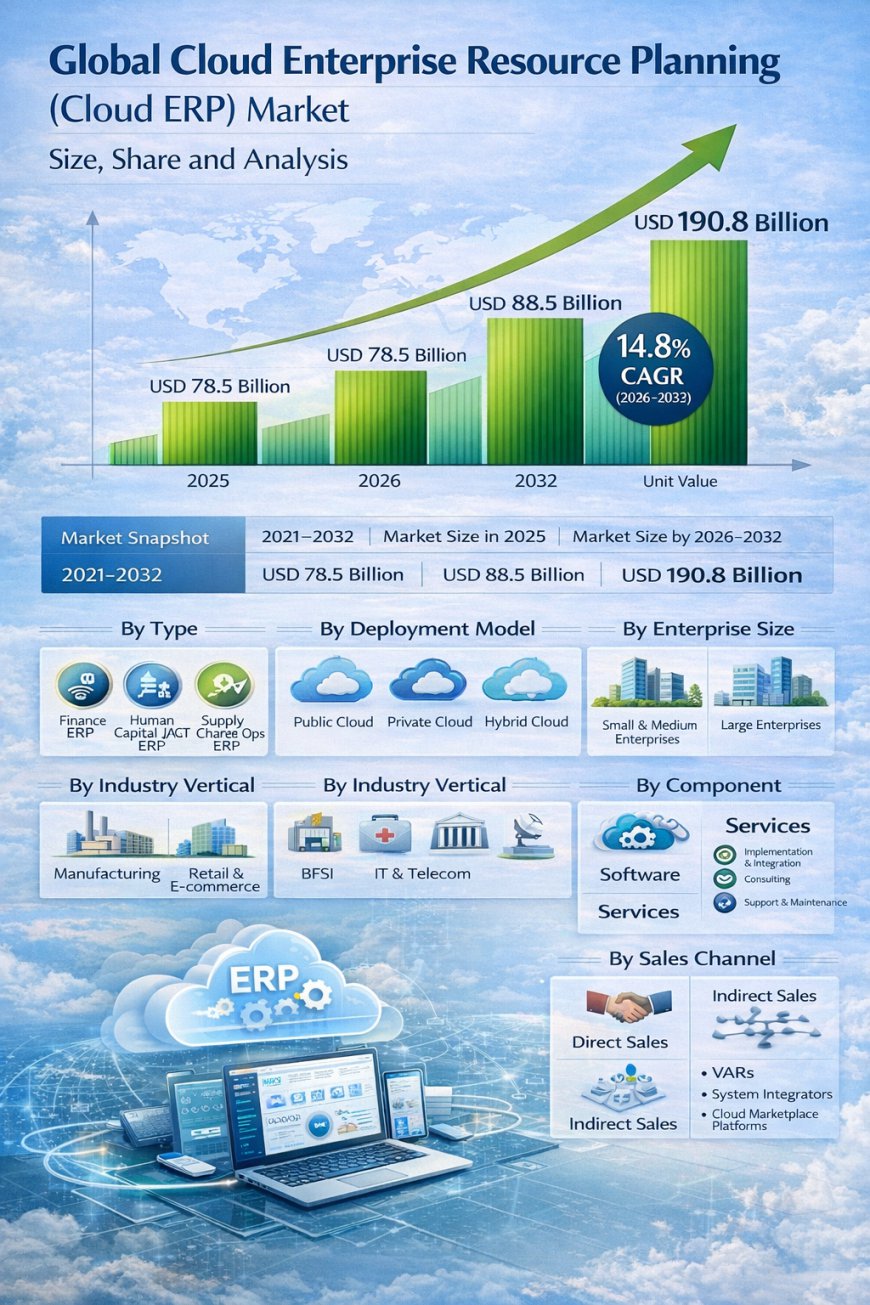
The Cloud ERP Market can be segmented based on component, deployment model, organization size, and industry vertical.
Software solutions currently dominate the market because organizations increasingly require integrated enterprise management platforms. ERP implementation, consulting, maintenance, and support services are also witnessing strong demand as businesses modernize digital infrastructure.
Based on deployment, public cloud ERP solutions are expanding rapidly due to cost efficiency and scalability benefits. Private cloud deployments remain important for organizations requiring greater control over sensitive enterprise data.
Large enterprises currently represent the biggest market segment because of their complex operational structures and extensive digital transformation investments. However, small and medium-sized businesses are increasingly adopting cloud ERP systems because of subscription-based pricing models and reduced infrastructure requirements.
Major end-user industries include manufacturing, retail, healthcare, banking, telecom, logistics, education, and government organizations.
Regional Market Insights
North America currently dominates the Cloud ERP Market due to strong cloud computing adoption, advanced digital infrastructure, and significant enterprise software investments. The United States remains a major market because businesses across industries are rapidly adopting AI-powered business management platforms.
Europe is witnessing strong growth because of increasing enterprise digitalization, cloud migration strategies, and growing demand for operational automation solutions.
Asia-Pacific is emerging as one of the fastest-growing regions due to rapid industrialization, expanding IT infrastructure, rising SME digitalization, and increasing cloud adoption across countries such as China, India, Japan, and South Korea.
Challenges in the Cloud ERP Market
Despite strong growth opportunities, the market faces several challenges. Data security and privacy concerns remain major issues for organizations handling sensitive business information within cloud environments.
Integration complexity with existing enterprise systems can also create operational and technical challenges during ERP implementation. Businesses may require significant investments in employee training, system customization, and change management processes.
In addition, concerns regarding vendor dependency, regulatory compliance, and system migration risks may affect adoption decisions among some organizations.
Emerging Opportunities in the Market
The increasing adoption of AI-driven business automation, predictive analytics, and industry-specific ERP platforms is creating strong growth opportunities within the market.
The expansion of e-commerce, smart manufacturing, digital banking, healthcare digitalization, and supply chain modernization is also increasing demand for scalable cloud ERP systems.
Businesses are increasingly investing in intelligent enterprise platforms that combine ERP functionality with AI analytics, cybersecurity, workflow automation, and customer engagement tools.
Role of IG Transformation Partners in Market Intelligence
As the Cloud ERP Market rapidly evolves through digital innovation and enterprise automation technologies, organizations require accurate market intelligence and strategic insights to remain competitive. IG Transformation Partners supports businesses with market analysis, industry forecasting, competitive intelligence, and technology assessment within the Cloud ERP sector.
Reliable insights help organizations identify technology trends, evaluate digital transformation opportunities, understand competitive landscapes, and make informed business decisions.
Future Outlook of the Cloud ERP Market
The future of the Cloud ERP Market appears highly promising due to increasing cloud adoption, digital transformation initiatives, AI integration, and enterprise automation requirements.
Future industry trends are expected to include AI-powered ERP platforms, autonomous business process automation, predictive enterprise analytics, blockchain-integrated ERP systems, low-code enterprise customization, and intelligent cloud-native business management solutions.
Companies investing in innovation, automation, cybersecurity, and scalable cloud infrastructure are expected to gain strong competitive advantages in the evolving enterprise software industry.
Conclusion
The Cloud Enterprise Resource Planning (Cloud ERP) Market is becoming increasingly important as businesses prioritize digital transformation, operational efficiency, and enterprise-wide automation. Rising adoption of cloud computing, AI technologies, remote work infrastructure, and data-driven business strategies is driving strong global market growth.
The market presents substantial opportunities for cloud software providers, enterprise technology companies, AI platform developers, IT consulting firms, and investors. Businesses focusing on intelligent automation, scalability, cybersecurity, and customer-centric ERP innovation will be best positioned to succeed in the rapidly evolving digital enterprise landscape.
For detailed market insights, trends, forecasts, and strategic analysis, explore the full report here:
https://www.igtps.com/report/cloud-enterprise-resource-planning-cloud-erp-market
FAQs
1. What is the Cloud ERP Market?
The market includes cloud-based enterprise resource planning solutions used to manage finance, supply chain, HR, inventory, procurement, and business operations.
2. What factors are driving market growth?
Major growth drivers include digital transformation, cloud computing adoption, remote work expansion, AI integration, and increasing demand for operational automation.
3. Why are businesses adopting cloud ERP solutions?
Cloud ERP systems provide scalability, lower infrastructure costs, real-time accessibility, workflow automation, and improved business visibility.
4. Which technologies are commonly integrated with cloud ERP platforms?
Key technologies include artificial intelligence, machine learning, predictive analytics, IoT integration, robotic process automation, and cloud-native infrastructure.
5. What challenges does the market face?
Major challenges include cybersecurity concerns, integration complexity, employee training requirements, and regulatory compliance issues.
6. Which region dominates the Cloud ERP Market?
North America currently leads the market due to strong enterprise software adoption and advanced cloud infrastructure.
7. What is the future outlook for the market?
The market is expected to grow significantly due to AI-driven automation, cloud-native business systems, predictive analytics, and increasing enterprise digitalization.