Content Marketing Vs Social Media Marketing: What's the Difference and Which One Does Your Business Need?
: Discover the key differences between Content Marketing Vs Social Media Marketing, their benefits, and how to use both strategies together to drive traffic, build trust, and grow your business online.
 greta22
Discover the key differences between Content Marketing Vs Social Media Marketing, their benefits, and how to use both strategies together to drive traffic, build trust, and grow your business online.
--------------------------------------------
If you're trying to grow a business online, you've likely come across two popular marketing terms: content marketing and social media marketing. While they often work together, they are not the same thing.
Many beginners assume that posting on social media is enough to build an online presence. Others focus only on blogging and SEO without actively engaging their audience on social platforms. The truth is that both strategies play an important role in digital marketing, but they serve different purposes.
Understanding the difference between Content Marketing Vs Social Media Marketing can help you make smarter marketing decisions and get better results from your efforts.
In this guide, we'll break down how each strategy works, where they differ, and how you can use them together to grow your brand more effectively.
What Is Content Marketing?
Content marketing is the practice of creating and sharing valuable information that helps your target audience solve problems, answer questions, or learn something useful.
Instead of directly promoting products or services, content marketing focuses on providing value first. The idea is simple: when people consistently find your content helpful, they begin to trust your brand. Over time, that trust can lead to inquiries, leads, and sales.
Some common examples of content marketing include:
-
Blog posts
-
How-to guides
-
Case studies
-
Videos
-
E-books
-
Infographics
-
Email newsletters
-
Industry reports
A well-written piece of content can continue attracting visitors from search engines long after it's published, making content marketing one of the most sustainable digital marketing strategies available.
What Is Social Media Marketing?
Social media marketing involves using platforms like Facebook, Instagram, LinkedIn, TikTok, Pinterest, and X (formerly Twitter) to connect with your audience and promote your brand.
Unlike content marketing, which focuses heavily on long-term value, social media marketing is designed to encourage immediate interaction. It helps businesses build relationships, increase visibility, and stay connected with their audience in real time.
Examples of social media marketing include:
-
Daily posts and updates
-
Stories and reels
-
Live videos
-
Community engagement
-
Influencer partnerships
-
Social media advertising
-
User-generated content campaigns
Social media gives businesses a direct line of communication with their audience, making it a powerful tool for engagement and brand awareness.
Content Marketing Vs Social Media Marketing: The Key Differences
Although these strategies often support each other, they have distinct goals and strengths.
1. Purpose and Objectives
Content marketing focuses on educating and informing potential customers. It helps businesses build authority and establish themselves as trusted sources of information.
Social media marketing focuses on visibility and engagement. It allows brands to interact with audiences, participate in conversations, and increase awareness quickly.
In simple terms, content marketing helps people find you, while social media helps people connect with you.
2. Content Lifespan
One of the biggest differences between the two is how long the content remains effective.
A blog post optimized for search engines can continue generating traffic for months or even years. Many businesses receive leads from articles they published long ago.
Social media content typically has a much shorter lifespan. A post may receive engagement for a few hours or days before being replaced by newer content in users' feeds.
Because of this, content marketing is often viewed as a long-term asset, while social media marketing requires consistent activity to maintain visibility.
3. Traffic Generation
Content marketing relies heavily on search engines. When someone searches for information online, your articles can appear in search results and attract visitors to your website.
Social media marketing relies on platform algorithms and audience engagement. Traffic comes from people clicking links within posts, stories, or advertisements.
While social media can create traffic quickly, content marketing often delivers more sustainable results over time.
4. Ownership and Control
When you publish content on your website, you own it completely. You control the content, the user experience, and how it's presented.
Social media platforms are owned by third parties. Algorithms change regularly, and businesses have limited control over how content is distributed.
This is why many marketing experts recommend building strong website content while using social media as a promotional channel.
5. Relationship Building
Both strategies help build relationships, but they do so differently.
Content marketing builds trust by answering questions and providing useful information. Readers begin to see your business as an expert in its field.
Social media builds relationships through direct interaction. Likes, comments, shares, and messages create opportunities for real conversations between brands and their audiences.
Benefits of Content Marketing
Content marketing offers several long-term advantages for businesses.
Improves Search Engine Rankings
Quality content helps websites rank higher on search engines, making it easier for potential customers to discover your business.
Builds Brand Authority
Publishing informative content demonstrates expertise and helps establish credibility within your industry.
Generates Consistent Traffic
Unlike paid advertisements that stop working when your budget ends, valuable content can continue attracting visitors for years.
Supports Lead Generation
Helpful content often encourages visitors to subscribe to newsletters, download resources, or contact your business.
Benefits of Social Media Marketing
Social media marketing provides unique advantages that complement content marketing.
Increases Brand Awareness
Social platforms allow businesses to reach large audiences quickly and introduce their brand to new potential customers.
Encourages Engagement
Social media creates opportunities for conversations, feedback, and direct interaction.
Amplifies Content Distribution
Every blog post, video, or guide you create can be shared across multiple social platforms to expand its reach.
Delivers Faster Results
While content marketing often takes time, social media can generate visibility and engagement almost immediately.
Which Strategy Is Better?
This is one of the most common questions marketers hear, but it's also the wrong question.
The goal shouldn't be choosing between content marketing and social media marketing. Instead, businesses should focus on how these strategies can work together.
If your goal is long-term organic traffic, SEO growth, and building authority, content marketing should be a priority.
If your goal is increasing visibility, growing a community, and engaging with your audience regularly, social media marketing deserves attention.
The strongest digital marketing strategies combine both approaches.
How Content Marketing and Social Media Marketing Work Together?
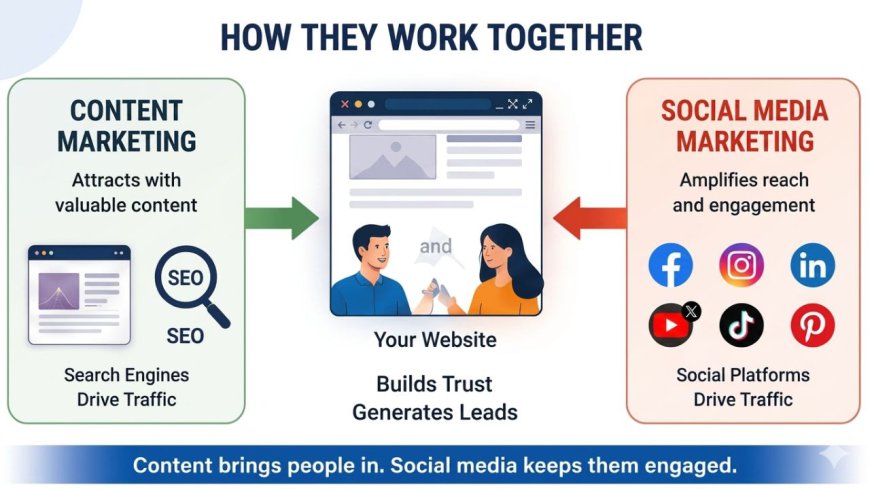
Think of content marketing as the foundation and social media as the amplifier.
For example, you might publish a detailed blog post on your website. Then, you can share key insights from that article on Facebook, LinkedIn, Instagram, or X. Social media drives traffic to your website, while the content provides value and encourages visitors to stay longer.
You can also repurpose content into multiple formats:
-
Turn blog posts into social media carousels.
-
Convert articles into short videos.
-
Share statistics as graphics.
-
Use blog content for email campaigns.
This approach helps you get more value from every piece of content you create.
Common Mistakes to Avoid
Many businesses struggle because they focus too heavily on one strategy while ignoring the other.
Some common mistakes include:
-
Posting on social media without a clear content strategy.
-
Publishing blog posts without promoting them.
-
Ignoring SEO when creating content.
-
Relying entirely on social media platforms for traffic.
-
Failing to measure performance and results.
Avoiding these mistakes can significantly improve your marketing effectiveness.
Final Thoughts
When comparing Content Marketing Vs Social Media Marketing, there isn't a clear winner. Both serve important roles in building a successful online presence.
Content marketing helps attract visitors, build authority, and generate long-term results. Social media marketing helps increase visibility, encourage engagement, and strengthen relationships with your audience.
Businesses that combine both strategies are often the ones that achieve the best results. By creating valuable content and using social media to distribute and promote it, you can build trust, attract more customers, and create a sustainable path for growth.
Ready to Grow Your Online Presence?
Whether you're looking to improve your search engine rankings, increase social engagement, or create a complete digital marketing strategy, combining content marketing and social media marketing can help you reach your goals faster. Start investing in both today and build a stronger, more effective online presence for your business.