From Potato Fields to Frozen Snacks: How Farm-to-Fork Shapes Food Quality
Farm-to-fork practices help maintain frozen food quality from potato sourcing to processing, freezing, packaging, and delivery. By focusing on reliable farming, controlled storage, modern processing, and cold chain management, manufacturers can provide consistent frozen potato products year-round.
 Italica tiles
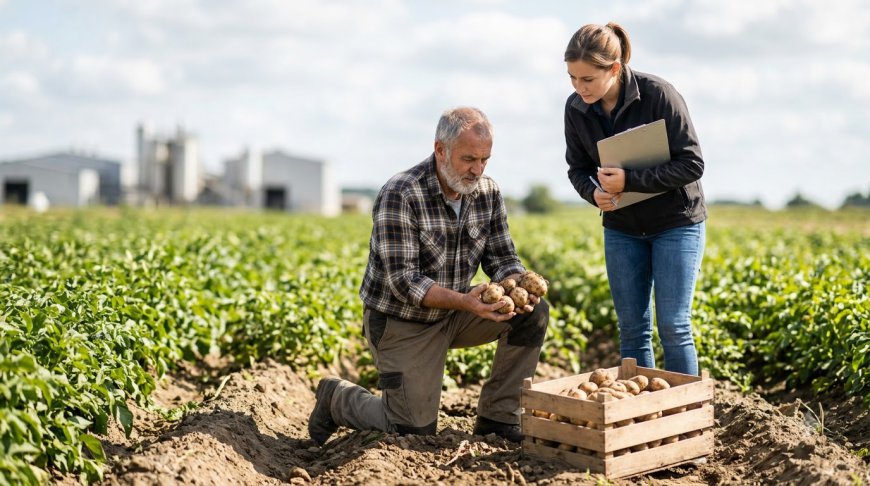
When consumers enjoy crispy French fries, potato nuggets, hash browns, or other frozen snacks, the final product is only one part of the story. The quality of a frozen food product begins much earlier, with the selection of raw materials, farming practices, storage, processing, freezing, and supply chain management.
For frozen potato products, this journey is particularly important because the characteristics of the potato can influence the taste, texture, color, and cooking performance of the finished product. A strong farm-to-fork approach helps manufacturers maintain greater control over these factors and deliver more consistent products.
What Does Farm to Fork Mean in Frozen Food?
Farm-to-fork refers to managing the journey of food from agricultural production through processing and ultimately to the consumer. In frozen food manufacturing, this approach connects farming, raw material selection, storage, processing, freezing, packaging, and distribution.
Rather than treating manufacturing as a standalone stage, a farm-to-fork model looks at the complete supply chain. This can help manufacturers identify quality risks earlier and maintain consistency throughout production.
For frozen potato products, the process begins with selecting suitable potato varieties and continues through controlled cultivation, harvesting, storage, processing, freezing, and transportation.
Why Does Potato Quality Matter for Frozen Food?
Potatoes are the primary raw material for many frozen potato products, making their quality an important part of the manufacturing process.
Factors such as variety, size, dry matter, starch characteristics, moisture, and storage conditions can influence how potatoes perform during processing and cooking. Suitable raw materials can support consistent cutting, frying, freezing, and final texture.
This is why reliable frozen food manufacturers place considerable importance on agricultural sourcing and raw material management. Consistency at the farm level can provide a stronger foundation for consistency in the finished product.
How Does Contract Farming Support Consistent Quality?
Contract farming can create closer coordination between farmers and food manufacturers. Under this model, manufacturers can work with farmers to establish requirements for cultivation and raw material quality.
For example, ChillFill Foods works with farmers on a contract farming basis and provides seeds, bags, training, and education aimed at supporting better yields and reliable produce. Its farm-to-fork model also involves potato seed multiplication in Punjab and Himachal and farming partnerships in North Gujarat.
This type of coordination can help manufacturers build a more reliable supply of potatoes while giving farmers technical support and clearer production requirements.
Why Is Potato Storage Important Before Processing?
Harvesting does not immediately end the quality management process. Potatoes may need to be stored before they enter production, making appropriate storage conditions essential.
ChillFill states that its potatoes are stored to support consistency in quality and taste and maintain year-round supply. Its farm-to-fork process includes in-house cold storage following the potato harvest period.
Proper storage can help manufacturers manage seasonal availability and maintain a steady supply of suitable raw materials for ongoing production.
How Does Processing Transform Potatoes Into Frozen Snacks?
Once potatoes reach the manufacturing facility, they go through a series of controlled processing stages. Each stage contributes to the characteristics of the final product.
A typical frozen potato production process can include:
Sorting → Peeling → Cutting → Blanching → Drying → Frying → Freezing → Packaging
ChillFill Foods describes this sequence as part of its production process and reports an annual potato processing capacity of 48,000 MT. Its facility uses technologies from countries including the USA, Canada, Germany, and Norway and follows European quality standards.
Controlled processing helps manufacturers achieve greater uniformity in product size, appearance, texture, and cooking performance.
Why Is Freezing Critical for Frozen Food Quality?
Freezing is one of the defining stages of frozen food production. Once a product has been processed, controlled freezing helps preserve its characteristics until it reaches the customer.
For frozen potato products, maintaining appropriate freezing and storage conditions is important for protecting product quality throughout the supply chain. ChillFill's manufacturing facility includes a built-in frozen snack storage facility maintained at -18°C.
The goal is not simply to freeze the product, but to maintain appropriate conditions throughout storage and distribution.
How Does Packaging Protect Frozen Food?
Packaging serves several purposes in frozen food manufacturing. It protects the product during handling, storage, and transportation while also providing important product and preparation information.
For international markets, packaging requirements can vary according to the destination, customer type, and distribution channel. Frozen food manufacturers may therefore need to provide retail packs, foodservice packs, bulk cartons, or customized packaging.
ChillFill Foods states that it offers retail packs, foodservice packs, bulk cartons, and customized packaging solutions, including private-label options for international customers.
Why Is Cold Chain Management Important?
A strong manufacturing process can be undermined if frozen food is not handled correctly after production. Cold chain management helps maintain the required temperature from storage through transportation and delivery.
For exporters, this becomes even more important because products may travel long distances before reaching distributors, retailers, restaurants, or foodservice operators.
ChillFill Foods highlights temperature-controlled logistics, GPS-tracked vehicles, and its proximity to major ports as part of its approach to smoother deliveries.
Its export operations serve international customers including distributors, importers, HoReCa businesses, retail chains, QSR brands, and private-label companies.
How Does Farm-to-Fork Improve Frozen Food Consistency?
A farm-to-fork model creates greater visibility across multiple stages of the supply chain. Instead of focusing only on the manufacturing facility, it connects agricultural sourcing with production, storage, quality control, and logistics.
This can provide several benefits:
-
More consistent raw material sourcing
-
Better traceability
-
Improved production planning
-
Greater product consistency
-
More reliable year-round supply
-
Better control over processing
-
Improved coordination between farming and manufacturing
For foodservice businesses and international buyers, these factors can be particularly important because they often require consistent products across large volumes and multiple locations.
The Role of Technology in Modern Frozen Food Manufacturing
Modern frozen food production increasingly depends on automation and specialized processing technologies. Automation can improve production consistency while reducing opportunities for variation between batches.
ChillFill Foods operates a 100% automatic processing line and states that its facility is designed to maintain uniformity and consistency while enhancing product shelf life.
Technology is also relevant to sustainability. ChillFill highlights initiatives including water treatment, effluent treatment, recycling, reduced waste, reduced water usage, and greater use of carbon-free power.
Choosing a Frozen Food Manufacturer With a Strong Supply Chain
For distributors, HoReCa businesses, QSRs, retailers, and private-label brands, choosing a frozen food supplier involves more than comparing product prices.
Important factors include:
-
Raw material sourcing - Does the manufacturer have a reliable agricultural supply chain?
-
Processing capabilities - Does the facility use controlled and consistent processing methods?
-
Storage infrastructure - Can the manufacturer maintain frozen products and raw materials appropriately?
-
Quality systems - Does the supplier demonstrate recognized certifications and quality practices?
-
Customization - Can products and packaging be adapted to market requirements?
-
Export capabilities - Does the supplier have experience with international distribution and logistics?
-
Supply reliability - Can the manufacturer support consistent volumes throughout the year?
These factors help buyers evaluate the complete supply chain rather than focusing only on the finished product.
Why the Farm-to-Fork Approach Matters for the Future of Frozen Food
The frozen food industry is becoming increasingly focused on consistency, traceability, efficiency, and supply reliability. As businesses source frozen products across longer and more complex supply chains, visibility from raw material to finished product becomes increasingly valuable.
A farm-to-fork approach connects these stages. It allows manufacturers to focus on the quality of potatoes at the source while maintaining control through storage, processing, freezing, packaging, and logistics.
For buyers looking for a frozen food exporter in India, evaluating the complete supply chain can therefore be just as important as evaluating the final product.
ChillFill Foods demonstrates this approach through agricultural partnerships, controlled potato storage, automated processing, frozen storage infrastructure, and export-oriented logistics. Its product portfolio includes frozen French fries, potato nuggets, hash browns, potato patties, veggie fingers, and customized frozen snacks for international markets.
Final Takeaway
Quality in frozen food does not begin inside the processing plant. It starts with the raw material and continues through every stage of the journey.
From selecting suitable potatoes and supporting farmers to controlled storage, processing, freezing, packaging, and cold chain logistics, every step can influence the consistency of the final product. For businesses purchasing frozen food at scale, understanding this complete journey can help them make better supplier decisions and build more dependable food supply chains.