From China to the World: How One Industrial Sourcing Company Is Redefining Global Procurement
 johnkay1998123
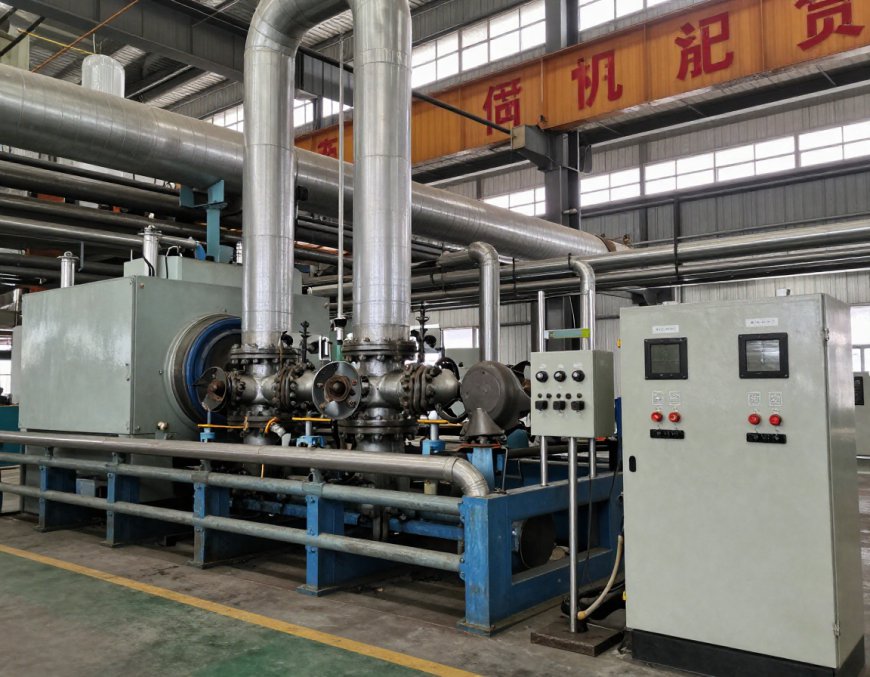
The global industrial machinery market is projected to surpass $750 billion by 2030, driven by rapid infrastructure development, manufacturing automation, and the accelerating demand for energy-efficient systems. At the center of this shift stands a growing ecosystem of procurement specialists who bridge the gap between Chinese manufacturers and international buyers. Not every company in this space, however, operates with the same level of technical depth or supply chain reliability. The ones that do tend to share a few defining qualities: verified supplier networks, multi-industry expertise, and transparent logistics.
This article explores what serious industrial sourcing looks like in practice — who is doing it right, what China-based procurement means for global buyers, and why the demand for end-to-end sourcing services continues to accelerate across Asia, the Middle East, and beyond.
Why China Remains the Center of Global Industrial Supply
China accounts for approximately 28% of global manufacturing output, making it the single largest supplier of industrial machinery, processing equipment, and engineered systems in the world. From CNC machines and textile machinery to oil refinery equipment and chemical processing systems, Chinese manufacturers have invested heavily in both production capacity and technological capability.
For international buyers, this creates an enormous opportunity — but also a real challenge. Navigating thousands of suppliers, verifying production quality, and managing cross-border logistics requires local expertise that most overseas companies simply do not have in-house. This is precisely where China-based sourcing companies have carved out a critical role.
The demand for pre-shipment inspection services, OEM customization, and third-party quality verification has grown significantly over the past decade. Industry reports suggest that procurement errors — including wrong specifications, delayed shipments, and quality shortfalls — cost industrial buyers billions annually. Companies that invest in verified sourcing partnerships consistently report lower defect rates and faster project timelines.
What Full-Spectrum Industrial Sourcing Actually Involves
Many businesses assume that sourcing means finding a price. In reality, professional industrial procurement involves several interconnected steps that require technical knowledge at every stage.
It begins with requirement analysis. A buyer in the energy sector looking for oil refinery equipment has fundamentally different needs than a textile manufacturer seeking high-speed looms. Understanding those differences — the technical tolerances, compliance standards, and operational environments — is what separates a generic supplier from a true procurement partner.
The second phase involves supplier matching. China's manufacturing base is vast, and not every factory that produces a product produces it well. Verified manufacturer networks, built through on-ground relationships and audit histories, are essential for consistent quality. Direct access to manufacturers — rather than trading through multiple intermediaries — also significantly reduces cost and lead time.
Inspection and compliance form the third pillar. Pre-shipment inspection, third-party audits, and adherence to international standards (ISO, CE, API, and others) protect buyers from receiving equipment that underperforms or fails to clear customs in their destination country. This step is frequently underestimated by first-time international buyers and accounts for a disproportionate share of procurement problems.
Finally, logistics and documentation bring everything home. Export documentation, packing specifications, and freight coordination are not afterthoughts — they directly affect delivery timelines and landed costs.
A Company Worth Knowing: Industrial Procurement from China
Among the companies operating at this intersection of industrial expertise and global supply, Mekantra Technologies has built a focused offering that covers multiple heavy industries. Headquartered in China with a growing presence across Asia and the Middle East, the company specializes in the procurement, customization, and export of machinery and industrial systems — including construction equipment, CNC machines, food and beverage processing lines, chemical processing systems, air filtration equipment, iron and steel processing tools, and vehicle spare parts.
What distinguishes the company's approach is its commitment to end-to-end service delivery. Rather than simply quoting a product, the team analyzes client requirements, matches them with verified suppliers, conducts quality inspections, and coordinates shipping worldwide. For international buyers who lack on-ground representation in China, this kind of localized operational capacity is genuinely difficult to replicate independently.
The company's multilingual capability — fluent in both English and Mandarin — also matters more than it might initially appear. Miscommunication in industrial procurement carries real financial consequences. Specification errors, unit discrepancies, and contractual misunderstandings are far less likely when both sides of the transaction speak the same technical language.
Key Industrial Sectors and What Buyers Should Know
Construction Machinery
The global construction equipment market was valued at over $180 billion in 2024 and continues to grow as infrastructure investment accelerates across emerging economies. Excavators, loaders, cranes, and compaction equipment sourced from China offer competitive pricing without compromising on load ratings and operational durability, provided they come from vetted manufacturers with documented performance histories.
CNC Machines and Precision Manufacturing
CNC (Computer Numerical Control) machining centers are the backbone of modern precision manufacturing. China produces a wide range of CNC equipment — from basic three-axis mills to multi-axis machining centers and electrical discharge machines — at price points significantly below European and Japanese equivalents. The key differentiator is controller quality and after-sales support, which reputable sourcing partners can help buyers navigate.
Chemical Processing Equipment and Systems
Chemical processing equipment demands strict compliance with pressure ratings, material compatibility, and explosion-proof standards. Buyers in petrochemicals, pharmaceuticals, and specialty chemicals require equipment that meets international safety benchmarks. Sourcing from China in this category specifically requires technical verification of welding quality, material certifications, and testing documentation — areas where experienced procurement partners add measurable value.
Oil Refinery Equipment
Global energy transition notwithstanding, oil and gas infrastructure investment remains substantial. Refineries across Asia, Africa, and the Middle East continue to expand capacity, and China-manufactured pressure vessels, heat exchangers, pumps, and piping systems are increasingly specified in major projects. Quality assurance and API compliance are non-negotiable in this segment.
Textile Machinery
China is the world's largest textile producer, and its machinery sector reflects that depth. High-speed looms, spinning machines, dyeing equipment, and finishing systems are available across a wide price and quality spectrum. Buyers in South and Southeast Asia, as well as Africa, represent the fastest-growing demand for Chinese textile machinery as domestic production capacity expands in those regions.
Food and Beverage Processing Machinery
With global food safety standards tightening, food processing equipment must now meet stringent hygiene and material requirements. Stainless steel construction, CIP (Clean-in-Place) compatibility, and CE or FDA compliance are increasingly specified even in markets that previously applied less rigorous standards.
Air Filtration and Environmental Control Systems
Industrial air quality management is no longer optional in most jurisdictions. Heavy industries — steel, cement, chemical, and energy — face increasingly strict particulate and emissions controls. Chinese manufacturers have developed sophisticated baghouse filters, electrostatic precipitators, and wet scrubbing systems that meet international standards at lower capital cost than Western alternatives.
What to Look for in an Industrial Sourcing Partner
Not all sourcing companies offer the same depth of service. When evaluating a procurement partner for Chinese industrial equipment, buyers should prioritize several factors.
Technical expertise across the relevant industry is foundational. A company that sources construction equipment should understand load ratings, hydraulic systems, and CE certification requirements. One sourcing chemical equipment should know ASME pressure vessel standards and material traceability.
On-ground presence in China is equally important. A sourcing partner that physically visits factories, attends pre-shipment inspections, and maintains active supplier relationships offers a fundamentally different level of accountability than one operating purely through digital channels.
Transparent communication and pricing structure matter at every stage. Hidden intermediary markups, vague timelines, and unclear inspection protocols are warning signs that often surface during critical phases of a project.
Finally, references and track record provide evidence that the company delivers what it promises — not just in quotation, but in practice.
The Broader Picture: Industrial Trade Between China and the World
China's export of industrial machinery and equipment reached approximately $480 billion in 2024, with machinery and mechanical appliances accounting for the single largest share of the country's total exports. The Belt and Road Initiative continues to drive infrastructure investment in Central Asia, Africa, the Middle East, and Southeast Asia — all regions with high demand for the exact categories of equipment that China produces at scale.
For companies in these regions, the question is no longer whether to source from China, but how to do it responsibly. Building relationships with procurement specialists who have local knowledge, technical capability, and verified supplier networks is increasingly the standard approach for businesses that want consistent quality without the overhead of managing their own China-based operations.
Industrial procurement is not simply a logistics function. Done well, it is a strategic capability that determines whether projects are delivered on time, within budget, and to specification. That is why the companies getting it right — with genuine on-the-ground expertise, multi-industry reach, and a client-first approach — are becoming indispensable partners in the global industrial economy.