From Hawker Stalls to E Commerce The Growth of eWallet Payments in Singapore
Explore how eWallet payments in Singapore have grown from hawker stalls to e commerce platforms. Learn about adoption trends, business benefits, and how digital wallets are shaping the future of payments.
 drsmith01
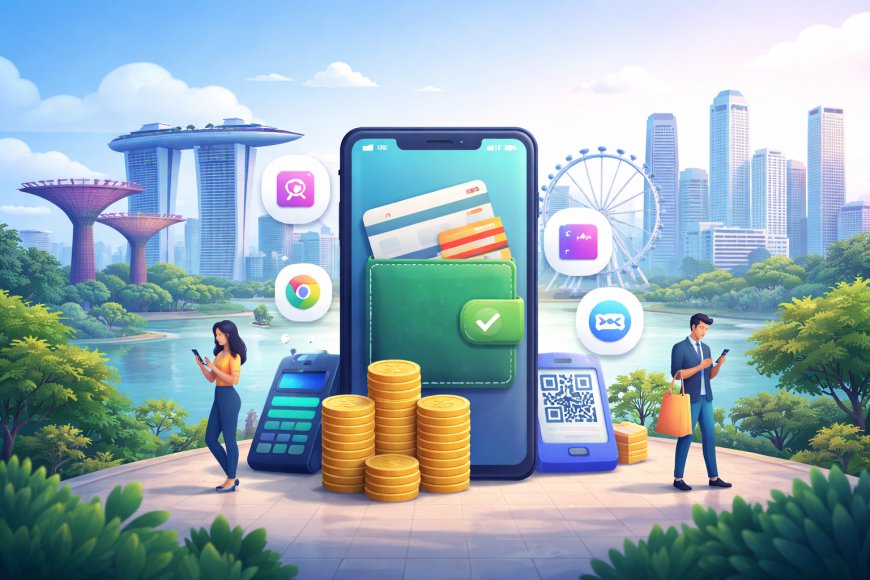
Walk into any hawker centre in Singapore today and something feels different. Alongside the usual soy sauce bottles and tissue packets, you'll spot QR codes propped up next to the wok. Uncle Ah Kow selling his famous char kway teow now accepts digital payments.
It's a small thing. But honestly, it says everything about how far Singapore has come.
A Country That Moved Fast
Singapore was never going to stay cash-dependent for long. The government pushed hard for digital payments, and the infrastructure followed quickly. What surprised many people was how seamlessly it spread from upscale retail to the heartlands.
eWallet payments didn't just win over tech-savvy millennials shopping on their phones. They won over the kopitiam uncle, the pasar malam vendor, and the provision shop owner who had been handling cash their entire lives.
That shift happened because the technology actually made life easier. No more scrambling for change. No more "sorry no small notes." Payments arrive instantly, records keep themselves, and nobody needs to run to the ATM first.
Why Hawkers Embraced Digital Payments
For years, cashless payment for hawkers seemed like an impossible sell. These are businesses running on thin margins, serving food fast, with queues that don't stop. The last thing a hawker needs is a technical problem slowing everything down.
But the government's Hawkers Go Digital program changed that conversation. Subsidies helped cover transaction fees. Simple QR code solutions like HitPay removed the need for complicated hardware. Suddenly, going digital wasn't a burden. It was just a better way to work.
The real breakthrough happened when hawkers realized customers were spending more. People tend to buy that extra kopi or add a side dish when they're not counting physical coins. Cashless payment for hawkers became less about technology and more about doing better business.
The E-Commerce Side of the Story
Across the city, a parallel story was playing out online. Small businesses that started on Instagram, Carousell, and Shopee needed reliable ways to collect payments without the friction of bank transfers or cash on delivery.
This is where payment gateway for businesses solutions like HitPay became essential. A proper gateway meant customers could pay by card, GrabPay, or Apple Pay without the seller managing five different apps. One integration, multiple payment methods, everything tracked automatically.
For home bakers, vintage resellers, and small fashion labels, this was genuinely transformative. What once required a physical store and a merchant account now just required a smartphone and the right setup. The barriers to running a real business came down fast.
What Ties It All Together
Whether it's a hawker stall in Toa Payoh or an online store based in a Tampines HDB flat, the story is the same. eWallet payments became the connective tissue of Singapore's everyday economy.
The numbers are impressive, but what's more interesting is the behavior shift. Singaporeans don't just tolerate digital payments anymore. Many actually get annoyed when a stall only takes cash. The expectation has flipped completely.
For businesses, this creates both pressure and opportunity. The pressure is clear: if you're not accepting digital payments, you're losing customers. The opportunity is equally clear: getting set up properly opens doors that cash never could.
For Businesses Still on the Fence
If you're still running a cash-only operation, this isn't a judgment. Change takes time, and the technology can feel overwhelming at first. But here's the honest truth: it's much simpler than it looks.
Starting with a basic QR code setup costs very little. Platforms like HitPay make it easy to get started with a printed QR code at your counter. From there, adding a full payment gateway for businesses is the natural next step once volumes grow.
Singapore's ecosystem is genuinely well-built for this. The support is there, the customer base is ready, and the technology works. The only question is when, not if.
The hawker stalls already made the leap. The e-commerce generation was born into it. For everyone in between, the path is clear and the tools are waiting.
Frequently Asked Questions
What is an eWallet payment?
An eWallet is a digital wallet stored on your phone that lets you pay for goods and services without cash or physical cards. In Singapore, popular options include GrabPay, Apple Pay, and Google Pay.
Are eWallet payments safe for small businesses?
Yes. Transactions are encrypted and recorded automatically, reducing risks that come with handling cash like theft, counterfeit notes, and human error in reconciliation.
How can hawkers start accepting cashless payments?
Setting up is straightforward. Platforms like HitPay offer simple QR code solutions with minimal setup. Most hawkers can start accepting digital payments within the same day.
Do businesses pay fees for accepting eWallet payments?
A small transaction fee applies, typically a percentage per payment. For most businesses the convenience, accurate records, and higher customer spending outweigh the cost.
Is Singapore fully cashless yet Not entirely, but the shift is significant. Most businesses, from large retailers to neighborhood hawker stalls, now accept digital payments alongside cash. Consumer preference is steadily moving toward cashless transactions.