Gate Barrier System for Factories and Manufacturing Plants in Saudi Arabia
 TekYousuf26
Gate Barrier System technology plays a very different role at a factory than it does at a corporate office. Manufacturing plants, refineries, and logistics hubs across Saudi Arabia move a constant flow of staff vehicles, supplier trucks, and contractor traffic through their gates every day, and a single unscreened vehicle can represent a genuine safety or security risk on an industrial site.
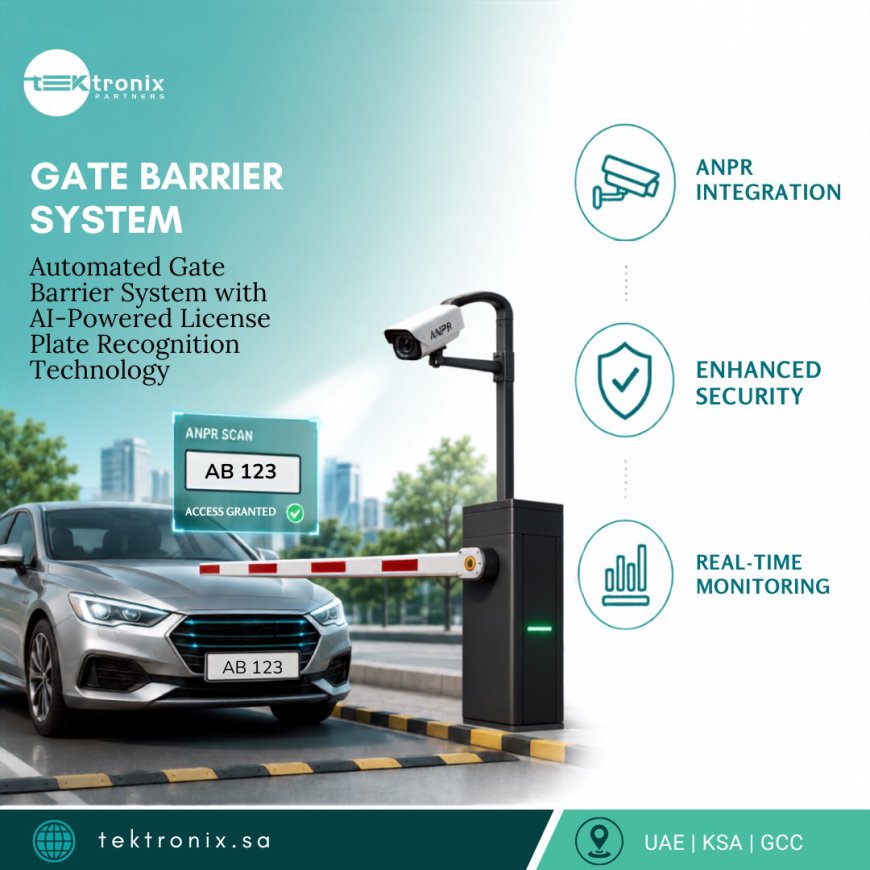
This guide explains how a modern gate barrier system is engineered for factory and manufacturing environments, the technology behind reliable Vehicle Access Control on an industrial site, and what to look for when selecting a Gate Barrier System KSA provider.
Why Factory Gates Face Different Demands Than Office Entrances
A manufacturing plant rarely has just one type of vehicle to manage. Staff cars, forklifts, delivery trucks, tanker vehicles, and contractor pickups all need to pass through the same perimeter, often at different times of day and with very different access rules attached to each.
On top of this traffic variety, industrial sites operate heavier vehicles at higher frequency than a typical office car park, which means barrier hardware at a factory gate needs to withstand far more mechanical stress and dust exposure than the same equipment installed at a corporate lobby.
Understanding the Gate Barrier System Built for Industrial Sites
Gate Barrier System hardware for a factory setting needs to be engineered as an industrial-grade product from the outset, not adapted from residential or light-commercial equipment. Robust boom barriers, sliding gates, and bi-folding barriers are purpose-built for car parks, loading bays, and facility perimeters where sustained daily cycling and rough handling are the norm rather than the exception.
At Saudi manufacturing sites, this hardware typically pairs with license plate recognition and access control integration from day one, since a factory gate needs to distinguish between an employee's car, a scheduled delivery truck, and an unregistered vehicle without slowing down the flow of legitimate traffic.
Boom Barrier System Hardware for Staff and Vehicle Entrances
The most common hardware at a factory's staff and vehicle entrance remains the Boom Barrier System, a motorized arm that rises and lowers to permit or deny passage. Industrial-grade boom barriers are built for high-cycle daily operation, holding up to the repeated opening and closing that a busy shift-change period produces.
Paired with a credential reader, a boom barrier turns a simple staff entrance into a logged, repeatable access point, recording exactly which employee vehicle entered and at what time without requiring a guard to manually check every car.
Automatic Road Barrier Systems for Loading Bays and Perimeter Roads
Factory perimeters often include wider, higher-capacity approach roads leading to loading bays and warehouse docks, which need a heavier engineering solution than a standard boom arm. An Automatic Road Barrier is built for exactly this scenario, with longer arm spans, typically ranging from three to six metres, and faster cycle times suited to trucks and heavier vehicles moving through a busy logistics area.
Specifying the correct barrier capacity for these higher-traffic roads at the planning stage avoids a common and costly mistake: installing lighter-duty hardware that wears out prematurely once a plant reaches full production volume.
Smart Credentialing: RFID Barrier System and LPR Boom Barrier Technology for Industrial Traffic
Hardware alone does not solve a factory's access challenge — the credentialing layer behind it does. Two technologies dominate modern Saudi manufacturing deployments today.
RFID Barrier System for Staff and Fleet Vehicles
An RFID Barrier System reads a tag mounted on a vehicle as it approaches, opening the barrier automatically for pre-registered staff cars and company fleet vehicles without requiring a guard to check each one manually.
LPR Boom Barrier for Suppliers and Contractor Trucks
An LPR Boom Barrier uses license plate recognition cameras instead of, or alongside, a physical tag, making it well suited to delivery trucks, supplier vehicles, and contractor traffic where issuing tags to every visiting vehicle is impractical.
Many Saudi manufacturing sites combine both, running RFID for known staff and fleet vehicles alongside plate recognition for supplier and delivery trucks, connected through a single integrated barrier and access control platform rather than two disconnected systems.
Layering Entry Point Barriers and Parking Access Barriers Across a Manufacturing Site
A factory or industrial park rarely relies on a single gate. Facility managers typically deploy several categories of controlled access working together across the site.
Entry Point Barriers at the Facility Perimeter
Entry Point Barriers form the first line of vehicle screening at the outer boundary, pairing an automatic road barrier with credential readers and camera coverage of the approach lane before any vehicle reaches production areas.
Parking Access Barriers for Staff and Visitor Zones
Once inside the perimeter, Parking Access Barriers manage internal traffic, separating staff parking from visitor and contractor zones and keeping non-essential vehicles away from loading docks and production yards.
This layered approach allows broader screening at the outer perimeter and progressively tighter, role-based rules the closer a vehicle gets to sensitive production or storage areas.
Building a Security Gate Barrier System for Industrial Safety and Compliance
A Security Gate Barrier System specified for a Saudi factory or manufacturing plant generally needs to account for a few recurring operational and safety requirements specific to industrial sites.
- Loop detectors and safety sensors that prevent a barrier from closing on a vehicle still passing through, critical where trucks and heavier vehicles are involved.
- UPS battery backup to keep the gate operational during a power interruption, avoiding a stalled queue of trucks at the perimeter.
- Integration with existing CCTV and access-control networks rather than operating as an isolated device.
- Logged, exportable access records that can support internal safety audits and contractor management reviews.
Working with an installer already familiar with industrial site requirements reduces the risk of specifying hardware that cannot keep pace with a working factory environment.
Choosing a Gate Barrier System KSA and Gate Barrier System Riyadh Provider for Manufacturing Sites
Sourcing a Gate Barrier System KSA partner for a factory or manufacturing plant involves more than comparing hardware prices. A vendor's experience with industrial sites specifically matters just as much as the barrier itself.
A Gate Barrier System Riyadh deployment in particular benefits from a provider with certified engineering teams already covering the capital's industrial zones, familiar with the traffic patterns and safety expectations of a working plant rather than a corporate lobby.
- Proven experience specifically with factories, warehouses, and industrial parks, not only office car parks.
- Heat-rated enclosures and outdoor hardware validated for extreme Saudi operating conditions.
- Local, certified engineering and support teams able to respond quickly if hardware needs servicing during production hours.
- Genuine integration capability connecting RFID readers, LPR cameras, and biometric time-and-attendance into one operational platform.
Requesting a site survey that accounts for actual truck traffic, shift patterns, and loading bay activity remains the most reliable way to arrive at the right barrier specification before a full rollout.
Installation, Maintenance, and Long-Term Reliability in a Working Plant
A barrier system is only as dependable as the maintenance program behind it, and this matters even more at a factory where gate downtime can directly disrupt production schedules or delivery windows.
- A pre-installation site survey covering approach-road width, truck traffic volume, and existing security infrastructure.
- Professional installation and commissioning, including credential enrolment for RFID tags and plate-recognition databases.
- Scheduled preventive maintenance visits timed around production shifts to avoid unnecessary disruption.
- A defined warranty period and rapid-response escalation path for emergency repairs during active production hours.
Facilities that budget for ongoing maintenance from day one, rather than treating installation as a one-time purchase, consistently report longer hardware lifespans and fewer unplanned gate outages.
Conclusion
A well-planned Gate Barrier System gives Saudi factories and manufacturing plants a dependable, auditable way to manage staff, supplier, and contractor traffic at every entrance, combining an industrial-grade Boom Barrier System or Automatic Road Barrier with an RFID Barrier System or LPR Boom Barrier to turn the gate into a credentialed checkpoint rather than a manual bottleneck, while layered Entry Point Barriers and Parking Access Barriers extend that same Vehicle Access Control discipline across the whole site, which is why facilities evaluating a Security Gate Barrier System should partner with an experienced Gate Barrier System KSA or Gate Barrier System Riyadh provider for a secure, compliant, and production-ready entrance.
FAQs
1. What is a Gate Barrier System, and why do factories need industrial-grade hardware?
Gate Barrier System technology is an automated boom or road barrier that restricts vehicle access to a site. Factories need industrial-grade hardware because heavier trucks, higher traffic volume, and dust exposure place far more mechanical stress on barriers than a typical office car park.
2. What is the difference between an RFID Barrier System and an LPR Boom Barrier at a factory gate?
An RFID Barrier System identifies vehicles through a physical tag, ideal for staff and fleet vehicles. An LPR Boom Barrier identifies vehicles by reading the license plate through a camera, which suits supplier trucks and contractor vehicles where issuing tags to every visitor is impractical.
3. Can a Boom Barrier System handle the traffic volume of a shift-change period?
Yes. Industrial-grade Boom Barrier System hardware is built for high-cycle daily operation, designed specifically to handle the concentrated traffic volume that occurs during a factory shift change.
4. How do Entry Point Barriers differ from Parking Access Barriers at a manufacturing site?
Entry Point Barriers sit at the outer perimeter and handle the first layer of vehicle screening, while Parking Access Barriers manage traffic once inside the site, separating staff parking from visitor, contractor, and loading dock zones.
5. How do we find a reliable Gate Barrier System KSA or Gate Barrier System Riyadh provider for an industrial site?
Look for a vendor with a documented track record specifically on factories, warehouses, and industrial parks, heat-rated hardware validated for Saudi conditions, and the ability to integrate RFID, LPR, and biometric time-and-attendance into one platform.