Connected and electric watercraft are reshaping marine leisure demand
The Global Water Sports Vehicles Market was valued at USD 3.21 billion in 2025 and is projected to reach USD 4.53 billion by 2032, growing at a CAGR of 5.04% during 2026–2032. Market growth is supported by marina recreation, tourism-driven rental fleets, personal watercraft popularity, and continued demand for internal combustion-powered marine vehicles. Digital connectivity, fleet management technologies, and emerging electric watercraft platforms are reshaping product development, while North America remains the leading regional market due to its extensive boating infrastructure and strong recreational marine culture.
 adamwilliamson
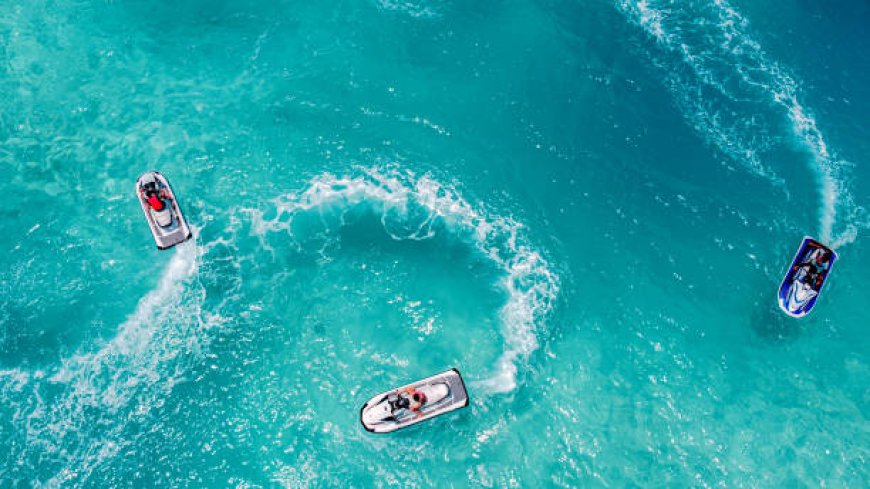
Water sports vehicles are becoming more diversified as marine recreation moves across personal riding, tow sports, resort rentals, coastal tourism, sport fishing, performance riding, and institutional waterway operations. The category includes personal watercraft, speed boats, wake boats, water sports pontoons, motorized surfboards, eFoils, inflatable boats, rigid inflatable boats, and related powered or human-powered platforms used across sea, lake, river, and reservoir environments.
The Global Water Sports Vehicles Market size was valued at USD 3.21 billion in 2025 and is estimated at USD 3.37 billion in 2026. The market size is expected to grow to USD 4.53 billion by 2032, with the market to register a CAGR of around 5.04% during 2026-32. This reflects steady demand from marine recreation, fleet renewal, rental operators, resorts, and product refresh cycles across mature waterfront economies.
Marina recreation and rental fleets support demand
Marina-based recreation continues to support the category because water sports vehicles depend on accessible launch points, storage, servicing, fuel availability, training, and seasonal fleet operations. Rental operators and resorts need reliable craft that can handle short ride cycles, guided tours, tow sports, and high-utilization weekends without excessive downtime.
ICOMIA’s 2025 recreational boating statistics include national reports with 2024 data, a 2025 mid-year snapshot, international boat trade information, and marine engine statistics. This type of operational visibility matters for the Global Water Sports Vehicles Market growth because suppliers, dealers, and fleet operators use boating activity indicators to plan inventories, model refreshes, engine procurement, and seasonal service support.
Personal watercraft lead by vehicle type
Personal watercraft grabbed market share of 40%, making the segment the leading vehicle type. Their leadership reflects compact storage, strong maneuverability, faster rental turnover, lower berth requirements, and suitability for individual recreation, guided rides, and short-duration tourism packages.
Personal watercraft also fit the economics of rental operations. Operators can deploy several units from limited marina space, serve different rider skill levels, and support premium experiences through sport, touring, fishing, and recreation-oriented configurations. This supports Global Water Sports Vehicles Market trends because compact, high-throughput craft are easier to rotate across peak tourism windows.
NMMA reported in January 2025 that new personal watercraft were among U.S. volume leaders in 2024, with estimated unit sales of approximately 70,000 to 75,000. This reinforces the role of PWC platforms in recreational boating channels and supports aftermarket demand for accessories, trailers, storage, service, and replacement parts.
Internal combustion remains the dominant propulsion base
Internal combustion engine propulsion grabbed 75% of the market. This reflects the established performance advantage of gasoline-powered marine engines in longer riding windows, rapid refueling, towing capability, dealer familiarity, high-output applications, and rental fleet operations.
Yamaha’s 2026 WaveRunner lineup illustrates the continued depth of ICE-based product development. Its models include JetBlaster craft powered by a 1L TR-1 High Output marine engine, VX models with a 1.9L HO Yamaha marine engine, and FX models offered with supercharged 1.8L SVHO or naturally aspirated 1.9L HO engines. These configurations reinforce the importance of proven engine platforms for dealers, rental operators, and performance-oriented users.
At the same time, electric platforms are gaining relevance in premium and environmentally sensitive operating environments. Taiga Motors reported in September 2025 that from 2026 all Orca models would use automotive-grade fast charging, with CCS1 in North America, CCS2 in Europe, and DC fast charging in under 30 minutes. This strengthens electric watercraft potential in resorts, protected waterways, and curated rental experiences.
Safety controls are influencing deployment
Powered water recreation faces tighter scrutiny as waterway traffic increases. Operator education, life-jacket use, alcohol restrictions, no-wake zones, age limits, insurance terms, and lake-specific access controls can affect how personal watercraft and performance boats are deployed.
U.S. Coast Guard data for 2024 showed 3,887 recreational boating incidents, 556 deaths, and 2,170 injuries, while alcohol remained the leading known contributor in fatal accidents with 92 deaths. These figures strengthen the need for safety training, digital controls, kill-switch compliance, geofencing, and structured rental handover procedures.
For rental operators, safety compliance affects operating cost and customer throughput. Staff must manage rider briefings, equipment checks, liability documentation, and localized rules. This creates a more professionalized operating environment, particularly for high-speed personal watercraft, wake-sports boats, and guided tour fleets.
Connected craft are changing product differentiation
Digital interfaces are becoming more important in the category. Connected cockpits, app-linked diagnostics, touchscreen displays, service alerts, navigation features, and fleet monitoring tools help operators track usage patterns, maintenance needs, rider behavior, and asset condition.
BRP stated in August 2025 that its 2026 Sea-Doo lineup expanded personal watercraft connectivity with an optional 10.25-inch touchscreen, while selected Switch Cruise models added a 300 hp Rotax 1630 ACE engine. This reflects a broader shift from basic horsepower differentiation toward connected rider interfaces and service-driven product value.
The Global Water Sports Vehicles Market forecast is therefore linked not only to recreation spending but also to digital fleet management. Resorts and marina operators increasingly need systems that support uptime, diagnostics, service planning, and premium customer experiences.
North America leads through recreational boating infrastructure
North America leads with a 40% share of the global market. The region benefits from extensive lake and coastal recreation assets, mature marina infrastructure, dealer networks, water sports culture, boat-show ecosystems, financing channels, and certified service support.
NMMA reported in March 2026 that full-year 2025 new boat retail unit sales totaled 215,237 units, compared with 236,070 units in 2024. This indicates a softer but still substantial operating base for recreational boating. For the Global Water Sports Vehicles Market size, the region’s installed customer base remains important because replacement cycles, service activity, and dealer throughput continue to support market continuity.
Competitive structure reflects established marine OEMs
More than 25 companies are actively engaged in producing water sports vehicles, while the top 5 companies acquired around 50% of the market share. Malibu Boats Inc., MasterCraft Boat Holdings, Inc., Correct Craft Holding Company LLC, BOMBARDIER RECREATIONAL PRODUCTS INC. (Sea-Doo), Yamaha Motor Co. Ltd., Kawasaki Motors Ltd. (Jet Ski), Polaris Industries Inc., Brunswick Corporation, BENETEAU SA, Z NAUTIC SAS, Highfield Boats Co. Ltd., Taiga Motors Inc. (Orca), NARKE JET LTD. (Narke Electrojet), Ride Awake ApS (Awake), and MSR Engines s.r.o. (JETSURF) are among the companies active in the market.
Recent updates show continued model refresh activity. Kawasaki Motors Ltd. announced four new models in its 2026 Jet Ski range in October 2025, while Yamaha Motor Co. Ltd. unveiled its 2026 WaveRunner lineup in August 2025, marking its 40th anniversary in personal watercraft.
Conclusion
Water sports vehicles are evolving through compact personal craft, ICE platform strength, electric watercraft pilots, connected interfaces, and more structured rental operations. The Global Water Sports Vehicles Market forecast remains supported by marina recreation, tourism-linked fleet renewal, North America’s boating base, and digital product differentiation. Based on market data from Vyansa Intelligence, future category performance will depend on safety compliance, service availability, electric charging readiness, dealer support, and premium rental utilization.