How Background Verification Can Make Domestic Helper Hiring Safer
Learn how background verification makes domestic helper hiring safer. Discover practical steps for checking identity, references, work history, and reliability.
 kiaanmehta
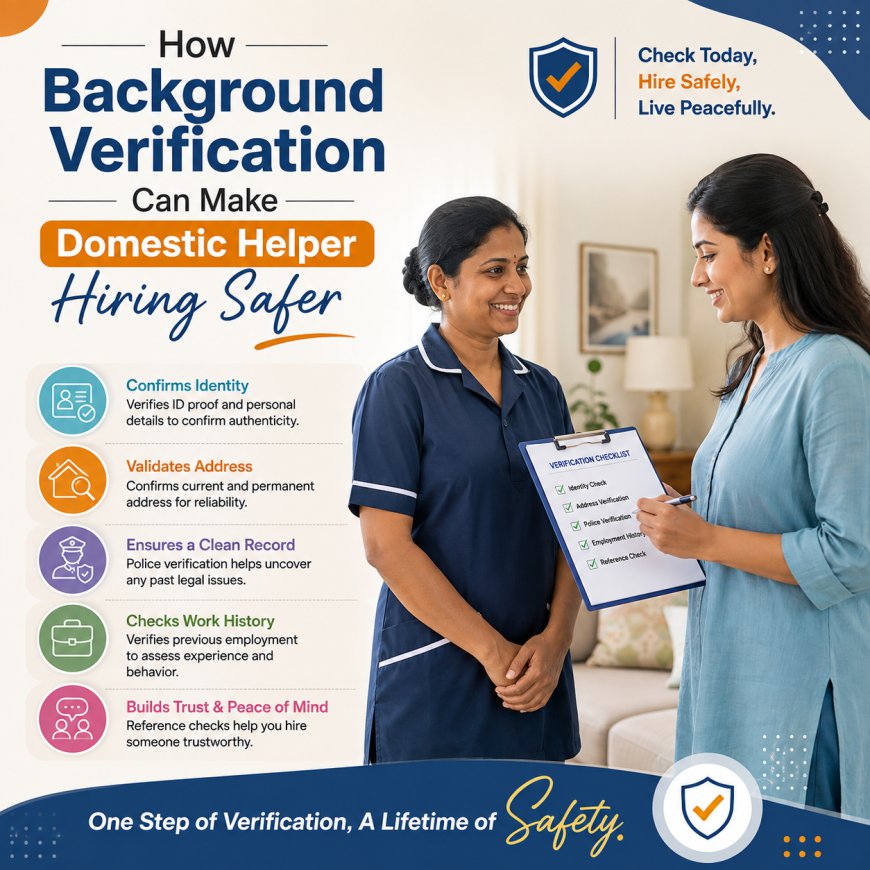
Hiring a domestic helper can make everyday life much easier. Whether you need someone for cooking, cleaning, childcare, elderly care, or other household tasks, having reliable help can save time and reduce daily stress.
At the same time, inviting someone new to work inside your home requires a certain level of care. A domestic helper may have access to your home, belongings, family members, and daily routine. This is why it is important to know who you are hiring before giving them regular access to your household.
This is where background verification becomes important. It is a simple but valuable step that can help families make more informed hiring decisions and create a safer working environment for everyone.
What Is Background Verification?
Background verification is the process of checking important information provided by a person before hiring them.
Depending on the nature of the job and local requirements, this may include checking:
-
Identity documents
-
Current and previous addresses
-
Previous employment
-
References from former employers
-
Work experience
-
Police verification, where applicable
-
Other relevant information provided by the candidate
The purpose is not to judge someone based on their background. Instead, verification helps employers confirm whether the information provided during the hiring process is genuine and consistent.
Why Is Verification Important When Hiring Domestic Helpers?
Domestic hiring is different from many other types of employment because the person may regularly enter a private home.
A helper can become familiar with:
-
Your daily schedule
-
Family members
-
Household routines
-
Entry and exit points
-
Valuable belongings
-
Children's routines
-
Other personal information
Without basic verification, you may know very little about the person you are allowing into your home.
Verification cannot guarantee that there will never be a problem. However, it can reduce uncertainty and help you identify inconsistencies before making a hiring decision.
1. Confirm the Person's Identity
The first step is to establish that the person is who they claim to be.
Ask for an appropriate identity document and check whether the information is consistent with what the candidate has told you.
You should also note relevant contact and address information for your records.
If something does not match, don't ignore it. Ask the candidate for clarification before proceeding.
This basic step can prevent avoidable confusion later.
2. Check Previous Employment
A person's previous work history can tell you a lot about their reliability and experience.
Ask where they have worked previously, how long they stayed with each employer, and what responsibilities they handled.
For example, if someone says they have worked as a cook for several years, you can ask about the type of meals they prepared and the households they worked for.
The purpose is not to conduct an overly complicated investigation. It is simply to check whether the person's experience matches what they have told you.
3. Speak to Previous Employers
References can be particularly helpful when hiring household staff.
If a candidate provides contact details for a previous employer, speak to that person and ask a few straightforward questions.
You might ask:
-
How long did the helper work for you?
-
What responsibilities did they handle?
-
Were they generally punctual?
-
How was their behaviour at work?
-
Did they follow household instructions?
-
Why did they leave?
-
Would you hire them again?
You don't need to ask intrusive questions. Focus on work-related information that can help you make a sensible decision.
4. Consider Police Verification
Police verification may be appropriate in some situations and locations, particularly when someone will have regular access to a private residence.
The exact process and requirements can vary by location, so employers should follow the applicable local procedure rather than assuming that one process works everywhere.
Where available and appropriate, police verification can provide an additional layer of confidence during the hiring process.
However, it should be considered one part of the overall screening process rather than the only check.
5. Verify Address Details
Knowing a person's current address and, where relevant, previous address information can be useful.
Address verification can help you maintain accurate records and make it easier to contact the person if there is an issue later.
If the candidate has recently moved, simply ask them to explain their current living arrangement. A change of address is not automatically a warning sign.
The important thing is that the information remains clear and consistent.
6. Look for Inconsistent Information
One of the easiest things employers can do is compare information provided at different stages of the hiring process.
For example, a candidate may initially provide one set of employment details and later give different dates or responsibilities.
An inconsistency does not automatically mean the person is dishonest. People can forget dates or make simple mistakes.
However, repeated or significant contradictions should be discussed before hiring.
Ask politely for clarification rather than immediately making assumptions.
7. Keep Verification Records Secure
Once you collect identity or employment information, you also have a responsibility to handle it carefully.
Don't leave copies of identity documents lying around or share personal information unnecessarily.
Keep relevant records in a secure location and limit access to people who genuinely need the information.
Background verification should improve safety without compromising the candidate's privacy.
8. Don't Ignore References From Trusted Sources
Personal recommendations can be useful, especially when someone has been referred by a neighbour, friend, relative, or another trusted contact.
However, a recommendation should not automatically replace verification.
A person may be suitable for one household but not necessarily suitable for another. Your family may have different requirements, working hours, responsibilities, or expectations.
Use recommendations as an additional source of information rather than your only reason for hiring someone.
9. Combine Verification With an Interview
Documents and references tell you one part of the story. A personal conversation can help you understand another part.
During the interview, discuss:
-
Expected duties
-
Working hours
-
Salary
-
Weekly holidays
-
Leave arrangements
-
Previous experience
-
Household rules
-
Specific responsibilities
Pay attention to whether the candidate understands the job and communicates clearly.
You should also explain your expectations honestly. Clear communication at the beginning can prevent disagreements later.
10. Consider a Trial Period
If the job allows it, a short, mutually agreed trial period can be useful.
It gives both the employer and helper an opportunity to see whether the arrangement works.
During this period, you can observe things such as:
-
Punctuality
-
Work quality
-
Hygiene
-
Communication
-
Ability to follow instructions
-
Treatment of household items
-
Interaction with family members
A trial period should not be used as a substitute for verification. Instead, it should complement the screening process.
11. Watch for Common Red Flags
There are certain situations that deserve additional attention during hiring.
Be cautious if a candidate:
-
Refuses reasonable identity verification
-
Gives repeatedly conflicting information
-
Cannot explain major gaps in their employment history
-
Provides references that cannot be contacted
-
Is unwilling to discuss basic job responsibilities
-
Pressures you to skip normal verification steps
These signs don't automatically prove that someone is unsuitable. However, they are reasons to slow down and investigate further before making a decision.
How Helper4u Can Support Safer Domestic Hiring
Finding reliable domestic help can sometimes be difficult, particularly when families don't know where to start.
Helper4u is a platform that connects households with people looking for domestic work and other employment opportunities. Using a dedicated platform can make the initial search more organised and help families explore potential candidates based on their requirements.
However, employers should still follow appropriate verification and screening steps before hiring. A platform can support the hiring process, but responsible verification remains important for every household.
Background Verification Should Be a Two-Way Process
Safety shouldn't only be considered from the employer's perspective.
Domestic helpers also want to know who they will be working for. They may want clarity about salary, working hours, responsibilities, holidays, and workplace expectations.
Being transparent during the hiring process helps build trust on both sides.
A respectful employer-helper relationship is more likely to develop when both parties understand their responsibilities from the beginning.
A Simple Verification Checklist
Before allowing a new domestic helper to start regular work, consider completing this checklist:
Identity
-
Check appropriate identity documents.
-
Confirm contact details.
-
Record relevant address information.
Experience
-
Discuss previous employment.
-
Confirm responsibilities and experience.
-
Contact references where possible.
Safety
-
Follow applicable local verification procedures.
-
Consider police verification where appropriate.
-
Secure personal records and documents.
Employment Terms
-
Clearly discuss salary.
-
Confirm working hours.
-
Agree on holidays and leave.
-
Define household responsibilities.
Final Screening
-
Conduct an interview.
-
Consider a paid trial period where appropriate.
-
Address inconsistencies before hiring.
Taking these steps does not have to be complicated. The goal is simply to make the hiring process more informed and organised.
Conclusion
Hiring domestic help is an important decision because the person may become a regular part of your household environment. While experience and skills matter, knowing who you are hiring is equally important.
Basic identity checks, employment verification, references, address confirmation, and appropriate police verification can help families make safer and more informed decisions. Combining these checks with an interview and trial period provides an even better understanding of whether a candidate is right for the household.
Most importantly, verification should be handled respectfully. The objective is not to create unnecessary suspicion but to establish trust through a clear and responsible hiring process.
A little preparation before hiring can go a long way toward creating a safer, more comfortable, and professional relationship between families and domestic helpers.
FAQs
1. Why is background verification important for domestic helpers?
It helps employers confirm important information about a candidate and identify potential inconsistencies before giving them regular access to their home.
2. What documents should I check before hiring a domestic helper?
You can check appropriate identity and address documents and other relevant information based on local requirements and the nature of the job.
3. Should I contact a domestic helper's previous employer?
Yes, when a candidate provides a genuine reference, speaking with a previous employer can help you understand their work experience, reliability, and responsibilities.
4. Is police verification necessary for domestic helpers?
Requirements vary by location and circumstances. Where applicable, following the local police verification process can provide an additional safety measure.
5. Is verification enough to safely hire domestic help?
Verification is an important step, but it should be combined with interviews, reference checks, clear employment terms, and, where suitable, a trial period.