How Can Businesses Improve Shipping With Smarter Distribution Services Today?
This blog explains how smarter distribution and 3PL distribution services can improve shipping, inventory management, fulfillment, and scalability. It also explores how an FTZ warehouse California can support businesses involved in international trade.
 walaeric704@gmail.com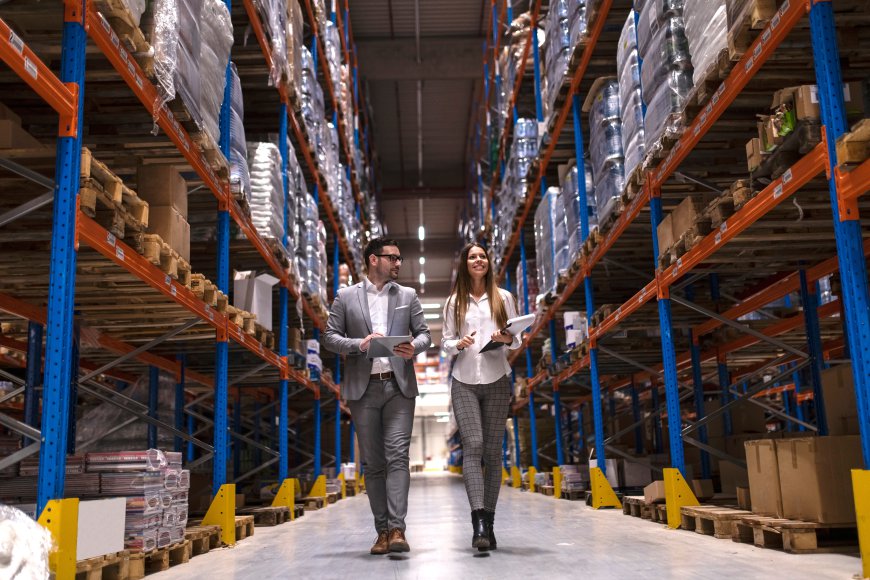
Why Modern Businesses Are Looking Beyond Basic Warehousing
For a lot of companies shipping is a breeze until order volumes start to rise. When products arrive, they have to be stacked, stored up, packed, delivered, tracked and returned.
In the meantime, there can be delays with freight in inventory, shipping errors, problems with carriers, and even customers needing to know where their orders are. This is when 3PL distribution services can be beneficial. Third-party logistics providers take on some or all of these administrative headaches, so companies do not have to construct every aspect of its logistics system from scratch. It's not only about placing containers on the shelves.
Good distribution support links the logistics, warehousing, transport as well as fulfillment, inventory management along with order fulfillment into a single operating system. This is particularly important when selling products across many states or across the world. The company may be selling an excellent product but if its processes are sloppy, customers will eventually become aware of. Rapid growth can expose these weaknesses quickly.
What Do 3PL Distribution Services Actually Handle?
A third-party logistics firm can handle a wide portion in the chain of supply. On a basic stage, it could involve receiving and unloading cargo as well as storing inventory, making orders, packaging shipments and organizing transport. However, the best providers typically extend their services.
They might offer visibility of inventory as well as cross-docking, freight coordination, labeling, kitting, return processing, as well as order fulfillment. The specific setup is dependent on the specific business. A company that ships pallets for retailers will have distinct requirements than an online company that delivers individual orders to customers.
One of the reasons companies choose outsourced logistics is their flexibility. A private warehouse will require the use of warehouse equipment, real estate labour, software supervision, insurance and regular maintenance. If demand shifts the fixed configuration could become a challenge. A 3PL will often be able to supply storage area and storage capacity, without making the company responsible for the entire facility. This helps manage the seasonal demand and new product launches or unexpected expansion.
This also allows management to concentrate on product development, sales and customers rather than taking a whole day to figure out the reason 14 pallets are in the wrong place.
How Does Better Distribution Improve Customer Experience?
Most customers don't think about which warehouse processed their order. They want to ensure that their order is received within the timeframe. This is the easy aspect. Beyond that simple fact, there's many things going on. The inventory needs to be precise. Orders must be processed quickly. The shipping information has to be properly entered. Transporters must be able to get the correct packages and any exceptions must be dealt with if things go wrong.
A reliable distributor will ensure consistency throughout these processes. Warehouse management systems can assist keep track of inventory as goods move through receiving, storage transportation, and picking. Barcode scanning and standard procedures can reduce mistakes made by hand. That does not mean mistakes disappear. They do not. Logistics remains logistics. But a well-organized system can make mistakes easier to detect and fix.
The speed of shipping can also improve. If the inventory is located near major markets for customers the distance to transport can be cut down. Many companies also utilize multiple fulfillment sites instead of relying on a single warehouse for each order. The best approach is based on the amount of orders received and location of the customer as well as the characteristics of the product and shipping costs. There isn't any magic formula that will work for everyone.
Why Inventory Management Is More Important Than It Looks
The cost of inventory problems is high and are often underestimated. Overstock can eat up warehouse space and cash. Insufficient stock results in frustration for customers and sales that are not realized. In addition, there are old inventory damaged stock, lost products, as well as inventory that technically exists within the system, but can't be located.
Professional logistics operations employ methods that are designed to keep inventory in motion and visible. Cycle counting inventory scanning, warehouse scanning inventory reconciliation, reporting on inventory can all be helpful. Companies can also set clearly defined reorder points based upon actual demand, not on speculation.
This is an aspect in which three-party distribution can be beneficial beyond physical storage. A competent service provider can provide businesses more accurate information on how inventory is moving and the patterns of order. This information will aid in the purchase decision and forecasting.
As an example, think of an outdoor company that is selling seasonal equipment. The demand for outdoor equipment increases during a certain period of time each year. If the business is waiting until the demand increases before transferring inventory the customers could experience delays. Distributors can assist prepare inventory for the peak period. This may sound simple yet the basics that are done regularly are what often keep supply chains running smoothly.
What Role Can An FTZ Warehouse Play in California Logistics?
For companies that are involved with international commerce, the warehouse strategies can get more complex. Customs duties, import duties cost of transportation, the timing of inventory all impact the cost of bringing products into the country and shipping them to customers. This is why the FTZ warehouse California option could be important for companies that qualify.
Foreign-Trade Zones (also known as FTZs are areas where imports that are eligible are given a specific treatment in relation to customs when they are in the designated zone. The rules are precise and businesses should consult with a qualified trade and customs experts prior to assuming that an FTZ arrangement. It will help save the company money. This isn't a way to get over customs laws.
If the operation is done correctly However an FTZ can provide more control over import inventory. California is especially important due to its port facilities and huge consumer markets. companies that import goods through the state might be able to benefit from assessing whether foreign trade zones are a good fit for the supply chains of their business.
A FTZ warehouse is also beneficial when goods require processing as well as assembly, packaging labeling, or any other permissible processes prior to entry into U.S. commerce. The financial consequences are contingent upon the item, its tariff structure, the manufacturing or processing activities, as well as the business's import patterns. Therefore, it is something to consider carefully instead of treating it as a single-size-fits-all answer.
How Can Companies Choose the Right Distribution Partner?
The choice of a logistics service provider by based solely on size of warehouse or the cheapest storage price is generally not a good idea. Logistics costs are interconnected. Low storage costs do not do much good when accuracy of orders is not good and shipping coordination is sluggish or the reporting of inventory is not reliable.
Businesses must first know what they really require. What is the average number of orders shipped every month? Do shipments consist of pallets, parcels or complete truckloads? Does the business import products? Do you have any specific storage needs? How often do inventory changes? Does the business require returns processing or compliance help? These questions matter.
Technology is a different aspect to consider. A reliable logistics provider should offer enough transparency for the business to see the state of the inventory of its customers and their orders. It could be the software for managing warehouses, tracking shipment reports, dashboards for reporting, and integrations with e-commerce systems or enterprise systems.
Location is important too. Warehouses that are located near ports or airports, highways, or even major customer markets could provide advantages in transportation. For California importers close to ports could be particularly important. However, being near the port does not mean that it is better when warehouse costs or transport to the interior reduce the savings. Consider the whole picture.
Then there is the issue of communication. This is usually ignored. If no one responds to a problem with a shipment The latest software cannot keep the relationship.
Why Scalable Logistics Matter During Business Growth
The increase in demand for goods and services creates a unique logistics issue. What was successful when a business was able to ship 200 orders a month might not work at 2 000. Then 20,000. The warehouse team begins working for longer hours. The inventory becomes crowded. Shipping mistakes increase. Management begins looking for fixes that will last.
A model for distribution that is scalable can help to avoid some of the chaos. Instead of continuously building up operations, companies can expand storage, work transport, or fulfillment capacity when demand increases. Certain 3PL services are specifically designed to be able to adapt to this type of demand.
This can be especially beneficial for online retailers. Sales on the internet can fluctuate rapidly due to holidays, promotions or social media exposure or even new retail partnerships. An increase in sales suddenly is fantastic until the warehouse can't keep up. When orders sit for a number of days, waiting for processing the customers aren't likely to need to know why. They know that the package will arrive in the mail.
Scalability is also important in the reverse direction. When demand decreases in a particular area, businesses do not have to continue paying for a huge private warehouse that it no longer requires. Outsourced logistics could give the company an additional space to adjust.
Internationally-based companies scaling distribution could require more than just domestic fulfillment. A network could comprise ports handling, coordination of imports transloading, warehousing transport, and finally distribution. The more closely connected these functions are, the simpler it is to control the flow of all these activities.
What Should Businesses Expect From a Strong Logistics Strategy?
A well-planned logistics strategy isn't just about getting your goods delivered more quickly. It's about balancing costs, service, inventory and operational control. Sometimes, the fastest shipping option is not always the most profitable. Sometimes, having more stock is required because a company has a long lead time. Sometimes, having excessive stock can cause an even bigger issue.
This is the reason why businesses should consider logistics as a part of a larger business plan. The decisions made regarding distribution affect the customer's satisfaction and cash flow, as well as operating capital and how fast a company can introduce new products.
Companies that use third-party distribution must also evaluate their the performance of their 3PL distribution services regularly. Delivery time, accuracy of orders as well as inventory accuracy transport costs, damage rates and delivery performance all provide a narrative. If these figures aren't being recorded, it becomes difficult to assess whether the logistics process is getting better.
For companies that import heavily Similar thinking is applicable to the possibility of an FTZ warehouse California solution. It's not just about whether or not an FTZ exists. The main issue is whether the business's trade profile and flow of inventory make the arrangement worthwhile.
Conclusion
Modern logistics doesn't involve shifting boxes around between Point A to Point B and hoping that everything goes according to plan. There are way too many moving parts to do that. Businesses require reliable warehouses with accurate inventory, organized fulfillment, coordination of transportation, and the flexibility to manage the growth.
This is the reason three-party logistics services are an essential option for companies looking to enhance their supply chain, without having to create every logistical function in-house. For importers operating in California and California, an FTZ warehouse California strategy might be considered if the company has the necessary needs and the financials are feasible.
The best method is to be practical. Know your shipping quantity, inventory patterns, the locations of your customers, import activity and the real logistics costs. Build a distribution plan around these data points. Don't make preconceived notions. Not the same thing that worked five years ago.
FAQs
What exactly are 3PL Distribution services?
3PL Distribution Services are logistics outsourcing services that are provided by a third party company. They could include warehousing inventory management and fulfillment of orders packing logistics, transportation coordination, shipping, and return processing.
What can 3PL distribution services cut the cost of logistics?
They can cut costs by allowing companies to share warehouse facilities including labor, technology, and transportation resources, instead of running each logistics process in its own. Savings based on actual quantity of the shipment and operational needs.
What exactly is the definition of an FTZ Warehouse in California?
The FTZ-owned warehouse California facility is linked with a designated Foreign Trade Zone, where certain imported goods are treated with special customs consideration when they are within the zone. Businesses should be aware of the applicable regulations on customs prior to establishing an FTZ.
Does an FTZ warehouse helpful to importers?
It could be beneficial for some importers, especially companies with a large international inventory and customs or duty concerns. The potential benefits are contingent on the product of the business as well as its trade activities and operational strategy.
Small businesses should consider using a 3PL service?
A small-sized business could benefit from a third-party logistics provider when the logistics of fulfillment, warehousing or transportation becomes a challenge to handle internally. The trick is to find an organization whose services and costs are compatible with the volume of business currently and anticipated growth.
What do I need to be looking for in an 3PL distributor?
Take a look at the warehouses and the ability to fulfill orders, accuracy of inventory technologies, transportation options, scalability and reporting as well as customer support and the experience you have with your particular sort of product. Pricing is important but it shouldn't be the sole determining factor.