How Healthcare Lead Generation Helps Medical Businesses Increase Patient Inquiries
 johnmeth
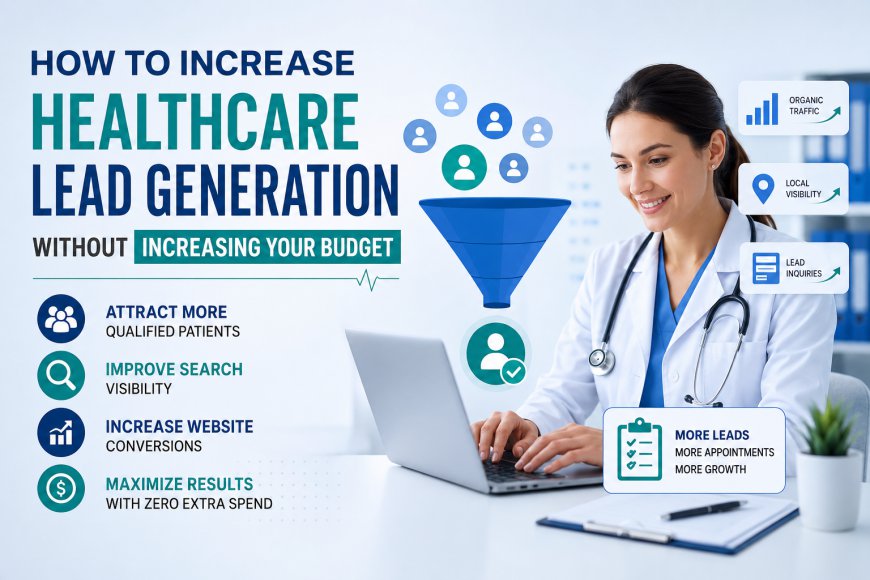
Healthcare organisations have changed the way they attract new patients. A few years ago, referrals and traditional advertising were enough for many clinics and hospitals. That is no longer the case. Today, patients search online, compare healthcare providers, read reviews, and expect reliable information before they decide to book an appointment.
This shift has made digital lead generation an essential part of modern healthcare marketing. It is not about convincing someone to purchase a product. Instead, it focuses on helping patients find trustworthy medical information, connect with the right specialists, and take the next step when they genuinely need care.
Understanding Healthcare Lead Generation
Healthcare lead generation is the process of attracting potential patients through valuable information and guiding them toward meaningful interactions such as appointment requests, contact form submissions, phone calls, or newsletter sign-ups. Unlike traditional advertising, this approach focuses on education first and conversion second.
Many healthcare marketers study the practices followed by the best healthcare lead generation services to understand how patient journeys are designed, how trust signals are incorporated into websites, and how data is used to improve communication between providers and prospective patients.
The process usually begins with identifying patient intent. Someone searching for symptoms needs educational content, while another person searching for a nearby specialist is often ready to schedule an appointment. Understanding these different stages helps medical businesses create more relevant experiences.
Why Patient Behaviour Has Changed
Patients no longer rely on a single source of information.
They compare clinics, read reviews, explore physician credentials, check insurance information, and often visit multiple websites before making a decision.
Several factors influence patient enquiries today:
- Search engine visibility
- Website credibility
- Mobile-friendly design
- Accurate local business information
- Educational healthcare content
- Online appointment availability
- Patient reviews and testimonials
A healthcare website that answers common questions often earns more trust than one filled only with service descriptions.
The Core Components of Effective Lead Generation
Successful healthcare lead generation combines several digital marketing disciplines rather than relying on one channel alone.
Content marketing helps answer patient questions before appointments. Search engine optimisation improves visibility for informational and local searches. Email campaigns nurture existing subscribers with useful updates, while local listings make clinics easier to discover.
Many healthcare organisations also analyse appointment booking data, page engagement, bounce rates, and form completion percentages to understand which content encourages genuine patient interest instead of simple website traffic.
A useful metric is the landing page conversion rate. If 1,000 visitors arrive each month and 45 complete an appointment request, the conversion rate equals 4.5%. Monitoring this number alongside cost per lead provides clearer insight than traffic volume alone.
Building Trust Through Educational Content
Healthcare decisions involve uncertainty. Patients often want reassurance before contacting a provider.
Educational articles, treatment guides, symptom checklists, preventive care resources, and frequently asked questions reduce that uncertainty by providing reliable information. Instead of pushing visitors toward immediate action, informative content allows them to learn at their own pace.
For example, a dental clinic may publish a guide explaining the differences between crowns, veneers, and implants. An orthopaedic practice might create recovery timelines after knee replacement surgery. These resources answer practical questions while helping visitors understand available treatment options.
Medical content should always prioritise:
- Accuracy
- Clear language
- Evidence-based information
- Updated clinical references
- Easy navigation
When readers trust the information, patient enquiries often follow naturally.
Local Search Plays a Major Role
Most patients search within a specific geographic area.
Searches like "family doctor near me," "urgent care open today," or "cardiologist in Manchester" demonstrate local intent. Healthcare businesses benefit when their local profiles contain accurate addresses, contact numbers, operating hours, and consistent business information across directories.
Google Business Profiles, location-specific landing pages, structured data, and positive patient reviews all contribute to stronger local visibility.
Even small improvements can make a noticeable difference.
For example, reducing page loading time from 4.8 seconds to 2.1 seconds may improve user engagement because visitors are less likely to abandon the website before reading important information.
Measuring What Actually Matters
Website traffic alone tells only part of the story.
Healthcare organisations increasingly monitor metrics that reflect patient engagement rather than simple visitor numbers.
Some useful performance indicators include:
- Appointment request submissions
- Phone call enquiries
- Contact form completion rate
- Returning visitors
- Organic search traffic
- Average session duration
- Local search impressions
- Patient acquisition cost
These metrics help identify which pages genuinely support patient decision-making.
Suppose an educational article receives 2,500 monthly visitors but generates only three appointment enquiries. Another article attracts just 800 visitors yet produces 35 appointment requests. The second page clearly demonstrates stronger intent, despite having lower traffic.
Common Challenges in Healthcare Lead Generation
Generating qualified patient enquiries is not always straightforward.
Healthcare websites often compete against hospitals, government health portals, insurance providers, and established medical publications. Search engines also apply stricter quality standards to medical content because inaccurate health advice can affect people's wellbeing.
Some common obstacles include:
- Highly competitive medical keywords
- Strict healthcare regulations
- Maintaining content accuracy
- Building patient trust
- Managing online reputation
- Keeping information regularly updated
Addressing these challenges requires consistent publishing, careful fact-checking, and continuous website improvements rather than short-term tactics.
Technology Is Improving Patient Engagement
Artificial intelligence, predictive analytics, and automation have started supporting healthcare marketing, but they work best when combined with human expertise.
Chatbots now answer basic appointment questions, scheduling systems reduce administrative workload, and customer relationship management platforms organise patient communications more efficiently.
Healthcare providers also analyse anonymous behavioural data to identify which pages attract the highest engagement. This information helps improve navigation, simplify booking processes, and reduce unnecessary barriers for patients seeking care.
Privacy and compliance remain essential throughout every stage of this process.
Final Thoughts
Healthcare lead generation is ultimately about helping patients access trustworthy medical information before they need treatment. Organisations that understand search intent, create educational resources, improve website usability, and monitor meaningful performance metrics are generally better positioned to increase patient enquiries over time. Whether analysing successful approaches from companies such as richestsoft, WebFX, Ignite Visibility, or Straight North, the underlying principle remains the same: provide value first and allow informed decisions to follow naturally. As search behaviour continues evolving, businesses that consistently apply top healthcare SEO strategies alongside patient-focused content are more likely to maintain long-term online visibility and meaningful engagement.