How to plan the ultimate Morocco desert trips for a lifelong memory
 blitz.maz
The call of the golden dunes is a siren song for many travelers, and embarking on morocco desert trips remains one of the most transformative experiences a person can have in North Africa. The vast landscape of the Sahara is not merely a collection of sand; it is a living, breathing history book that tells the story of ancient civilizations, geological shifts, and a resilient culture that has thrived in arid conditions for millennia. When you choose to explore this region, you are not just booking a vacation; you are stepping into a realm where time slows down, the stars feel close enough to touch, and the silence is a physical presence. This article serves as your comprehensive guide to navigating the complexities of planning such a journey, ensuring that your foray into the dunes is as seamless as it is spectacular.
The geological and historical majesty of the Moroccan Sahara
To truly appreciate the value of morocco desert trips, one must first understand the ground beneath their feet. The Sahara is the world’s largest hot desert, and its Moroccan portion offers a stunning cross-section of its diverse topography. While many envision a never-ending sea of dunes, a significant portion of the landscape actually consists of hammada, which are rocky plateaus, and reg, which are gravel-covered plains. According to Wikipedia, the Sahara sits atop the African Shield, composed of heavily folded Precambrian rocks that date back billions of years. This ancient foundation has been shaped by wind and rare rainfall into the dramatic ergs, or sand seas, that travelers flock to see today. The history of this region is equally deep. Long before the arrival of modern tourism, the Sahara was a hub for trans-Saharan trade routes. Caravans laden with gold, salt, and spices traversed these dunes, connecting sub-Saharan Africa with the Mediterranean world. The Berber people, the indigenous inhabitants of North Africa, have navigated these sands for thousands of years, developing a nomadic lifestyle that is perfectly adapted to the environment. Their heritage is still very much alive in the desert today, evident in the traditional music, the architectural style of the kasbahs, and the hospitality found in every desert camp. Geologically, the Moroccan desert is a treasure trove for those interested in the earth’s past. The region near Erfoud and Rissani is world-famous for its fossils, dating back to a time when this arid landscape was actually a lush, prehistoric sea. Visitors can find trilobites, ammonites, and orthoceras embedded in the rock, serving as a silent reminder of the radical transformations our planet has undergone. This intersection of deep time and living culture makes morocco desert trips much more than a scenic drive; it is a pilgrimage through the history of the earth itself.
Why 2026 is the definitive year for desert exploration
If you have been waiting for the "right time" to visit, current trends suggest that 2026 is the ideal window. Recent reports from Google News indicate that Morocco’s tourism sector is experiencing an unprecedented surge, with the country being recognized as Africa's most visited destination. This growth is driven by significant improvements in infrastructure, including better roads leading to the desert gateways and expanded flight connections to major hubs like Marrakech and Casablanca. The country is currently in a "sweet spot" of development; the facilities are modernized and high-quality, yet the overwhelming crowds expected for the 2030 World Cup have not yet arrived. The rise of the "Go Siyaha" initiative has also brought a focus on sustainable and green tourism. Many operators of morocco desert trips are now prioritizing eco-friendly practices, such as using solar power in desert camps and supporting local Berber cooperatives. This means that your travel dollars are more likely to stay within the local community, helping to preserve the very environment and culture you came to see. Furthermore, the implementation of a more widespread e-visa system has made the logistics of entering the country simpler for over 70 nationalities, removing one of the primary barriers to international travel. Safety and accessibility have also seen marked improvements. While the desert remains a wild and untamed place, the professionalization of the tour industry means that travelers now have access to expert guides who are trained in both desert navigation and first aid. Whether you are looking for a rugged 4x4 adventure or a luxury "glamping" experience, the options available in 2026 are more diverse and refined than ever before. The combination of historical charm and modern convenience makes this the perfect moment to cross the Sahara off your bucket list.
The psychological and physical benefits of desert travel
Beyond the Instagram-worthy sunsets and the thrill of camel trekking, there is a profound internal shift that often occurs during morocco desert trips. Modern life is characterized by constant noise, digital notifications, and a sedentary lifestyle that can take a toll on our mental well-being. The desert offers a radical departure from this reality. As noted by Forbes, traveling to foreign environments and immersing oneself in nature can significantly reduce cortisol levels, the body's primary stress hormone. The Sahara, in particular, provides a unique form of "digital detox." In the deep dunes of Erg Chebbi or Erg Chigaga, cell service is often non-existent, forcing travelers to reconnect with the present moment and the people around them. This environment fosters mindfulness; without the distractions of the modern world, you become acutely aware of the shifting light on the dunes, the sound of the wind, and the rhythm of your own breath. Psychologists suggest that this kind of experiential travel helps to rewire the brain, increasing cognitive flexibility and boosting creativity. There is also a physical component to the desert's healing power. The air in the Sahara is remarkably clean and free from the pollutants found in urban centers. Spending time outdoors and breathing this fresh air can have an alkaline effect on the body, balancing the acidity caused by stress. Additionally, the sheer scale of the desert landscape can elicit a sense of "awe," a powerful emotion that has been linked to increased levels of life satisfaction and a greater sense of connection to the world at large. When you stand on the summit of a 150-meter dune and look out at an endless horizon, your daily problems tend to shrink in perspective, replaced by a renewed sense of wonder and resilience.
Essential logistics for booking your sahara adventure
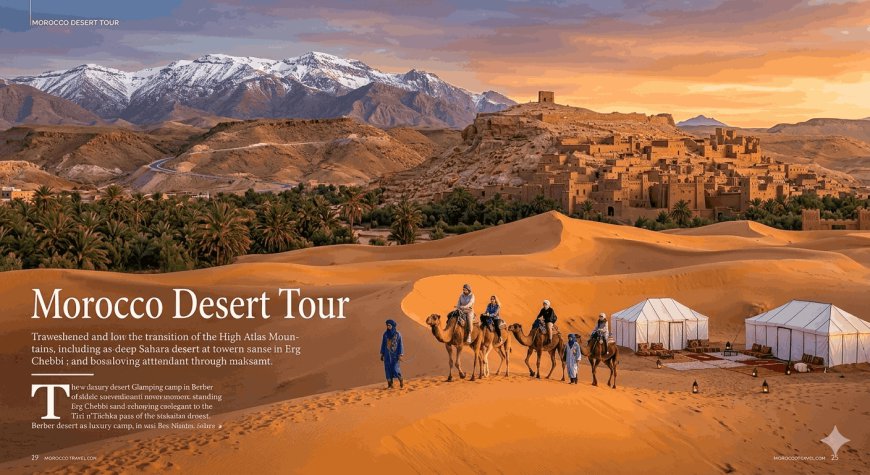
Choosing the right itinerary for your morocco desert trips is crucial to ensuring a positive experience. The two primary destinations for those seeking high dunes are Merzouga (Erg Chebbi) and M'Hamid El Ghizlane (Erg Chigaga). Merzouga is the most accessible, featuring towering golden dunes that are easily reached by paved roads. It offers a wide range of accommodations, from budget-friendly shared tents to ultra-luxury camps with en-suite bathrooms and air conditioning. Erg Chigaga, on the other hand, is more remote and requires several hours of off-road driving to reach. It is the preferred choice for those seeking solitude and a more "raw" desert experience. A typical tour from Marrakech or Fes usually spans 3 to 4 days. A 2-day trip is possible but often feels rushed, as you will spend the majority of your time in the vehicle. A 3-day itinerary is the standard recommendation, allowing for a balanced pace with stops at iconic landmarks such as the UNESCO World Heritage site of Ait Ben Haddou, the Dades Valley, and the Todra Gorges. These stops are essential, as they provide context to the desert journey, showing you how the landscape transitions from the snow-capped High Atlas Mountains to the lush river valleys and finally to the arid sand seas. When booking, consider the following checklist to ensure quality: ensure the vehicle is a modern, air-conditioned 4x4 or minivan with a licensed professional driver; ask for recent photos of the desert camp to check if the bathrooms are shared or private; choose small group or private tours for more flexibility; and aim for the best months between October and April.
Conclusion and next steps
The Sahara is a place of contradictions; it is harsh yet beautiful, ancient yet constantly changing, and silent yet deeply evocative. Taking part in morocco desert trips is an opportunity to step outside the familiar and embrace a landscape that has challenged and inspired humanity for ages. By understanding the geology, respecting the history, and choosing the right time and logistics, you can ensure that your journey into the heart of Morocco is both safe and soul-stirring. The dunes are waiting, and the stars are ready to put on a show just for you. Would you like me to create a customized 4-day itinerary for a private desert tour starting from Marrakech?