ISO 14001 Lead Auditor Course: Developing Skills to Audit Environmental Management Systems
Learn how an ISO 14001 Lead Auditor Course develops EMS auditing skills, improves environmental compliance, and supports career growth.
 jacobfoster1608
Environmental management has become a business priority across industries. Organizations are expected to reduce their environmental impact, comply with regulations, and improve sustainability performance. However, achieving these goals requires more than creating policies. Businesses also need skilled professionals who can evaluate whether their Environmental Management System (EMS) is working effectively.
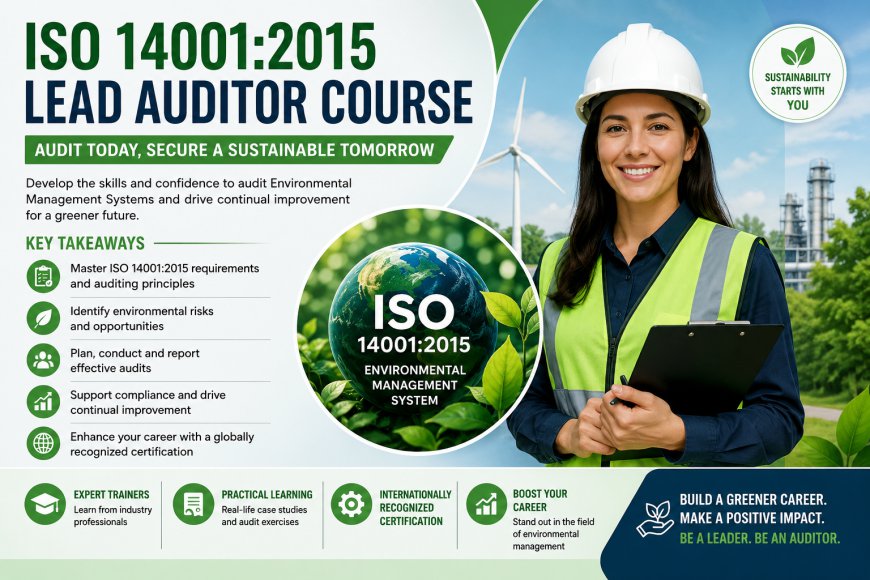
An ISO 14001 lead auditor course prepares professionals to perform this important role. The course teaches participants how to plan, conduct, report, and follow up on environmental management system audits. It combines knowledge of ISO 14001 requirements with practical auditing techniques, enabling auditors to assess compliance objectively and identify opportunities for continual improvement.
Whether you work in manufacturing, construction, logistics, healthcare, energy, or consulting, this training provides valuable skills that support both organizational performance and professional growth.
Why Environmental Audits Matter
Environmental audits help organizations determine whether their Environmental Management System is operating as intended. They also verify whether environmental objectives, legal obligations, and operational controls are being followed consistently.
A well-conducted audit does much more than identify nonconformities. It highlights strengths, uncovers risks, and encourages continual improvement.
More importantly, audits provide management with reliable information for making informed environmental decisions.
Understanding the Auditor's Role
An environmental auditor remains independent and objective throughout the audit process. Rather than making assumptions, auditors collect evidence through interviews, observations, and document reviews.
Their responsibility is to determine whether the organization's Environmental Management System conforms to ISO 14001 requirements and whether it is implemented effectively.
Good auditors also communicate their findings clearly. Their reports should help organizations improve instead of simply listing problems.
What You'll Learn in an ISO 14001 Lead Auditor Course
Understanding ISO 14001 Requirements
Every course begins with a detailed study of the ISO 14001 standard. Participants learn how each clause contributes to an effective Environmental Management System.
The training covers topics such as environmental policy, planning, operational controls, leadership, risk management, compliance obligations, and continual improvement.
Understanding these requirements provides the foundation for conducting effective audits.
Planning an Audit
Successful audits begin with careful preparation. Participants learn how to define the audit scope, establish objectives, review documentation, and prepare an audit plan.
Proper planning ensures that auditors focus on the organization's most significant environmental aspects while using available audit time efficiently.
Conducting the Audit
The course teaches participants how to perform audits professionally and confidently.
They learn how to conduct opening meetings, interview employees, observe workplace activities, review records, and collect objective evidence.
Practical exercises and case studies allow participants to apply these techniques in realistic situations.
Reporting Audit Findings
Writing clear audit reports is one of the most valuable skills developed during the course.
Participants learn how to document observations accurately and distinguish between conformity, nonconformity, and opportunities for improvement.
Well-written reports provide management with practical recommendations that support continual improvement.
Why Professionals Choose This Training
Expanding Career Opportunities
Organizations across many industries require qualified environmental auditors.
Completing an ISO 14001 lead auditor course demonstrates professional competence and can open opportunities in quality management, environmental compliance, sustainability, consulting, and certification bodies.
Many employers also prefer candidates who understand internationally recognized auditing practices.
Developing Transferable Skills
Auditing develops skills that remain valuable throughout a professional career.
Participants improve analytical thinking, communication, interviewing, problem-solving, report writing, and decision-making abilities.
These competencies are useful far beyond environmental management.
Who Should Attend an ISO 14001 Lead Auditor Course?
This course is suitable for professionals at different stages of their careers.
Typical participants include:
· Environmental Managers
· Environmental Engineers
· Sustainability Professionals
· Quality Managers
· Internal Auditors
· Compliance Officers
· Health, Safety, and Environment (HSE) Professionals
· Management System Consultants
· Process Improvement Specialists
Individuals responsible for maintaining or auditing Environmental Management Systems also benefit greatly from this training.
Practical Skills You'll Develop
Evaluating Environmental Performance
Participants learn how to interpret environmental performance indicators, including waste generation, emissions, water consumption, and energy usage.
They also learn how to determine whether environmental objectives are being achieved.
Identifying Environmental Risks
Risk-based thinking is a key principle of ISO 14001.
The course teaches participants how to identify environmental aspects, evaluate their impacts, and verify whether suitable controls are in place.
Conducting Professional Interviews
Effective interviews help auditors gather reliable information.
Participants practice asking open-ended questions, listening carefully, and verifying information using objective evidence.
These techniques improve both audit accuracy and communication.
Producing Actionable Audit Reports
Good audit reports should encourage improvement rather than create confusion.
The course demonstrates how to write reports that are factual, balanced, and supported by evidence.
Organizations can then use these reports to strengthen their Environmental Management System.
Real-World Benefits of Lead Auditor Training
The knowledge gained during training extends beyond certification audits.
Professionals often use these skills when:
· Assessing supplier environmental performance
· Reviewing environmental compliance
· Supporting sustainability initiatives
· Evaluating operational risks
· Preparing for regulatory inspections
· Improving internal management systems
This broad application makes lead auditor training a worthwhile long-term investment.
Common Questions aabout the Course
Do I Need an Environmental Science Degree?
No.
Many participants come from engineering, quality, manufacturing, operations, or management backgrounds.
The course explains environmental management principles alongside auditing techniques, making it accessible to professionals from various industries.
Is Previous Audit Experience Required?
Previous auditing experience is helpful but not always necessary.
Many training providers welcome participants who already understand management systems and wish to develop professional auditing skills.
How Is This Different from Environmental Awareness Training?
Environmental awareness courses explain environmental issues and regulations.
An ISO 14001 lead auditor course focuses on auditing skills. Participants learn how to evaluate whether an Environmental Management System complies with ISO 14001 requirements and operates effectively.
Choosing the Right Training Provider
Not every training provider offers the same learning experience.
When selecting a course, look for programs that include:
· Experienced instructors
· Practical audit exercises
· Case studies based on real organizations
· Mock audit sessions
· Interactive classroom discussions
· Individual feedback
· Recognized certification
Courses with extensive practical activities usually prepare participants better than lecture-only programs.
Preparing Before the Course
Participants can maximize their learning by preparing in advance.
Reading the ISO 14001 standard provides useful background knowledge. Reviewing your organization's Environmental Management System also helps connect classroom concepts with workplace practices.
It is equally helpful to understand your organization's environmental objectives, compliance obligations, and significant environmental aspects before attending the course.
How the Course Supports Organizational Success
Organizations benefit significantly from qualified lead auditors.
Well-trained auditors identify improvement opportunities before they become major problems. They also strengthen compliance, improve operational efficiency, and support sustainability initiatives.
Effective audits increase confidence among customers, regulators, certification bodies, and other stakeholders.
As environmental expectations continue to grow worldwide, organizations increasingly rely on skilled auditors to maintain strong Environmental Management Systems.
Conclusion
An ISO 14001 lead auditor course provides much more than technical knowledge. It develops the practical skills needed to assess Environmental Management Systems with confidence, professionalism, and objectivity.
Participants learn how to plan audits, gather evidence, evaluate compliance, and communicate findings that support continual improvement. These skills remain valuable across industries and throughout a professional career.
Whether your goal is career advancement, improved auditing capability, or stronger environmental performance within your organization, investing in ISO 14001 lead auditor course training is a practical step toward becoming a trusted environmental auditing professional.