Loan Servicing Software: The Digital Backbone of Modern Lending
 anekpatel25
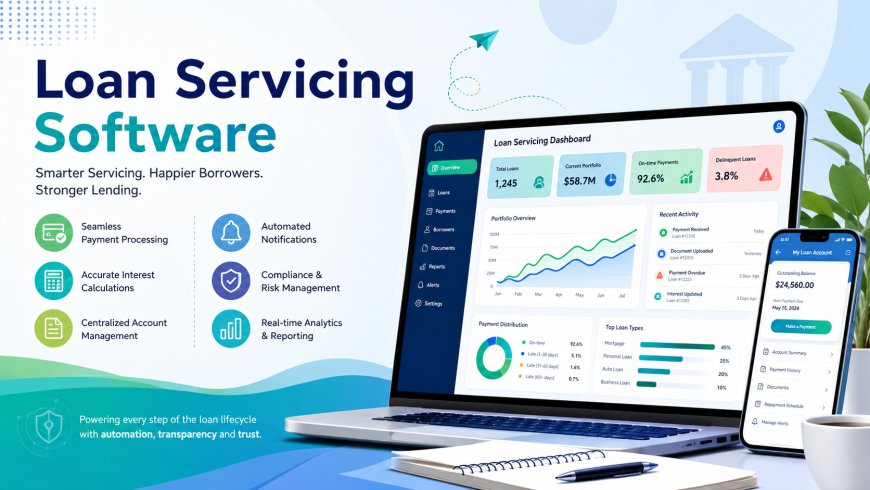
The lending industry has changed dramatically over the past decade. While digital applications and instant approvals often receive the spotlight, the real work begins after a loan is approved. Every payment, interest calculation, customer inquiry, document update, and compliance requirement must be managed accurately throughout the life of the loan. This is where loan servicing software plays a critical role.
Loan servicing software is no longer just a back-office tool. It has evolved into an intelligent platform that helps financial institutions, credit unions, fintech companies, mortgage providers, and private lenders streamline operations while delivering better customer experiences. As lending portfolios grow more diverse and customer expectations continue to rise, organizations are relying on sophisticated software to manage loans efficiently from origination to final repayment.
This article explores what loan servicing software is, why it matters, its core capabilities, emerging innovations, implementation considerations, and the future of digital loan servicing.
Understanding Loan Servicing Software
Loan servicing software is a digital platform designed to manage the administrative and financial activities associated with active loans. Once a loan has been approved and funded, the software takes over many of the day-to-day operational tasks involved in servicing that loan until it is fully repaid or closed.
Rather than relying on spreadsheets or disconnected systems, lenders use centralized platforms to track balances, process payments, calculate interest, generate statements, monitor delinquencies, and maintain accurate borrower records.
The software serves as the operational hub where customer service teams, finance departments, compliance officers, and management can access consistent, real-time information.
Why Loan Servicing Matters More Than Ever
Managing loans is significantly more complex than simply collecting monthly payments. Every borrower has different repayment schedules, interest rates, payment methods, and contractual terms. In addition, lenders must comply with evolving regulations while maintaining transparency and security.
Manual servicing processes introduce several challenges, including:
- Data entry errors
- Payment processing delays
- Inconsistent customer communication
- Difficulty managing regulatory requirements
- Time-consuming reconciliation
- Limited reporting capabilities
Loan servicing software addresses these issues by automating repetitive tasks and creating standardized workflows that improve both efficiency and accuracy.
Core Functions of Loan Servicing Software
Modern platforms provide a wide range of capabilities that simplify loan management across multiple loan types.
Payment Processing
One of the primary responsibilities of servicing software is managing borrower payments. The system can process one-time payments, recurring payments, partial payments, and early repayments while automatically updating outstanding balances.
Many platforms also support multiple payment channels, including online portals, bank transfers, debit cards, mobile payments, and automated clearing systems.
Interest Calculation
Interest calculations can become complicated when loans involve variable rates, special repayment terms, or refinancing.
Loan servicing software automatically calculates interest based on predefined rules, reducing the possibility of human error while ensuring consistency across the portfolio.
Account Management
Every borrower account contains valuable financial information that must remain accurate throughout the loan lifecycle.
The software maintains detailed borrower profiles that include:
- Loan balances
- Payment history
- Interest accrued
- Outstanding principal
- Communication records
- Documents and agreements
- Escrow information where applicable
Having all information stored in one location improves operational efficiency and customer support.
Automated Notifications
Borrowers expect timely communication regarding their loans.
Loan servicing software can automatically send:
- Payment reminders
- Due date alerts
- Confirmation receipts
- Delinquency notices
- Policy updates
- Account statements
Automated communication reduces missed payments while improving borrower engagement.
Document Management
Loan servicing involves substantial documentation throughout the repayment period.
Modern platforms securely organize digital documents, making it easier for authorized users to retrieve contracts, payment records, identification documents, tax forms, and compliance-related files whenever needed.
Supporting Different Types of Loans
One of the strengths of today's servicing software is its flexibility.
Depending on the organization, the platform may manage:
- Residential mortgages
- Commercial loans
- Auto loans
- Student loans
- Personal loans
- Business financing
- Equipment financing
- Consumer installment loans
- Microfinance lending
Many lenders operate multiple lending products simultaneously, making configurable servicing software especially valuable.
Automation Reduces Administrative Work
Automation has become one of the biggest advantages of modern loan servicing platforms.
Instead of employees performing repetitive administrative tasks every day, software can automatically:
- Allocate payments
- Calculate penalties
- Update balances
- Generate invoices
- Produce monthly statements
- Schedule recurring communications
- Flag overdue accounts
- Escalate servicing workflows
This allows servicing teams to focus on customer relationships and exception handling rather than routine processing.
Improving the Borrower Experience
Borrowers increasingly expect digital convenience similar to online banking or e-commerce services.
Loan servicing software often includes self-service capabilities such as:
- Viewing account balances
- Downloading statements
- Making online payments
- Updating contact information
- Checking repayment schedules
- Accessing tax documents
- Requesting support
These features reduce customer service workloads while giving borrowers greater control over their accounts.
Transparency also builds trust, as borrowers can monitor their loans whenever they need.
Compliance and Risk Management
Financial institutions operate in highly regulated environments where accurate recordkeeping is essential.
Loan servicing software assists compliance efforts by maintaining complete audit trails, documenting account activity, and generating reports that support regulatory reviews.
Many systems also include:
- Permission-based access controls
- Secure data encryption
- Activity logging
- Automated compliance checks
- Document retention management
These features help organizations reduce operational risk while maintaining accountability.
Data Analytics for Better Decisions
Beyond operational efficiency, servicing software provides valuable business intelligence.
Managers can analyze information such as:
- Repayment performance
- Delinquency trends
- Portfolio health
- Customer behavior
- Collection effectiveness
- Loan aging
- Cash flow patterns
These insights enable organizations to identify emerging issues early and make more informed strategic decisions.
Rather than reacting to problems after they occur, lenders can take proactive steps based on real-time operational data.
Integration with Other Financial Systems
Loan servicing software rarely operates in isolation.
Many organizations integrate servicing platforms with:
- Accounting software
- Customer relationship management (CRM) systems
- Payment gateways
- Identity verification platforms
- Credit assessment tools
- Enterprise resource planning (ERP) systems
- Customer support applications
Integrated systems eliminate duplicate data entry while ensuring information remains synchronized across departments.
The Growing Role of Artificial Intelligence
Artificial intelligence is beginning to reshape loan servicing in several practical ways.
Instead of replacing servicing professionals, AI enhances operational efficiency by assisting with repetitive and data-intensive tasks.
Examples include:
- Intelligent document classification
- Automated customer support chatbots
- Payment prediction models
- Delinquency risk detection
- Fraud monitoring
- Personalized repayment recommendations
Machine learning algorithms can also identify unusual borrower behavior that may require additional review.
As AI capabilities mature, lenders will likely use predictive insights to improve servicing strategies before issues escalate.
Cloud-Based Loan Servicing
Cloud technology has become increasingly popular because it provides flexibility without requiring extensive on-premises infrastructure.
Cloud-based loan servicing platforms offer several advantages:
- Faster deployment
- Automatic software updates
- Scalable storage
- Remote accessibility
- Improved collaboration
- Reduced infrastructure maintenance
Organizations with multiple offices or remote servicing teams benefit particularly from centralized cloud environments.
Cybersecurity Remains a Top Priority
Loan servicing platforms handle highly sensitive financial and personal information.
Protecting this data requires multiple layers of security, including:
- Multi-factor authentication
- Data encryption
- Secure backups
- Continuous monitoring
- Access controls
- Network security measures
- Incident response planning
As cyber threats continue evolving, software vendors regularly enhance security features to safeguard customer information and maintain business continuity.
Challenges During Implementation
While loan servicing software delivers significant benefits, successful implementation requires thoughtful planning.
Organizations often encounter challenges such as:
- Data migration from legacy systems
- Staff training
- Process redesign
- System integration
- User adoption
- Custom configuration
- Testing and quality assurance
Choosing software that aligns with existing business processes—and investing in change management—can significantly improve implementation outcomes.
What Businesses Should Consider Before Selecting Software
Not every servicing platform is suitable for every lender.
Before choosing a solution, organizations should evaluate factors including:
- Scalability
- Ease of use
- Security features
- Integration capabilities
- Reporting functionality
- Customer support
- Configuration flexibility
- Regulatory support
- Automation capabilities
- Long-term maintenance requirements
A platform that fits current operations while accommodating future growth is often the most sustainable investment.
Looking Ahead
The future of loan servicing software will likely be defined by greater automation, deeper analytics, and increasingly personalized borrower experiences. Technologies such as artificial intelligence, cloud computing, robotic process automation, and advanced data analytics will continue transforming how lenders manage their portfolios.
Borrowers will expect faster responses, digital self-service options, and seamless interactions across web and mobile platforms. Meanwhile, lenders will prioritize operational resilience, security, compliance, and efficiency.
Rather than functioning solely as an administrative tool, loan servicing software is becoming a strategic asset that supports stronger customer relationships, better operational visibility, and more agile decision-making.
Conclusion
Loan servicing software has become an essential component of modern lending operations. By automating routine processes, improving payment management, strengthening compliance, and enhancing borrower engagement, these platforms enable lenders to manage complex loan portfolios with greater confidence and efficiency.
As financial services continue to embrace digital transformation, the importance of reliable servicing technology will only increase. Organizations that invest in flexible, secure, and intelligent loan servicing solutions will be better positioned to meet evolving customer expectations while maintaining operational excellence in an increasingly competitive lending landscape.