Mexico vs Brazil iGaming Market: Where Should You Launch?
 playagegaming
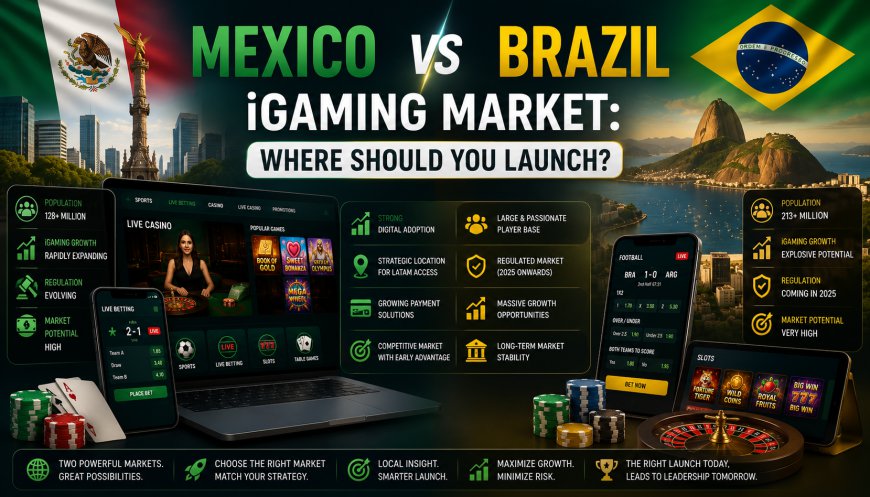
Latin America is one of the most closely watched regions in online gambling. Mexico and Brazil stand out because both offer large digital audiences, strong interest in sport and growing demand for iGaming, meaning online casino and betting services. However, they are not equally suitable for every operator.
Brazil offers greater scale and a newer federal regulatory system. Mexico offers a mature Spanish-speaking market, but entry often depends on a local permit structure and careful legal interpretation. Your choice should therefore depend on capital, compliance readiness, localisation and long-term control, not population alone.
The correct decision depends on the operator’s funding, licence strategy, product maturity and ability to localise every customer touchpoint. A market with more players is not automatically more profitable when compliance, tax and acquisition costs are much higher.
Quick Answer
Brazil is usually the stronger choice for a well-funded operator seeking long-term scale and a direct regulated position. Mexico may suit an operator with a trusted local permit partner, proven Spanish-language marketing and a tighter starting budget. Brazil provides clearer rules, while Mexico can offer a more flexible route but greater structural uncertainty.
Market Opportunity
Brazil has one of the largest consumer populations in Latin America and a highly active digital economy. This creates a valuable environment for sports betting and casino brands that can deliver a smooth local experience.
Mexico also has substantial market potential. It has a large population, established gambling activity and a broad Spanish-speaking audience. However, Mexican users still expect local language, local payment options and promotions that feel relevant to their market.
Brazil wins on total scale. Mexico may be easier for a Spanish-first business to understand operationally.
Regulation in Brazil
Brazil’s regulated fixed-odds betting market operates under federal supervision. The Secretariat of Prizes and Betting, part of the Ministry of Finance, authorises and monitors operators. Eligible online games can be offered within the regulated framework, provided the operator, platform and games meet local requirements.
The authorisation route is costly. Federal rules set an authorisation payment of R$30 million, with one authorisation covering up to three brands for five years. Operators must also maintain an appropriate Brazilian business structure and meet financial, technical, security and responsible gambling standards.
Operators can identify the regulator, study published requirements and plan their technology around specific obligations.
Brazilian compliance extends beyond obtaining approval. Operators need reliable identity checks, payment controls, player protection tools, secure data handling, reporting and certified games. The regulated domain system also helps users identify authorised brands.
For a closer look at product expectations, read this guide to online casino features in Brazil.
Regulation in Mexico
Mexico’s gambling market is overseen by the Ministry of the Interior, commonly known as SEGOB. The legal framework is older than Brazil’s newer digital betting rules. Online activity is generally connected to a federal permit or an approved relationship with an existing permit holder. SEGOB confirms that gambling activities require express permission under the federal system.
This can make entry appear more flexible, but the commercial structure must be examined carefully. An operator should confirm who owns the permit, who controls the domain, who processes payments and who holds the player database. It should also understand what happens if the partnership ends.
A weak agreement may leave the brand dependent on another company.
Mexico can work well when the local relationship is transparent and legally sound. It becomes risky when the operator treats a permit partnership as a simple shortcut.
Licensing and Entry Costs
Brazil requires more capital at the beginning. The authorisation payment, local company, compliance staff, certification, payment connections and marketing budget create a significant launch cost. It is best suited to operators that can fund both market entry and ongoing player retention.
Mexico may offer a lower initial route through a permit holder, but lower entry cost does not always mean lower total cost. Revenue sharing, platform fees, legal support, taxes and reduced operational control can affect long-term profitability.
Operators should calculate the full cost over at least three years.
Tax and Profitability
Tax should be modelled before choosing either market. Operators often focus on gross gaming revenue, known as GGR. This is the amount left after player winnings are deducted from stakes. It is not profit. Marketing, bonuses, payment charges, software, staff, tax and compliance costs still need to be paid.
Brazil applies betting-related allocations alongside normal business taxes. The Ministry of Finance states that authorised operators face standard business taxes and additional betting-related allocations.
Mexico also has federal and potentially local tax obligations. Tax treatment can depend on the exact corporate and permit structure, so figures should be confirmed with qualified local advisers before launch.
A realistic model should include payment failure, bonus abuse, affiliate commission, fraud, customer support and responsible gambling costs. Revenue forecasts without these deductions can create a misleading picture.
Payments and Player Experience
Payments can decide whether a promising launch succeeds. Brazilian users expect quick, familiar and mobile-friendly payment journeys. Operators must also follow local rules on account ownership, identity checks and accepted funding methods.
Brazil requires player payments to move between registered accounts held in the player’s name. Credit-funded gambling and credit card deposits are restricted. These requirements make payment planning a central part of compliance, rather than a feature added shortly before launch.
Mexican players may use cards, bank transfers and other locally popular methods. The right mix depends on the target audience and the operator’s approved payment structure.
In both countries, registration should be simple without weakening compliance. Players should understand why documents are required, how long checks take and when withdrawals will be processed. Clear communication builds trust, especially for a new brand.
A local payment strategy should cover deposits, withdrawals, failed transactions, chargebacks and fraud monitoring. Each payment method must work reliably.
Localisation and Marketing
Brazil requires Brazilian Portuguese. Translated European Portuguese often sounds unnatural and may reduce trust. Casino descriptions, bonus terms, safer gambling messages, payment instructions and support replies should all be written for Brazilian users.
Mexico requires Mexican Spanish rather than generic international Spanish. Operators should adapt vocabulary, tone, sports references and customer service scripts.
Marketing rules also matter. Brazil has detailed controls around advertising, promotions and responsible gambling. Operators must avoid claims that present betting as easy income.
Mexico also requires campaigns to fit the operator’s legal and permit arrangements.
Both markets reward brands that focus on trust rather than exaggerated bonuses. Fast pages, clear terms, recognised games, responsive support and predictable withdrawals can be stronger selling points than an oversized welcome offer.
Technology Requirements
A market-ready platform should support player registration, identity verification, payments, game management, bonuses, reporting, safer gambling tools and customer service. It should also allow country-specific limits, messages and processes.
Building every system from the beginning can delay launch. A turnkey platform provides an existing operational foundation that can be adapted for the chosen country.
Learn more in this guide explaining what a turnkey casino solution is.
A turnkey product does not replace licensing or legal advice. The operator must still verify that its games, payments, promotions and account controls meet local requirements. The best supplier is one that can show relevant experience, clear ownership of data and a practical compliance plan.
Choose Brazil If
Choose Brazil when you have enough capital for a major regulated launch, a long-term regional strategy and the ability to build a dedicated Portuguese operation.
You should also have local legal support, a compliant payment setup, certified technology and a realistic customer acquisition budget. Brazil is not ideal for testing an idea cheaply. It is better approached as a serious market investment.
Choose Mexico If
Choose Mexico when you have a reliable permit partner, strong Mexican Spanish capability and a contract that protects your brand, payments and player data.
Mexico may also suit operators already serving Spanish-speaking audiences. However, the business should not launch until ownership, tax, compliance responsibilities and exit terms are clearly documented.
Final Verdict
Brazil offers the stronger overall launch opportunity for established operators. Its market is larger, its federal framework is clearer and its long-term potential is difficult to ignore.
Mexico remains attractive for operators with strong local relationships and Spanish-language experience. Its entry route can be more flexible, but dependence on a permit partner and uncertainty around control can create additional risk.
For scale and regulatory clarity, choose Brazil. For a partnership-led Spanish market entry, consider Mexico. In either case, complete legal, tax, payment and technical checks before committing your launch budget.
Frequently Asked Questions
Is Brazil better than Mexico for iGaming?
Brazil is generally better for well-funded operators seeking scale and a clearer federal authorisation route. Mexico may be suitable for operators with an experienced local permit partner and established Spanish-language operations.
Which market is cheaper to enter?
Mexico may have a lower initial entry cost through a permit partnership. Brazil normally requires much more capital because of its authorisation payment and detailed compliance requirements.
Can an offshore licence cover Brazil or Mexico?
An offshore licence alone should not be treated as permission to target either market. Operators need a locally valid legal route and professional advice for their exact business structure.
Does a turnkey platform include a gambling licence?
No. A turnkey platform supplies technology and operational tools. Licensing, tax registration and local legal approval remain separate responsibilities.