Oxycodone Prescription Guide for First-Time Patients
Receiving a first prescription to buy oxycodone can feel overwhelming, especially if you've never taken a prescription opioid before. This guide walks first-time patients through what to expect — from understanding the prescription itself to taking the medication safely and knowing what questions to ask your doctor and pharmacist along the way.
 oliver1245
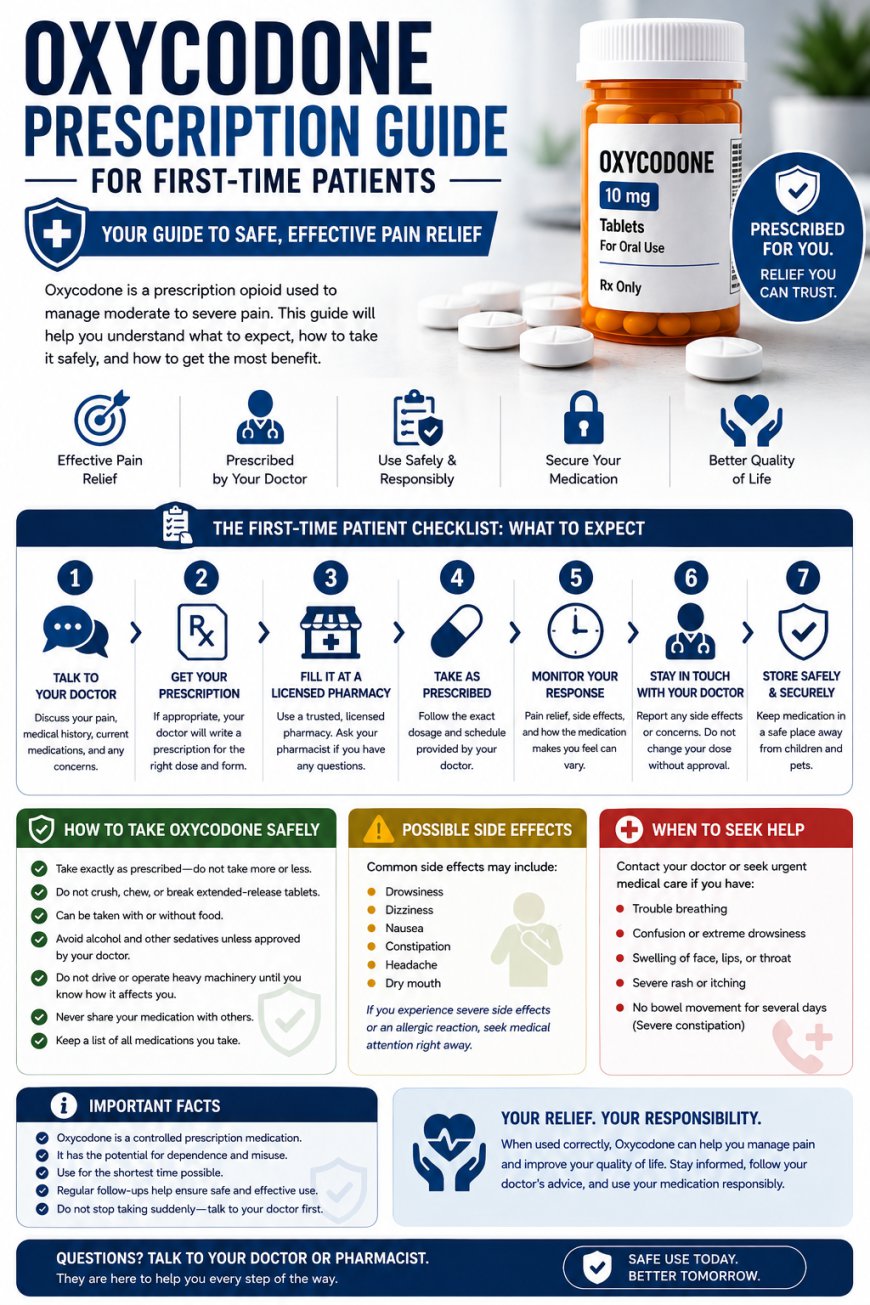
Receiving a first prescription to buy oxycodone can feel overwhelming, especially if you've never taken a prescription opioid before. This guide walks first-time patients through what to expect — from understanding the prescription itself to taking the medication safely and knowing what questions to ask your doctor and pharmacist along the way.
Oxycodone is typically prescribed when pain is significant enough that non-opioid medications, such as NSAIDs or acetaminophen, aren't providing adequate relief. First-time prescriptions are almost always for lower starting strengths and immediate-release formulations, allowing your doctor to see how your body responds before considering any dose adjustments. It's worth understanding, even as a first-time patient, that oxycodone is available in a range of strengths — from 5mg tablets up through higher formulations such as Oxycodone 30mg tablets — but first prescriptions are rarely, if ever, started at the higher end of that range, since opioid-naive patients require a cautious, gradual approach.
Understanding Your Prescription
When you receive your first oxycodone prescription, it will typically specify several key pieces of information:
-
Strength (measured in milligrams, such as 5mg or 10mg)
-
Formulation (immediate-release or, less commonly for first-time patients, extended-release)
-
Frequency (how often you can take it, such as every 4–6 hours)
-
Maximum daily amount or total quantity prescribed
-
Duration (how many days the prescription is intended to cover)
Take time to read this information carefully, and don't hesitate to ask your doctor or pharmacist to explain anything that's unclear before you start taking the medication.
Why Oxycodone Might Be Prescribed
Common reasons a first-time patient might receive an oxycodone prescription include:
-
Post-surgical pain, following a procedure where over-the-counter pain relief isn't sufficient
-
Acute injury, such as a fracture or significant soft tissue injury
-
Dental procedures, particularly more invasive extractions or oral surgery
-
Short-term flare-ups of an existing condition where stronger, temporary pain control is needed
For most first-time patients, oxycodone is intended as a short-term solution rather than a long-term pain management strategy, and doctors typically prescribe the smallest effective dose for the shortest necessary duration.
How to Take Oxycodone Safely as a First-Time Patient
Follow the Exact Dosing Instructions
After purchasing Oxycodone take it exactly as prescribed — the same dose, at the same intervals, without adjusting based on how you feel. If your pain isn't adequately controlled, contact your doctor rather than taking an extra dose on your own.
Take It With or Without Food, as Directed
Some patients find that taking oxycodone with food helps reduce nausea, a common early side effect for new users. Ask your doctor or pharmacist whether this applies to your specific prescription.
Avoid Alcohol Completely
Alcohol significantly increases the risks associated with opioid medications, including excessive sedation and slowed breathing. First-time patients should avoid alcohol entirely while taking oxycodone.
Be Cautious with Other Medications
Certain medications — including benzodiazepines, muscle relaxants, and some allergy or sleep medications — can interact with oxycodone in ways that increase risk. Give your doctor a complete list of everything you're currently taking, including over-the-counter medications and supplements, before starting oxycodone.
Don't Drive or Operate Machinery Until You Know How You Respond
Oxycodone can cause drowsiness or impaired coordination, particularly in first-time users. Avoid driving or operating machinery until you understand how the medication affects you individually.
What to Expect in the First Few Doses
Many first-time patients notice common initial responses when starting an opioid medication, and it's worth discussing what to expect directly with your doctor or pharmacist before your first dose, since they can walk you through this in more detail based on your specific health profile and prescription.
Storage and Handling for First-Time Patients
Because oxycodone tablets is a Schedule II controlled substance with recognized potential for misuse, proper storage matters from the very first prescription:
-
Store the medication in its original, labeled container
-
Keep it in a secure location, ideally locked, especially in households with children, teenagers, or visitors
-
Never share your prescription with anyone else, even if they're experiencing similar pain
-
Dispose of any unused medication promptly through a pharmacy take-back program once your treatment course is complete
-
Avoid keeping leftover tablets "just in case" for future pain episodes; unused controlled substances sitting in a medicine cabinet are one of the most common sources of accidental exposure or misuse within a household
If you're unsure where the nearest take-back location is, many pharmacies and local police departments host permanent drop boxes, and the DEA also holds periodic National Prescription Drug Take Back Day events for this purpose.
Refills and Follow-Up Care
Unlike many other medications, oxycodone prescriptions — as a Schedule II controlled substance — generally cannot be refilled automatically. Each new supply typically requires a new prescription from your doctor. For first-time patients on a short-term course, this is usually straightforward, since the prescription is meant to cover a defined treatment period, such as recovery from surgery.
If your pain persists beyond the expected timeline, your doctor will reassess your treatment plan at a follow-up visit rather than simply extending the original prescription. This is a normal part of responsible opioid prescribing and an opportunity to discuss whether continued opioid use is appropriate or whether alternative pain management strategies should be considered.
It's also worth understanding that many prescribers now use prescription drug monitoring programs (PDMPs) as a standard part of opioid prescribing, checking a statewide database before writing or renewing a prescription. This isn't a reflection of distrust toward any individual patient — it's a routine safety check built into modern prescribing practice, similar to reviewing a patient's full medication list before prescribing anything new. First-time patients shouldn't be surprised if their doctor mentions this step; it's simply part of how controlled substance prescribing works today.
Questions First-Time Patients Should Ask Their Doctor
-
What strength and formulation am I being prescribed, and why?
-
How often should I take it, and what's the maximum I should take in 24 hours?
-
What should I do if my pain isn't controlled at the prescribed dose?
-
Are there any medications or supplements I'm currently taking that could interact with oxycodone?
-
How long should I expect to need this medication?
-
What signs should I watch for that would warrant contacting your office?
-
How should I safely store and eventually dispose of any unused medication?
Bringing a written list of questions to your appointment can help ensure you leave with a clear understanding of your treatment plan.
Questions to Ask Your Pharmacist
-
Can you walk me through exactly how and when to take this medication?
-
Should I take this with food?
-
What should I avoid while taking this, including other medications or activities?
-
What's the best way to store this safely at home?
-
How and where can I dispose of any unused tablets when I'm finished with my prescription?
Pharmacists are a valuable, often underused resource for first-time opioid patients and can typically answer practical questions quickly at the counter.
Understanding the Bigger Picture
As a first-time patient, it's helpful to understand that oxycodone prescribing today generally follows a cautious, structured approach shaped by decades of clinical experience and evolving prescribing guidelines. Doctors are trained to start with the lowest effective dose, favor short-acting formulations for acute pain, and closely reassess treatment plans rather than allowing prescriptions to continue indefinitely without follow-up. This structured approach is designed to balance effective pain relief with responsible, safety-conscious prescribing — which is part of why first-time prescriptions look different from those given to patients with established, long-term treatment plans.
A Note on Emotional Preparation
Starting any opioid medication for the first time can bring up understandable questions or hesitation, particularly given how much public attention has been paid to opioid safety in recent years. This is a reasonable response, and it's worth remembering that when prescribed appropriately, monitored closely, and taken exactly as directed for a defined short-term purpose, oxycodone remains a well-studied and effective tool for managing significant pain. Open, honest communication with your care team — including sharing any concerns or hesitations you have about starting the medication — is one of the most effective ways to feel confident and informed throughout your treatment.
Final Thoughts
Starting oxycodone for the first time comes with a learning curve, but understanding the basics — how to read your prescription, how to take the medication safely, what to expect, and what questions to ask — can make the process feel far less daunting. As a first-time patient, following your doctor's exact instructions, maintaining open communication about how the medication is working, and taking storage and disposal seriously are the most important steps you can take. If anything about your prescription feels unclear at any point, don't hesitate to reach out to your prescribing doctor or pharmacist for guidance.