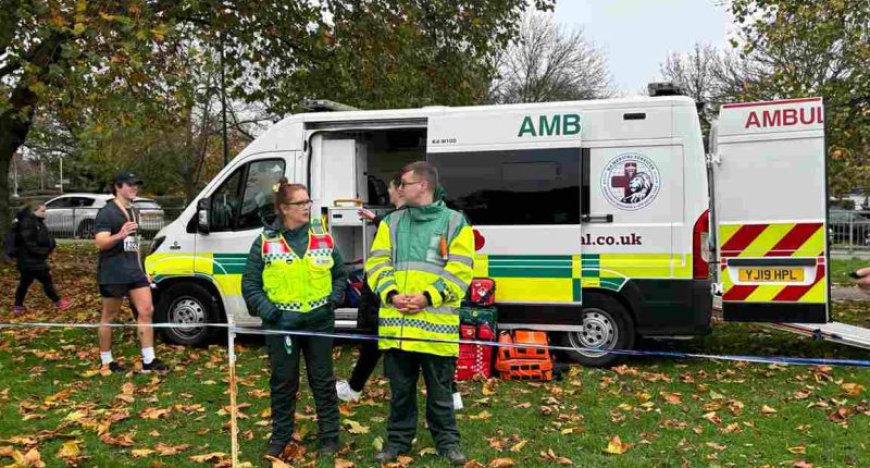
Healthcare rarely happens in a single location. A patient's journey often stretches across multiple sites — a GP surgery, a diagnostic clinic, a hospital ward, a rehabilitation centre, and eventually, home again. Between each of these stops lies a gap that most people never think about until they need to cross it themselves. That gap is filled, quietly and consistently, by patient transport service, the often-overlooked mechanism that keeps Britain's entire healthcare system in motion.
More Than a Logistical Detail
It's tempting to think of patient transport as a minor logistical detail, something that simply happens in the background while the "real" medicine takes place elsewhere. But for many patients, particularly those who are elderly, disabled, recovering from surgery, or undergoing long-term treatment, the transport itself can be the deciding factor in whether they receive care at all. A missed appointment because of unreliable transport isn't just an inconvenience — it can mean delayed diagnoses, disrupted treatment plans, or unnecessary strain on already stretched emergency services.
Mounting Pressure Across London's Boroughs
Across London's boroughs, the pressure on patient transport service has grown considerably in recent years, driven by ageing populations, rising chronic illness rates, and hospitals that increasingly serve wide, diverse catchment areas. In Enfield, community clinics and local hospitals rely on well-coordinated transport networks to ensure that patients with mobility challenges aren't left waiting hours for a routine appointment. Greenwich, with its mix of riverside communities and inland neighbourhoods, presents its own logistical puzzle, requiring transport providers to plan routes carefully around both geography and traffic patterns.
Navigating Density in Hackney and West London
Hackney's dense population and busy healthcare facilities mean patient transport service providers must operate with precision, often navigating narrow streets and heavy congestion to keep appointments running on schedule. In Hammersmith and Fulham, proximity to several major hospitals creates a constant flow of inter-facility transfers, each requiring careful coordination to avoid unnecessary delays. Haringey's mix of urban density and green spaces means transport routes can vary significantly depending on where a patient lives relative to their treatment centre.
Suburban Demand in Harrow, Havering, and Hillingdon
Harrow, often seen as a quieter suburban borough, still generates steady demand for non-emergency transport, particularly among elderly residents attending regular check-ups or ongoing treatments. Havering's more spread-out geography means longer average journey times, making efficient scheduling all the more important for local providers. Hillingdon, home to major transport links and a growing population, has seen patient transport service providers adapt quickly to keep pace with increasing demand, especially for patients requiring dialysis or chemotherapy sessions multiple times a week.
Diversity and Density in Hounslow, Islington, and Kensington
Hounslow's diverse community brings a wide range of transport needs, from young families to elderly residents with limited mobility, requiring flexible and responsive service models. Islington, with its tightly packed streets and mix of markets, clinics, and hospitals, presents a unique challenge for transport teams who must balance speed with safety in a busy urban environment. Kensington and Chelsea, home to some of London's most prominent medical institutions, requires transport providers to maintain a high standard of professionalism and reliability, given the volume and complexity of patients moving through the area daily.
Coordinated Care in Kingston, Lambeth, and Lewisham
Kingston upon Thames, with its riverside setting and family-oriented communities, sees consistent demand for patient transport service among both younger patients and elderly residents attending long-term care appointments. Lambeth's dense population and multiple major hospitals mean transport providers here must coordinate closely with medical staff to ensure smooth transitions between facilities, particularly for patients being discharged or transferred for specialist treatment. Lewisham, similarly, has become an area where local healthcare providers increasingly depend on structured transport networks to manage the flow of patients across its community and acute care services.
The Real Measure of a Healthcare System
What ties all these boroughs together is a simple but often unspoken truth: the quality of a healthcare system isn't just measured by the skill of its doctors or the sophistication of its equipment, but by how effectively it can get patients to the care they need, exactly when they need it. Patient transport service is the connective infrastructure that makes this possible, operating largely unseen but absolutely essential to the rhythm of daily healthcare delivery.
The Human Side of the Journey
There is also a deeply human side to this work that deserves recognition. For many patients, the transport journey can be a moment of vulnerability — a time when anxiety, discomfort, or fear can surface, particularly for those facing serious diagnoses or ongoing treatment. A skilled, compassionate transport team does more than simply move a patient from point A to point B; they provide reassurance, dignity, and a sense of care that extends beyond the clinical setting.
The Wheels That Never Stop Turning
As London's boroughs continue to grow and healthcare demands increase, the importance of reliable patient transport service will only become more pronounced. From the quiet streets of Harrow to the bustling clinics of Islington, from riverside Kingston to the dense urban core of Lambeth, these services form the wheels that keep Britain's healthcare moving — steady, dependable, and rarely acknowledged, yet utterly indispensable to the millions of patients who rely on them every single day.

 omarjames