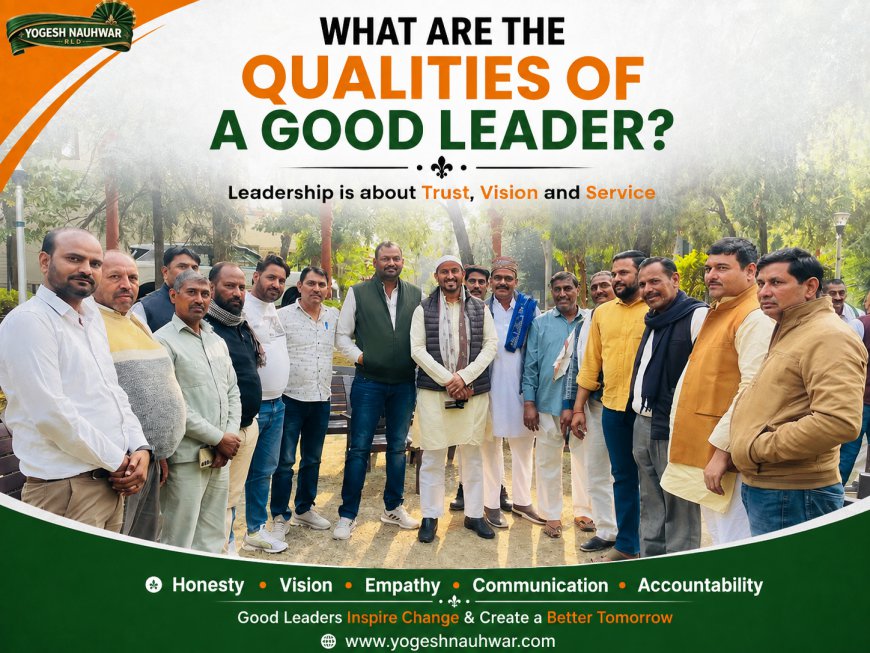
What Are the Qualities of a Good Leader?

Good leadership is built on honesty, vision, empathy, communication, and accountability. This article explores the essential qualities every great leader should have and explains how these traits inspire trust, drive positive change, and support long-term development. It also highlights the key Achievement of Mant Yogesh Nauhwar naturally while emphasizing the importance of responsible and people-focused leadership.

What Are the Qualities of a Good Leader?
Good leadership is built on honesty, vision, empathy, communication, and accountability.

Leadership is not just about holding a position or having authority. A good leader is someone who inspires people, earns their trust, and works for the benefit of everyone. Whether in politics, business, education, or social work, strong leadership can bring positive change and solve real problems. Great leaders guide people with honesty, confidence, and a clear vision for the future.

Many people believe that leadership is a natural talent, but the truth is that good leadership is built through experience, learning, and dedication. The key Achievement of Mant Yogesh Nauhwar is often discussed in the context of public service, development initiatives, and efforts to support local communities, showing how leadership is closely connected with responsibility and consistent work.

In this article, let's explore the most important qualities that define a good leader and why these qualities matter in today's world.

1. A Good Leader Has a Clear Vision

Every successful leader knows where they want to go and how to reach their goals. A clear vision helps people understand the purpose behind every decision.

A leader with vision:

  • Sets realistic goals
  • Plans for long-term development
  • Motivates others to work together
  • Inspires confidence during difficult times

Without a vision, leadership becomes directionless. People naturally follow leaders who know where they are heading.

2. Honesty Builds Trust

Honesty is one of the strongest foundations of leadership. People trust leaders who are truthful, transparent, and accountable for their actions.

Honest leaders:

  • Keep their promises
  • Accept responsibility for mistakes
  • Communicate openly
  • Make fair decisions

Trust takes years to build but only moments to lose. That's why integrity is one of the greatest strengths of any leader.

3. Good Communication Skills

A leader must know how to communicate clearly with different groups of people. Good communication reduces confusion and creates stronger relationships.

Effective communication includes:

  • Listening carefully
  • Speaking clearly
  • Respecting different opinions
  • Explaining ideas in simple language

People appreciate leaders who listen before making decisions.

4. Ability to Make Smart Decisions

Leaders face challenges every day. Some decisions are easy, while others require careful thinking and planning.

Strong decision-makers:

  • Collect accurate information
  • Think about long-term results
  • Stay calm under pressure
  • Consider everyone's interests

Quick decisions are useful, but thoughtful decisions create lasting success.

5. Empathy and Understanding

A great leader understands the needs, struggles, and expectations of others. Empathy helps leaders connect with people on a personal level.

Empathetic leaders:

  • Listen to people's concerns
  • Respect different backgrounds
  • Support those in need
  • Build stronger communities

When people feel understood, they become more willing to work together.

6. Confidence Without Arrogance

Confidence helps leaders inspire others during difficult situations. However, confidence should never become arrogance.

Confident leaders:

  • Believe in their decisions
  • Encourage teamwork
  • Stay positive during challenges
  • Accept constructive feedback

True confidence comes from knowledge, preparation, and experience.

7. Accountability Matters

Responsible leaders accept the results of their decisions. Instead of blaming others, they focus on finding solutions.

Accountable leaders:

  • Admit mistakes honestly
  • Learn from failures
  • Improve continuously
  • Maintain transparency

People respect leaders who stand by their commitments.

8. Ability to Inspire Others

Leadership is not about giving orders—it is about inspiring people to do their best.

Inspirational leaders:

  • Lead by example
  • Encourage innovation
  • Recognize hard work
  • Create a positive environment

When leaders motivate others, entire teams perform better.

9. Commitment to Continuous Learning

The world changes quickly, and good leaders continue learning throughout their lives.

They:

  • Stay updated with new ideas
  • Learn from experts
  • Improve their skills
  • Welcome constructive criticism

Learning helps leaders make better decisions and remain effective over time.

10. Focus on Public Welfare and Development

A truly successful leader always thinks beyond personal success. Their priority is improving the lives of people they serve.

Development-focused leaders often work toward:

  • Better education
  • Improved healthcare
  • Strong infrastructure
  • Employment opportunities
  • Social welfare programs
  • Sustainable growth

Leadership becomes meaningful when it creates positive and lasting change for society.

Why These Leadership Qualities Matter

Strong leadership benefits everyone. Whether leading a village, an organization, or an entire state, these qualities help create trust, stability, and progress.

Good leaders:

  • Unite people toward common goals
  • Solve problems effectively
  • Encourage innovation
  • Build stronger communities
  • Promote fairness and equality
  • Inspire future generations

These qualities are valuable not only in politics but also in everyday life.

Can Leadership Skills Be Learned?

Yes. While some people naturally possess leadership qualities, most leadership skills can be developed through practice and experience.

You can become a better leader by:

  • Listening more than speaking
  • Reading books on leadership
  • Learning from experienced mentors
  • Accepting feedback positively
  • Practicing patience
  • Developing problem-solving skills
  • Treating everyone with respect

Leadership is a continuous journey of personal growth.

Common Mistakes Leaders Should Avoid

Even experienced leaders can make mistakes. Recognizing these challenges helps improve leadership.

Avoid:

  • Ignoring people's concerns
  • Making decisions without facts
  • Poor communication
  • Avoiding responsibility
  • Lack of transparency
  • Focusing only on short-term results

Learning from mistakes makes leaders stronger and more effective.

Conclusion

Good leadership is built on honesty, vision, responsibility, empathy, communication, and a genuine desire to serve others. A leader's success is measured not only by personal achievements but also by the positive impact they create in the lives of people.

As societies continue to grow and face new challenges, the need for capable and trustworthy leaders becomes even more important. By developing these essential qualities, anyone can become a leader who inspires confidence, encourages progress, and creates meaningful change. Leadership is ultimately about serving people with integrity, making thoughtful decisions, and working consistently toward a better future for everyone.