2-Ethylhexanoic Acid Prices: Global Market Trends, Supply Dynamics, and Forecast Outlook
The global chemical market continues to experience dynamic shifts driven by supply chain changes, raw material costs, and downstream industrial demand.
 cheminfo
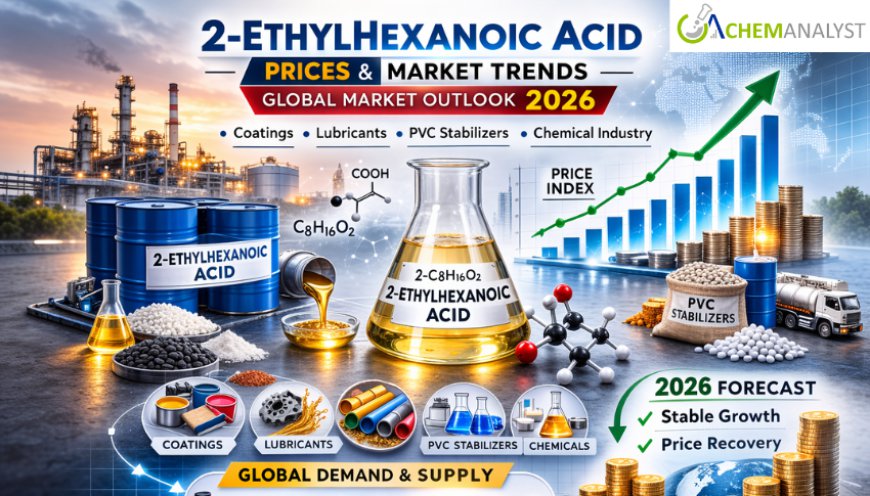
The global chemical market continues to experience dynamic shifts driven by supply chain changes, raw material costs, and downstream industrial demand. Among key specialty intermediates, 2-Ethylhexanoic Acid plays an essential role in coatings, lubricants, PVC stabilizers, and synthetic esters. As industrial activity evolves across major economies, tracking 2-Ethylhexanoic Acid Prices has become crucial for manufacturers, traders, and procurement professionals.
In recent years, the market has witnessed price fluctuations influenced by feedstock cost variations, inventory levels, and macroeconomic conditions. The latest market insights show that pricing trends remain regionally diverse, with varying demand conditions and supply stability shaping the global outlook. This article provides a comprehensive analysis of 2-Ethylhexanoic Acid Prices Trends, key drivers, regional market dynamics, and the forecast outlook for 2026.
Market Overview
2-Ethylhexanoic Acid is an organic carboxylic acid widely used as an industrial intermediate. It is produced from propylene through a multi-stage process involving hydroformylation and oxidation. Its applications include plasticizers, paint driers, lubricants, and automotive additives, making it closely tied to construction and automotive industries.
The global market has experienced steady demand due to its importance in coatings and stabilizers. However, supply-demand balance and feedstock availability remain critical factors influencing price movement.
Latest Global Price Trends
North America
In the United States, 2-Ethylhexanoic Acid Prices experienced a moderate decline in late 2025 due to softer downstream demand and sufficient inventories. The average price during the quarter ending December 2025 stood near USD 2,079 per metric ton. Stable feedstock costs and steady imports prevented significant price increases.
The market remained balanced, with demand from PVC stabilizers and coatings maintaining baseline consumption. Export demand provided some support, limiting further price declines.
Asia-Pacific
The Asia-Pacific market showed a slightly bearish trend in late 2025, particularly in Japan, where prices averaged around USD 1,309 per metric ton. Ample inventories and cautious procurement from downstream sectors contributed to weaker pricing momentum.
Despite the downward pressure, stable production rates and steady plastics demand helped maintain market equilibrium. Seasonal restocking is expected to provide moderate price support.
Europe
Europe witnessed a sharper decline compared to other regions. In Germany, prices fell significantly due to weak demand from the construction and automotive sectors. The average price in late 2025 was approximately USD 2,067 per metric ton.
Lower energy costs and stable feedstock supply reduced production expenses, further contributing to subdued pricing levels.
South America
In Brazil, prices remained relatively stable with minor declines. The average late-2025 price was around USD 2,033 per metric ton. Balanced domestic supply and steady consumption from coatings and PVC sectors prevented sharp fluctuations.
Track Real Time Prices Of 2-Ethylhexanoic Acid
https://www.chemanalyst.com/ChemAnalyst/PricingForm?Product=2-Ethylhexanoic%20Acid%20%282-EHA%29
Key Factors Influencing Price Movements
1. Feedstock Costs
One of the primary drivers of 2-Ethylhexanoic Acid Prices is the cost of feedstocks such as propylene and 2-ethylhexanol. Stable feedstock supply and lower raw material costs have helped reduce production expenses, contributing to price declines in multiple regions.
2. Inventory Levels
High inventories have been a significant factor in suppressing prices globally. Adequate stock availability has reduced procurement urgency among buyers, particularly during periods of weak demand.
3. Downstream Industry Demand
Demand from automotive coatings, construction materials, and plastic stabilizers strongly impacts market trends. Slow activity in these sectors, especially in Europe and Asia, has resulted in reduced consumption.
4. Logistics and Trade Conditions
Shipping disruptions, port congestion, and freight rate fluctuations have occasionally influenced supply availability and pricing trends. In some regions, logistical delays led to inventory accumulation, which exerted downward pressure on prices.
Regional Supply-Demand Dynamics
Balanced Market Conditions
Across most regions, supply remained stable due to consistent plant operations. Major producers maintained steady output levels, preventing supply shortages.
Demand Variations by Sector
-
Automotive Industry: A key consumer of coatings and lubricants, its slowdown has negatively impacted demand.
-
Construction Sector: Weak construction activity in certain regions has reduced coatings consumption.
-
PVC Stabilizers: Continued steady demand from plastic manufacturing provides baseline support.
Historical Price Performance
Throughout 2025, 2-Ethylhexanoic Acid Prices Trends displayed a mixed pattern. Early in the year, prices fluctuated due to geopolitical tensions and tariff impacts. However, as supply stabilized and demand weakened, prices gradually declined in the second half of the year.
Market volatility during the year highlighted the sensitivity of prices to macroeconomic factors and trade policies.
Industry Applications Supporting Demand
The demand outlook for 2-Ethylhexanoic Acid remains positive due to its wide range of applications:
-
Paint and coating additives
-
Lubricant esters
-
PVC stabilizers
-
Automotive coolants
-
Cosmetic ingredients
These diverse applications ensure continued baseline consumption, even during economic downturns.
2026 Market Outlook
Expected Price Recovery
The latest projections indicate that 2-Ethylhexanoic Acid Prices may experience modest recovery in 2026 due to seasonal restocking and improving downstream demand.
Growth in construction and automotive production is expected to support higher consumption levels.
Demand Growth Drivers
Key factors likely to influence the market in 2026 include:
-
Recovery in global manufacturing activity
-
Increased infrastructure investments
-
Growth in automotive production
-
Rising demand for environmentally friendly coatings
Supply Outlook
Production capacity remains stable, with major global manufacturers continuing to operate efficiently. However, potential disruptions in feedstock supply or energy markets could influence future price trends.
Strategic Insights for Buyers
For procurement professionals, monitoring 2-Ethylhexanoic Acid Prices Trends is essential for optimizing purchasing decisions. Key strategies include:
-
Tracking feedstock price movements
-
Monitoring inventory levels
-
Understanding regional demand patterns
-
Anticipating seasonal restocking cycles
These insights can help businesses manage costs and reduce supply chain risks.
Conclusion
The global market for 2-Ethylhexanoic Acid continues to be shaped by supply-demand balance, feedstock costs, and macroeconomic conditions. Recent data shows that 2-Ethylhexanoic Acid Prices experienced a downward trend in late 2025 due to ample inventories and subdued downstream demand, which was also reflected in a declining 2-Ethylhexanoic Acid Price Index across major regions.
However, the long-term outlook remains positive, supported by strong industrial applications and expected recovery in key sectors. As global economic activity improves in 2026, moderate price growth is anticipated, with the 2-Ethylhexanoic Acid Price Index expected to stabilize alongside strengthening demand fundamentals.
Overall, understanding 2-Ethylhexanoic Acid Prices Trends, tracking the 2-Ethylhexanoic Acid Price Index, and monitoring market drivers will remain critical for industry stakeholders seeking to navigate the evolving chemical market landscape.