AI Data Collection for Healthcare: Key Benefits and Risks
The healthcare industry is undergoing a major transformation as artificial intelligence (AI) becomes an essential tool for improving patient care, streamlining operations, and accelerating medical research. At the center of this transformation is AI Data Collection for Healthcare, a process that enables healthcare organizations to gather, analyze, and use large volumes of medical data to make smarter decisions.
 vanesa
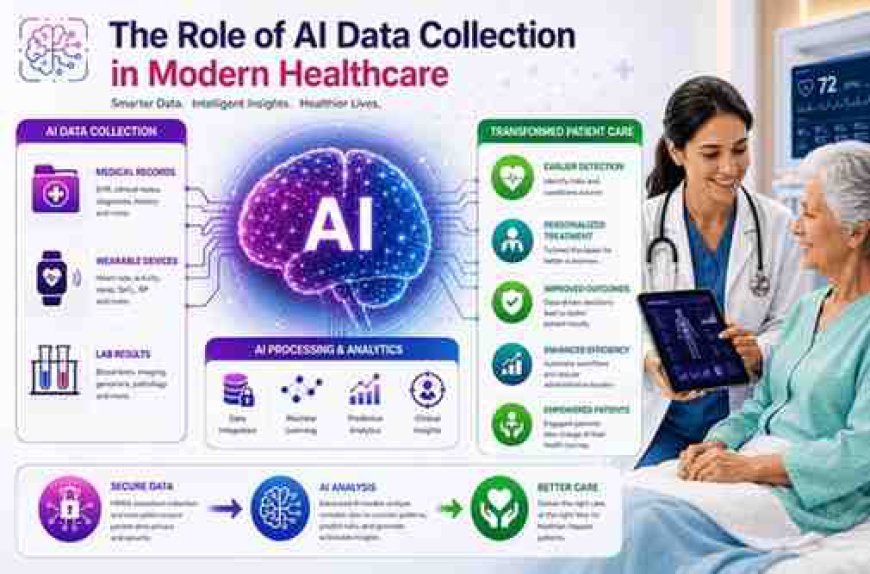
The healthcare industry is undergoing a major transformation as artificial intelligence (AI) becomes an essential tool for improving patient care, streamlining operations, and accelerating medical research. At the center of this transformation is AI Data Collection for Healthcare, a process that enables healthcare organizations to gather, analyze, and use large volumes of medical data to make smarter decisions.
From electronic health records (EHRs) and medical imaging to wearable devices and patient-generated data, AI-powered data collection is helping healthcare providers deliver more personalized and efficient services. However, while the benefits are significant, healthcare organizations must also address privacy, security, and ethical risks associated with collecting sensitive patient information.
What Is AI Data Collection for Healthcare?
AI Data Collection for Healthcare refers to the use of artificial intelligence technologies to collect, organize, process, and analyze healthcare-related data. Unlike traditional data collection methods, AI systems can automatically gather information from multiple sources, identify patterns, and generate valuable insights.
Healthcare AI data collection may include information from:
-
Electronic health records (EHRs)
-
Medical imaging systems such as X-rays, MRIs, and CT scans
-
Wearable health monitoring devices
-
Clinical trials and research databases
-
Patient surveys and health applications
-
Genomic and laboratory data
By leveraging machine learning and natural language processing (NLP), healthcare organizations can transform raw medical information into actionable insights that support diagnosis, treatment planning, and healthcare management.
How AI Data Collection Is Transforming Healthcare
AI-powered data collection is changing the way healthcare providers understand diseases, manage patients, and improve medical outcomes. Instead of relying only on manual documentation and analysis, healthcare professionals can use AI systems to identify trends and make faster, evidence-based decisions.
For example, AI algorithms can analyze patient histories to predict disease risks, identify early warning signs, and recommend personalized treatment approaches. Hospitals can also use AI-generated insights to optimize staffing, manage resources, and improve operational efficiency.
Key Benefits of AI Data Collection for Healthcare
1. Improved Patient Care and Personalized Treatment
One of the biggest advantages of AI Data Collection for Healthcare is its ability to support personalized medicine. AI systems analyze patient-specific information, including medical history, genetics, lifestyle factors, and treatment responses, to help physicians create customized care plans.
Personalized healthcare allows providers to move beyond one-size-fits-all treatments and deliver solutions that better match individual patient needs.
2. Faster and More Accurate Diagnoses
AI can process large amounts of medical data faster than traditional methods. By analyzing medical images, laboratory results, and patient records, AI tools can help healthcare professionals detect diseases earlier and improve diagnostic accuracy.
Early detection is especially valuable for conditions such as cancer, cardiovascular diseases, and neurological disorders, where timely intervention can significantly improve outcomes.
3. Enhanced Medical Research and Drug Development
AI data collection plays a critical role in advancing healthcare research. Researchers can analyze large datasets to discover disease patterns, identify potential drug targets, and speed up clinical trials.
By reducing the time required to analyze complex medical information, AI helps pharmaceutical companies and research institutions develop new treatments more efficiently.
4. Better Healthcare Operations
Healthcare organizations generate massive amounts of data every day. AI-powered collection and analysis help hospitals manage this information effectively.
AI can improve:
-
Patient scheduling
-
Resource allocation
-
Inventory management
-
Administrative workflows
-
Healthcare forecasting
These improvements can reduce operational costs and allow medical staff to focus more on patient care.
Risks and Challenges of AI Data Collection in Healthcare
While AI Data Collection for Healthcare offers many advantages, it also creates important challenges that healthcare organizations must carefully manage.
1. Patient Privacy and Data Security Concerns
Healthcare data contains highly sensitive personal information, making it a prime target for cyberattacks. Unauthorized access, data breaches, and misuse of patient information can create serious privacy concerns.
Healthcare providers must implement strong cybersecurity measures, including encryption, access controls, and compliance frameworks, to protect patient data.
2. Data Accuracy and Bias Issues
AI systems depend on the quality of the data they collect. If healthcare datasets are incomplete, outdated, or biased, AI models may produce inaccurate recommendations.
For example, if training data does not represent diverse patient populations, AI systems may perform less effectively for certain groups. Ensuring high-quality, inclusive datasets is essential for reliable healthcare AI solutions.
3. Regulatory and Compliance Challenges
Healthcare organizations must follow strict regulations when collecting and using patient information. In the United States, healthcare providers must consider requirements related to patient privacy, data protection, and responsible AI usage.
Organizations need clear policies to ensure AI systems are used ethically and comply with healthcare standards.
4. Lack of Human Oversight
Although AI can analyze healthcare data quickly, it cannot fully replace medical expertise. Human oversight remains necessary to interpret AI-generated insights and make final clinical decisions.
A balanced approach that combines AI capabilities with healthcare professionals’ knowledge can help maximize benefits while reducing risks.
Best Practices for Implementing AI Data Collection in Healthcare
Healthcare organizations can improve the success of AI adoption by following responsible data management practices:
Prioritize Data Privacy
Organizations should establish strong security protocols and ensure patients understand how their information is collected and used.
Use High-Quality and Diverse Data
Reliable AI outcomes depend on accurate, representative datasets. Healthcare providers should continuously evaluate and improve their data sources.
Maintain Transparency
Patients and healthcare professionals should have clear information about how AI systems operate and how data influences healthcare decisions.
Combine AI With Human Expertise
AI should support healthcare professionals rather than replace them. Combining advanced technology with clinical experience leads to safer and more effective outcomes.
The Future of AI Data Collection for Healthcare
The future of AI Data Collection for Healthcare will continue to expand as technology advances. Emerging solutions such as predictive analytics, remote patient monitoring, and AI-driven diagnostics will create new opportunities for improving healthcare delivery.
However, the success of AI in healthcare will depend on responsible implementation. Organizations must balance innovation with privacy protection, ethical considerations, and patient trust.
Conclusion
AI Data Collection for Healthcare is reshaping the medical industry by enabling faster diagnoses, personalized treatments, improved research, and more efficient healthcare operations. While the technology offers tremendous potential, organizations must address challenges related to security, accuracy, compliance, and ethical use.
By adopting responsible AI strategies and prioritizing patient protection, healthcare providers can harness the power of artificial intelligence to create a smarter, safer, and more effective healthcare system for the future.