Technical Comparison of ASTM B348 Grade 5 Round Bar and ASTM B348 Grade 2 Round Bar
Comparison of ASTM B348 Grade 5 Round Bar and ASTM B348 Grade 2 Round Bar, highlighting differences in strength, corrosion resistance, and typical industrial applications. Focuses on technical sourcing and supply through platforms like pipingmaterial.sa, helping industries in Riyadh, Dammam, Jeddah, and Al Khobar connect with verified suppliers and certified titanium materials.
 pipingmaterialsa
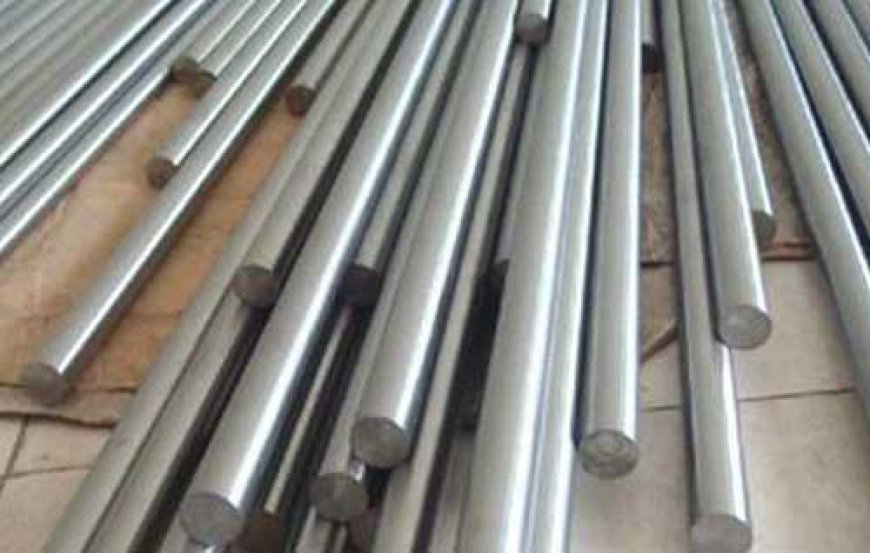
ASTM B348 Grade 5 Round Bar has become the go-to choice in the field of titanium material engineering because of its excellent strength-to-weight ratio and outstanding corrosion resistance. ASTM B348 Grade 5 Round Bar is often referred to as Ti-6Al-4V and consists of aluminum and vanadium elements that greatly increase mechanical strength and allow the alloy to be good in welding and fatigue resistance. The material is normally offered in annealed or solution treated and aged states, strictly conforming to the ASTM B348 standards for chemical composition, tensile strength, and dimensional tolerances. Its uses usually involve aerospace parts, offshore equipment, and high-performance mechanical components that must be dependable even at high stress levels.
Buying practices in cities like Riyadh, Dammam, Jeddah, and Al Khobar revolve around titanium products that are certified, have full traceability, and undergo third party inspection. Websites such as pipingmaterial.sa provide a platform for industries to connect with verified suppliers and genuine buyers, which means that they can always get mill certified materials, ultrasonic tested bars, and accurately machined products. The supply options normally consist of hot rolled, cold finished, and centerless ground bars, with diameters varying from tiny precision rods to large forged sections intended for critical engineering use.
On the other hand, ASTM B348 Grade 2 Round Bar is just pure titanium and offers great resistance to corrosion, especially in oxidizing and slightly reducing environments. Because of its very good ductility, weldability, and formability, this grade is heavily used in the chemical industry, marine work, and heat exchangers. Delivered in annealed state, it ensures dependable performance with lower strength but under highly corrosive conditions. It is thus appropriate for various kinds of industrial uses where durability and corrosion resistance are the main factors.