Why Every Breastfeeding Mother in Pakistan Needs a Reliable Electric Breast Pump in 2026
 deepseacare
Breastfeeding is one of the most rewarding parts of early motherhood, but it comes with real physical and logistical demands that many new mothers are unprepared for. Whether you are returning to work after maternity leave, managing a low or inconsistent milk supply, or simply trying to create a feeding routine that does not leave you exhausted, the tools you use make an enormous difference. For mothers across Pakistan, the shift from manual pumping or no pumping at all toward dedicated electric breast pumps has been one of the most impactful changes in modern breastfeeding care. This guide walks through everything you need to know about choosing the right electric breast pump, understanding how pumping modes work, and building a daily routine that supports your supply and your comfort.
The Real Difference Between Manual and Electric Breast Pumps
Many mothers start their breastfeeding journey with a manual pump because the upfront cost is lower and the device feels simpler to understand. Manual pumps do have genuine advantages, particularly for occasional use, travel, or as a backup when electricity is unavailable. However, for mothers who pump once or more per day, manual operation becomes physically tiring very quickly. The repeated squeeze motion over a fifteen to twenty minute session taxes the hand and wrist in a way that adds up across days and weeks of consistent use.
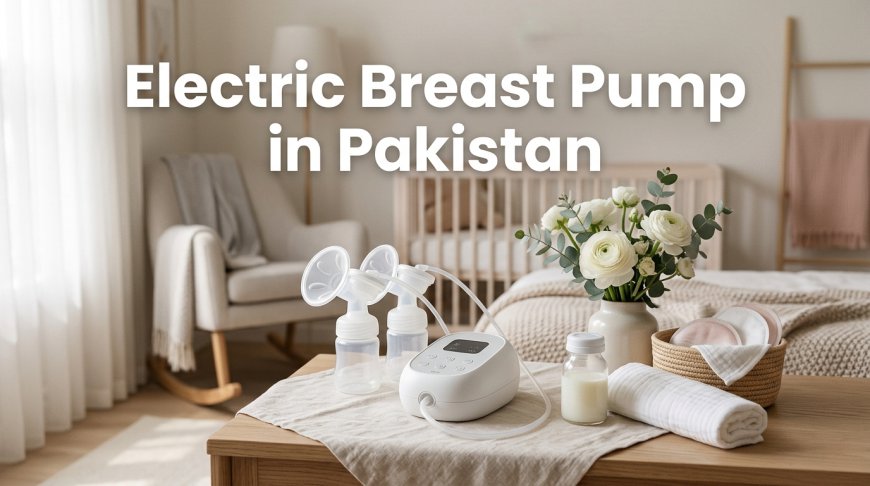
An electric breast pump removes that physical effort entirely. The motor handles suction generation while the mother focuses on relaxing, which itself is important because a calm, relaxed body produces the oxytocin response that drives milk flow. This physiological reality means that electric pumping is not just more convenient but often more effective, producing more milk per session with less fatigue. The Deepsea Prime Electric Breast Pump is designed around exactly this principle, offering a rechargeable, cordless motor with three distinct pumping modes and nine suction levels so that every session can be adjusted to what the mother's body needs at that moment.
Understanding Pumping Modes and Why They Matter
One of the most common mistakes new pump users make is treating all suction levels as interchangeable and simply setting the pump to a comfortable intensity and leaving it there for the entire session. Effective pumping actually mirrors the natural rhythm of a baby nursing, which moves through distinct phases during a single feed. A pump that replicates this progression produces better results than one that maintains a fixed suction pattern.
The Let-Down Mode is where every session should begin. This mode delivers quick, light stimulation that prompts the milk ejection reflex, the same neurological trigger that a baby's initial suckling pattern activates at the breast. Most mothers experience let-down within two to three minutes of starting in this mode, and the sensation of milk beginning to flow is a clear signal to switch to the next stage. Skipping this phase and going straight to stronger suction is one of the primary reasons mothers report poor pump output despite adequate milk supply.
Comfort Mode follows let-down and is designed for the main body of the session. The rhythm slows and the suction deepens in a pattern that encourages steady, sustained milk expression without causing fatigue or discomfort at the nipple. This is the mode most mothers spend the majority of their pumping time in, and the nine levels within it allow for fine adjustment as tolerance and supply change week to week.
Express Mode provides the strongest suction available and is best used toward the end of a session when the goal is maximum output in minimum time. This is particularly useful for working mothers who need to complete a full pumping session during a short break. For mothers exploring options across the full range of what Deepsea Care offers, the breast pumps collection includes manual, electric, and wearable formats to suit different lifestyles and pumping frequencies.
Building a Pumping Routine That Protects Your Supply
Milk supply operates on a demand and supply principle. The body produces milk based on how consistently it is being emptied, whether by a nursing baby, an electric breast pump, or a combination of both. This means that irregular or incomplete pumping sessions can gradually reduce supply over time, while consistent and thorough sessions support production across months of breastfeeding.
For mothers who are exclusively pumping, the general guidance from lactation professionals is to pump eight to ten times in every twenty four hours during the newborn period, gradually reducing frequency as supply stabilizes. For mothers who are combination feeding, nursing the baby directly when possible and using the pump to replace missed feeds or build a stored supply gives the body clear signals about how much milk to continue producing.
Timing also matters. Many mothers find that early morning sessions produce the highest volume due to natural prolactin peaks overnight. If supply is a concern, adding a session between two and five in the morning, even once every few days, can make a meaningful difference to overall production. Pairing an electric pump with the Deepsea Silicone Breast Milk Collector during nursing sessions allows mothers to capture letdown from the non-pumping breast simultaneously, making the most of every feed.
Hygiene, Safety, and What to Look for in Pump Components
The safety of a breast pump is not just about the motor or the suction mechanism. It extends to every part of the device that comes into contact with milk or the body. BPA, a chemical compound found in some plastics, has been the subject of significant concern in infant feeding products, and choosing a pump with BPA-free components is a baseline requirement rather than a premium feature.
A closed system design is equally important. An open system pump allows air and potentially milk particles to travel toward the motor, creating conditions for mold and bacterial growth that are very difficult to address through cleaning alone. A closed system uses a physical barrier, typically a backflow protector membrane, to keep milk and motor entirely separated. The Deepsea Prime Electric Breast Pump uses a closed system with a backflow protector built into the assembly, protecting both the expressed milk and the longevity of the device itself.
Flange fit is another area that affects both comfort and output but is frequently overlooked. A flange that is too large draws areolar tissue into the tunnel unnecessarily, while one that is too small causes friction and discomfort at the nipple wall. The correct fit allows the nipple to move freely through the tunnel with minimal areola involvement, and getting this right dramatically reduces reported pain during pumping. Replacement and alternative size flanges are available through the Deepsea Care nursing care collection for mothers who need to adjust from the standard included size.
Maintaining the valve and membrane components through regular inspection and replacement when wear appears is the most reliable way to preserve suction performance over the lifetime of the pump. These are the parts most directly responsible for suction generation and are also the first to show wear after extended use.
Why Pakistani Mothers Are Choosing Deepsea Care
Deepsea Care has been supporting Pakistani mothers since 2016 under Deep Sea Life Sciences, building a product range and a support infrastructure that is specifically designed for the needs of mothers in this market. The brand carries over one hundred thousand customers and maintains a focus on providing practical, well-supported breastfeeding tools at price points that are accessible to a broad range of families.
The Prime Electric Breast Pump is priced at Rs. 5,814 with a twelve month warranty, delivering a rechargeable cordless pump with three modes, nine levels, a 1200mAh battery, USB charging compatibility, and a complete accessory kit in a single purchase. Customer reviews consistently highlight comfort, build quality, and the practical value of having multiple modes in a portable format. Delivery reaches most major cities within one to two days, with same-day dispatch available for orders placed before three in the afternoon.
For mothers who are weighing their options before committing to an electric pump, reading through the manual to electric breast pump guide on the Deepsea Care blog provides a detailed breakdown of when each format is the better choice and how to transition between them as breastfeeding progresses.
Conclusion
The decision to invest in a quality electric breast pump is ultimately a decision to invest in the sustainability of your breastfeeding journey. Pumping is physically demanding when done correctly and consistently, and using a device that gives you control over mode, suction level, and session timing removes the barriers that cause many mothers to reduce or stop pumping before they intended to. Whether you are returning to work, building a freezer supply, managing supply concerns, or simply looking for more flexibility in your daily routine, a reliable electric breast pump is one of the most practical tools available to you. Pakistan's breastfeeding mothers deserve access to products that were built with their needs in mind, and Deepsea Care has spent nearly a decade working to provide exactly that.