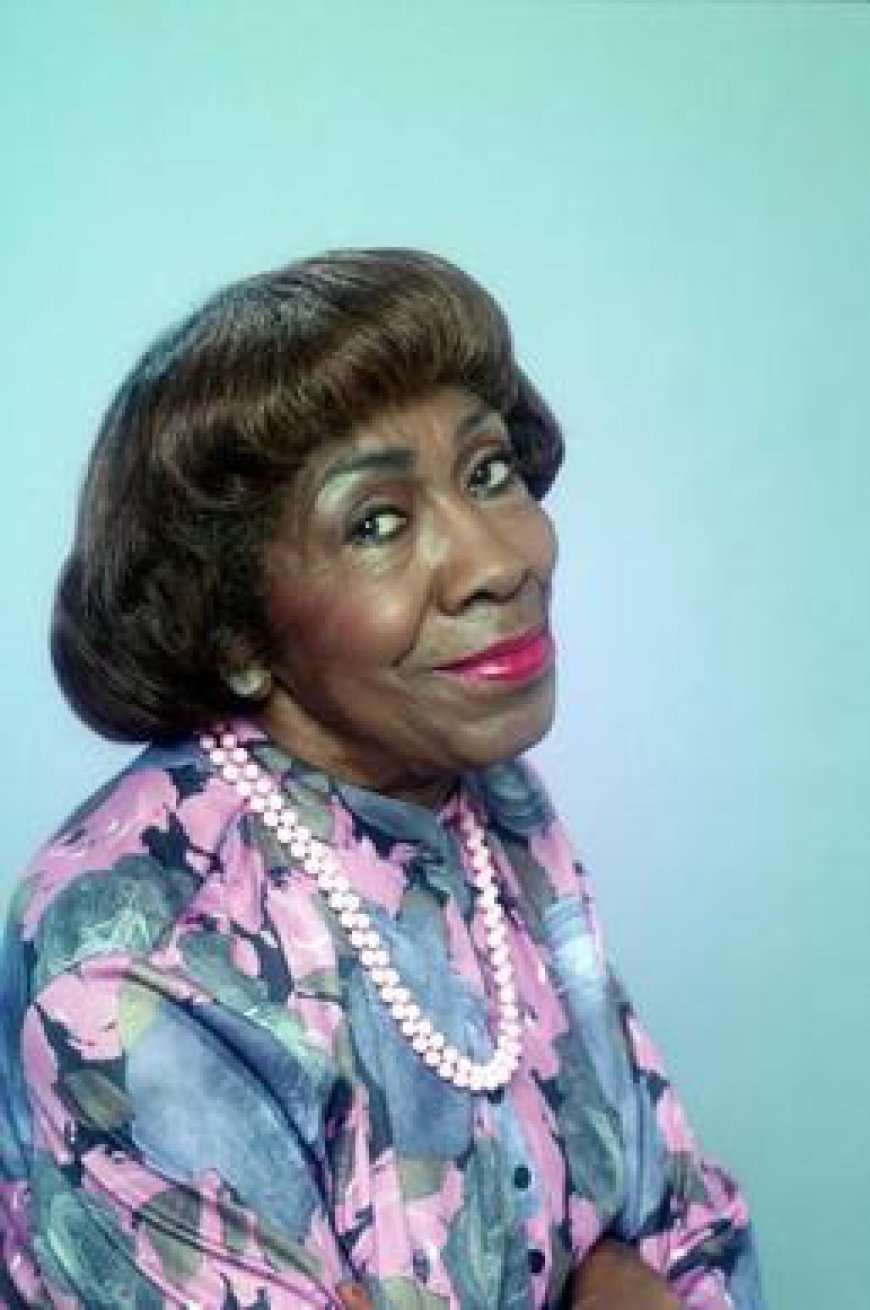
was an American actress whose stage career helped break racial barriers on Broadway and in American theater long before African American performers were regularly featured on major stages. Her work spanned more than six decades, marked by powerful performances, groundbreaking roles, and a commitment to expanding opportunities for Black artists.
Early Life and Passion for Performance
Helen Dorothy Martin was born on July 23, 1909, in St. Louis, Missouri, and raised in Nashville, Tennessee. Although her parents hoped she would become a concert pianist, Martin gravitated toward acting and performance from a young age, participating in local theater groups and even leading her own musical ensemble during her teenage years.
She attended Fisk University, a historically Black college, for two years before leaving during the Great Depression to fully dedicate herself to acting. After relocating first to Chicago and then New York City, she trained with the WPA Theater and the Rose McClendon Players, nurturing her craft amid the rich Black cultural life of the era.
Founding Member of the American Negro Theater
One of Martin’s most significant contributions to theater was as a founding member of the American Negro Theater (ANT) in Harlem in the early 1940s. ANT was a pioneering institution — a training ground and performance space for Black artists at a time when mainstream Broadway offered few opportunities to non-white performers. Through ANT, Martin helped produce original works that addressed social issues and the Black experience, and the organization played a role in launching the careers of talent such as Sidney Poitier.
Broadway Debut and Stage Milestones
Martin made her Broadway debut in 1937 in Orchids Preferred, but it was her 1941 role in Orson Welles’s production of Native Son that solidified her presence on the professional stage. In this adaptation of Richard Wright’s novel, she portrayed Vera Thomas, a complex character that marked an early breakthrough for Black actors on Broadway.
Over the ensuing decades, Martin appeared in more than a dozen Broadway productions, often portraying nuanced characters that challenged racial stereotypes. Some of her most notable stage work included:
-
Deep Are the Roots (1945), directed by Elia Kazan, exploring interracial tensions post–World War II.
-
The Long Dream (1960), an adaptation of a novel about life under racial oppression.
-
The Amen Corner (1965) by James Baldwin, a drama about faith and family in Harlem.
-
Purlie Victorious by Ossie Davis, and its musical adaptation Purlie, celebrating Black resilience with humor and vitality.
-
The Blacks by Jean Genet, a landmark production that toured Europe and confronted issues of colonialism and race.
-
Raisin (1973–1975), the musical based on A Raisin in the Sun, in which she appeared in a long-running production.
Through these roles, Martin brought depth and authenticity to Black characters at a time when theatrical opportunities for African Americans were limited.
Signature Style and Impact
Martin’s stage presence was marked by intelligence, strength, and emotional range. Critics and audiences alike recognized her ability to bring complex inner life to roles that transcended the stereotypical offerings often available to Black actresses of her generation. Her talent helped make space for more layered and meaningful portrayals of African-American life on stage.
Her work with ANT and on Broadway echoed beyond individual performances — it contributed to the broader development of Black theater as a respected artistic force in American culture.
Later Years and Legacy
While Martin became widely known in later decades for television and film roles — most notably as Wanda on Good Times and Pearl Shay on 227 — her foundation remained rooted in theatrical craft honed over decades on stage.
Her contributions were recognized with her induction into the Black Filmmakers Hall of Fame in 1992, and her influence lives on in the many actors who followed her path from Black theater stages to Broadway and beyond.
Martin passed away on March 25, 2000 at age 90 in Monterey, California, leaving behind a legacy of resilience, artistry, and pioneering achievement in American theater.
Conclusion
Helen Martin’s career in theater was a testament to talent meeting perseverance. From her early days in Nashville to her foundational work with the American Negro Theater, and across decades on Broadway, she stood as a trailblazer for African American performers. Her stage work not only reflected the richness of Black narratives but also helped reshape the cultural landscape of American theater.

 etcexpo10