From Mumbai’s Babulnath to the Kailasa Wonder of Ellora, India’s Most Ancient and Mysterious Temples
Explore the Babulnath temple in Mumbai and Kailasha Temple, Ellora. Plan your heritage journey with Air India flight booking for a seamless trip.
 indianeagle
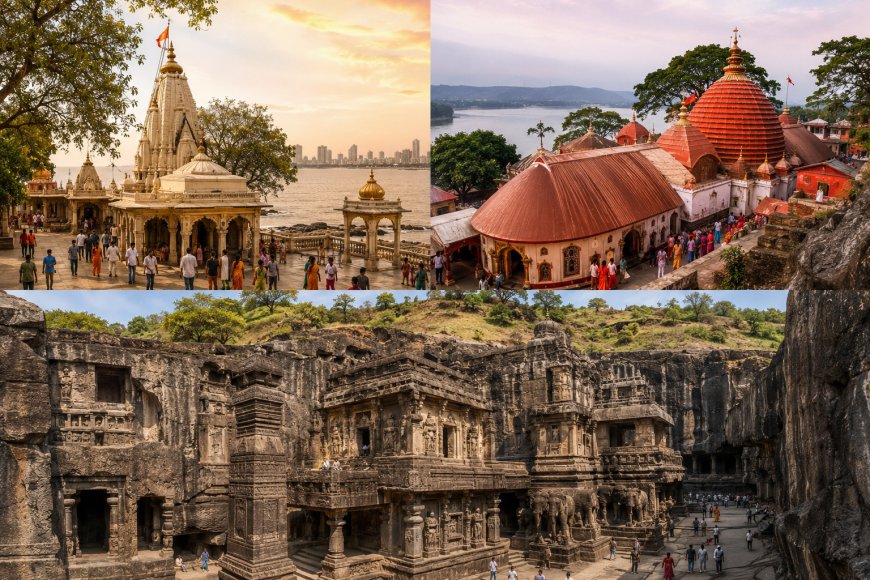
India is home to some of the oldest temples on Earth. These sacred places are more than religious landmarks. They are living museums of architecture, mythology, engineering, and human devotion. Many of them were built centuries before modern machines existed. Yet they continue to amaze historians, architects, and travelers from around the world.
Among the most fascinating are the Babulnath temple in Mumbai, the Kamakhya Temple in Guwahati, and the incredible Kailasa Temple at Ellora. Each tells a different story about ancient India. One stands above the busy streets of Mumbai. Another sits on a mystical hill in Northeast India. The third was carved from a single mountain rock and still confuses modern engineers.
This journey into India’s ancient temples reveals how spirituality and architecture shaped one of the world’s oldest civilizations.
Babulnath Temple
Babulnath Temple is one of Mumbai’s oldest surviving temples, dedicated to Lord Shiva. Located on a small hill near Girgaum Chowpatty, its name means “Lord of the Babul Tree,” linked to the legend of a Shiva idol found beneath a babul tree centuries ago. Though modest in size, the temple symbolizes the survival of ancient spiritual traditions within modern Mumbai. During Maha Shivaratri, thousands of devotees gather there for prayers, music, and rituals.
Maa Kamakhya Temple
Maa Kamakhya Temple is one of India’s most mysterious and sacred temples, located in Guwahati, Assam, atop Nilachal Hill near the Brahmaputra River. A major center of Tantra worship, the temple is unique because it contains no traditional idol; instead, devotees worship a natural rock formation symbolizing feminine energy and fertility. According to Hindu mythology, the site marks where parts of Goddess Sati’s body fell, making it one of the holiest Shakti Peethas. The temple is especially known for the Ambubachi Mela, when devotees celebrate the goddess’s symbolic annual menstrual cycle, highlighting themes of fertility, nature, and feminine power.
Kailasha Temple
Kailasha Temple, Ellora is often regarded as one of the most extraordinary feats of ancient Indian engineering. Built in the 8th century under the Rashtrakuta ruler Krishna I, it is part of the larger Ellora Caves complex. Unlike conventional construction, the temple was carved downward from a single massive rock, removing an estimated 150,000–200,000 tons of basalt. Instead of assembling stones, artisans sculpted the entire structure out of the mountain itself, effectively “revealing” the temple from within the cliff.
Which Is the Oldest Temple in India?
The answer depends on how “oldest” is defined.
Early Hindu worship likely predates surviving stone architecture, but most durable temple structures date from around the 5th century CE onward, as earlier wooden or simple shrines did not survive.
Among the oldest surviving monumental examples are the Shore Temple, the cave complexes of Ellora Caves, and other early South Indian temple traditions.
Meanwhile, places like Kamakhya Temple and Babulnath Temple preserve older living religious traditions, while the Kailasa Temple, Ellora represents the peak of medieval rock-cut temple engineering and artistic ambition.
Conclusion
India’s ancient temples are living records carved in stone, preserving history, belief, and craftsmanship across centuries. Babulnath Temple shows how ancient traditions endure within modern cities, while Kamakhya Temple reflects deep symbolic and tantric spiritual traditions. Kailasa Temple, Ellora demonstrates extraordinary ancient engineering and artistic ambition. Together, they highlight India’s long-standing role as a major center of spiritual heritage and architectural achievement.
Use Austin to bengaluru to plan your journey from the United States to Mumbai, Guwahati, and other historic Indian cities filled with centuries-old temples.